This is a short page. The full story is on our Mary page and in Mary: the story. Here we set her beside the other women of this set.
Where she stands
Mary was, in the Gospels, a young Jewish woman of Nazareth. She is the mother of Jesus (peace be upon him). God, Allah in Arabic, is at the centre of what Christians and Muslims each say about her: He chose her, He sent His angel to her, and she answered with trust.
Judaism does not give her a religious role. Jewish readers know her as a woman of first-century Galilee, and as part of the world in which the Gospels were written.
The Magnificat
In Luke's Gospel, Mary visits her relative Elizabeth, who greets her with the words "Blessed are you amongst women" (Luke 1:42). Mary answers with a song, called the Magnificat from its first word in Latin. Many churches sing or say it at evening prayer.
My soul magnifies the Lord. My spirit has rejoiced in God my Saviour, for he has looked at the humble state of his servant. For behold, from now on, all generations will call me blessed.
Luke 1:46–48 · WEB
Many readers hear the song of Hannah behind it (1 Samuel 2:1–10), and the box below sets them side by side. You can read about her on Women who spoke to God.
Surah Maryam
The Qur'an names Mary more often than the New Testament does, and one of its chapters is called Maryam (Surah 19). She is the only woman the Qur'an names. Its words about her are among its most tender:
And when the angels said: O Mary! Lo! Allah hath chosen thee and made thee pure, and hath preferred thee above (all) the women of creation.
Qur'an 3:42 · Pickthall
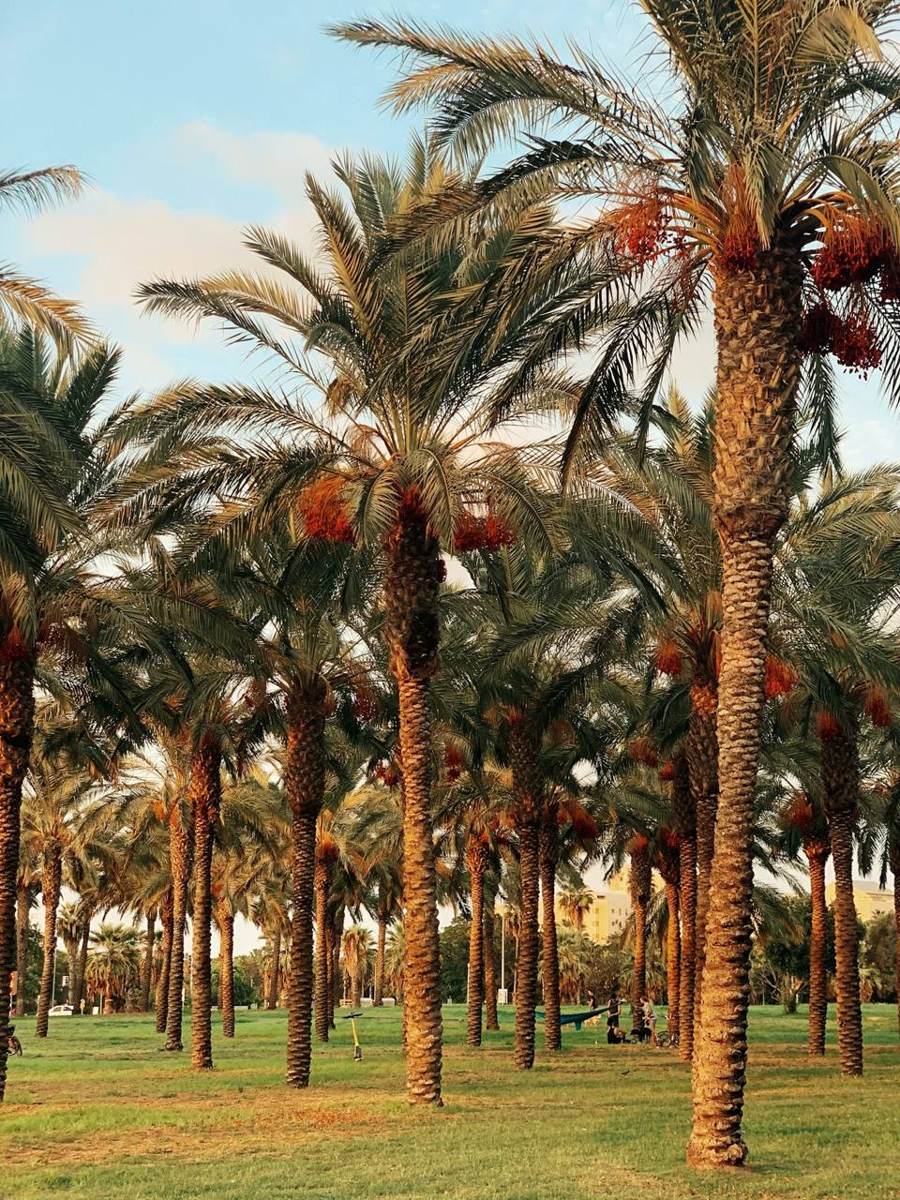
In Surah Maryam she gives birth beside a palm tree, alone and afraid, and is told not to grieve:
Grieve not! Thy Lord hath placed a rivulet beneath thee, And shake the trunk of the palm-tree toward thee, thou wilt cause ripe dates to fall upon thee.
Qur'an 19:24–25 · Pickthall
The Prophet Muhammad ﷺ (peace be upon him) said: "Mary, the daughter of ʿImran, was the best among the women (of the world of her time) and Khadija is the best amongst the women (of this nation)" (Sahih al-Bukhari 3432, Ali). Our page on Khadijah takes up the second half.
Songs of thanks and praise
And Hannah prayed, and said: My heart exulteth in the LORD, My horn is exalted in the LORD; ... Because I rejoice in Thy salvation.
1 Samuel 2:1 · JPS 1917Blessed are you amongst women, and blessed is the fruit of your womb!
Luke 1:42 · WEBO Mary! Lo! Allah hath chosen thee and made thee pure, and hath preferred thee above (all) the women of creation.
Qur'an 3:42 · PickthallHonest differences
Honest differences
- Who her son is. Christians confess Jesus as the Son of God. Muslims honour him as the Messiah and one of God's greatest messengers, born of Mary, and do not say he is God's son. Both agree on her purity and on his birth to a virgin.
- Titles. Catholic and Orthodox Christians call her the Mother of God (Theotokos). Many Protestants call her the mother of the Lord, and honour her without prayer to her. Muslims honour her as one of the best of women, and do not pray to her.
- Prophet or not. Most Muslim scholars do not count her among the prophets, though a minority have. Christians do not use the category in the same way.
- Prayer to Mary. Catholic and Orthodox Christians ask for her prayers. Other Christians and Muslims pray to God alone.
- Judaism. Judaism gives her no religious role.
If you visit
If you visit
- Many churches have a Lady Chapel, a quiet side space for Mary. You are welcome to sit there.
- On 25 March, the Annunciation, Christians remember the angel's greeting to Mary. A Muslim friend may be glad to hear that a surah bears her name.
- Muslims say "peace be upon her" after her name. Christians may simply say "Mary" or "the Virgin Mary".