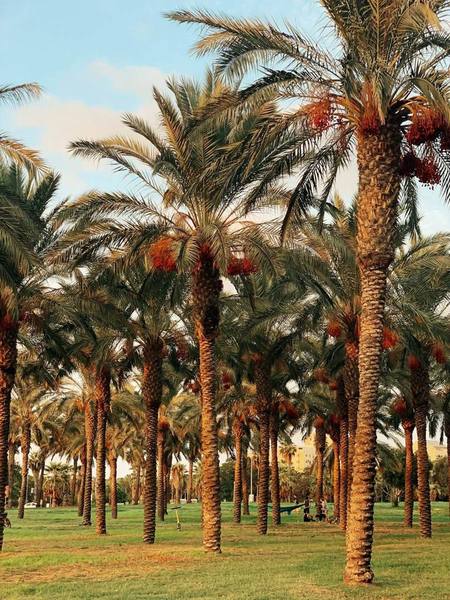
A date seed from the ruins of Masada, King Herod's fortress by the Dead Sea, was about 2,000 years old. In 2005 a scientist in Jerusalem planted it. It sprouted, and the young palm was nicknamed Methuselah.
Some things wait a very long time. Al-Muʾakhkhir, the One who puts back, names a delay that is never forgetting and is often mercy.
Start with what we know
Start with something we know. Then take away everything it needs. What is left is not a bigger version of us: it is the Name.
Episode 1
In us
In the late 1960s and early 1970s the psychologist Walter Mischel at Stanford offered young children one marshmallow now, or two if they could wait alone for about fifteen minutes. Many children tried hard, covering their eyes or singing to themselves; some managed it, and many did not. Later studies have argued over what the test shows, but one thing is clear: waiting is hard for us. Delay costs us time, patience and comfort. We postpone because we have to, and we rarely know whether what we wait for will come.
Episode 2
In nature
The Masada date seed had lain in the ruins for around two millennia. Dr Elaine Solowey planted it in 2005 at Kibbutz Ketura, and in 2008 the journal Science reported its radiocarbon age and its growth. Many seeds can wait: in Chile's Atacama, one of the driest places on Earth, seeds lie in the sand for years until a rare rainy season makes the desert bloom. Nature is full of delay. But the seed does not choose when to wake. It waits until conditions outside it change.
Episode 3
At our best
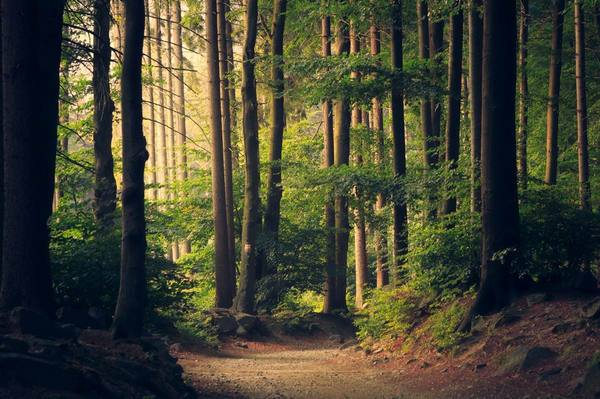
In 2014 the Scottish artist Katie Paterson planted a thousand spruce trees in a forest outside Oslo. Each year until 2114 a writer gives the Future Library a manuscript, which is sealed, unread, in a special room of the city library. In 2114 the trees will be cut down to make the paper for an anthology of all hundred books. Margaret Atwood was the first author. It is one of the most hopeful projects people have ever made. But none of the writers will live to see it printed. We can choose to wait. We cannot hurry, or guarantee, what comes.
Episode 4
The Break
Waiting, for us, means impatience, deadlines, forgetting, and not knowing whether what we wait for will come. Every delay we know is something we suffer or endure. Al-Muʾakhkhir puts back what He wills with full knowledge. The Qur'an says delay is often mercy, a space to turn back, and sometimes a warning that nothing is forgotten. “If Allah were to take mankind to task for their wrong-doing, he would not leave hereon a living creature, but He reprieveth them to an appointed term, and when their term cometh they cannot put (it) off an hour nor (yet) advance (it).” (Qur'an 16:61, Pickthall).
ʿĀʾisha once asked the Prophet Muhammad ﷺ (peace be upon him) whether he had ever faced a day harder than the battle of Uḥud. He said yes.
He told her about the day he went to the town of Ṭāʾif, in the hills above Mecca, hoping its leaders would listen. They did not. They turned him away, and later accounts say children were set on him with stones. He walked away so overwhelmed with grief that he did not notice where he was until he reached a place called Qarn al-Thaʿālib.
He looked up, and there was a cloud shading him, and in it was the angel Gabriel. God has heard what your people said to you, Gabriel told him. He has sent the angel of the mountains to do whatever you command.
The angel of the mountains greeted him and said: if you wish, I will bring the two mountains together and crush them.
The Prophet said: no. I hope that God will bring out of their descendants people who will worship God alone. (Bukhari 3231)
He chose delay. Within his lifetime the people of Ṭāʾif became Muslims.
What each faith says
Read:
Judaism
“Though it tarry, wait for it; Because it will surely come, it will not delay.”
The prophet Habakkuk complained that God seemed slow to act against injustice. The answer he received is one of the great sayings about waiting: the vision is for an appointed time, and “though it tarry, wait for it”.
God's name revealed to Moses at Sinai includes erekh appayim, “long-suffering”, literally long of face, slow to anger (Exodus 34:6). Jews recite it on fast days and festivals.
Maimonides' twelfth principle of faith borrows Habakkuk's word. Sung as the hymn Ani Ma'amin, it says: I believe in the coming of the Messiah, and though he tarry, I will wait for him every day.
Christianity
“The Lord is not slow concerning his promise, as some count slowness; but he is patient with us, not wishing that anyone should perish, but that all should come to repentance.”
Early Christians wondered why the end they hoped for had not come. The second letter of Peter replies that the Lord is not slow but patient, “not wishing that any should perish, but that all should come to repentance”.
Christians keep the season of Advent each December as a time of deliberate waiting, lighting one more candle each week.
Islam
“Deem not that Allah is unaware of what the wicked do. He but giveth them a respite till a day when eyes will stare (in terror)”
The Qur'an uses the verb of God: He puts people back, yuʾakhkhiruhum, to an appointed term. Sometimes this is mercy (16:61; 35:45). Sometimes it is a warning: “Deem not that Allah is unaware of what the wicked do. He but giveth them a respite till a day when eyes will stare (in terror)” (14:42, Pickthall).
Al-Muʾakhkhir is said with al-Muqaddim, as in the Prophet's night prayer (Bukhari 1120). The servant's share is patience, and making good use of the time one is given.
Same and different
Habakkuk's 'wait for it', Peter's 'patient with us' and the Qur'an's 'respite until a term' all say that God's delay is purposeful. All three hold both sides: delay as mercy, and delay as no excuse. Each faith also waits for something of its own. Jews wait for the coming of the Messiah, Christians for the return of Christ, and Muslims for the Day of Judgement, before which, in Islamic belief, Jesus too will return.
A moment to reflect
What is the longest you have ever waited for something? Was it worth it?
When might a delay be a kindness?
Is there something you keep putting off that you should not?
Watch
National Geographic films the Atacama Desert in rare bloom after years of waiting seeds.
The University of Queensland's time-lapse of the world's longest-running laboratory experiment.
Do it together
schools / familiesPlant a slow seed
Plant a date stone or an acorn in a pot and keep a waiting diary. It may take weeks or months to sprout. Read Habakkuk 2:3 and Qur'an 16:61 when it does.
neighbours / faith groupsLetters to 2050
Write letters to the people of your street, school or congregation in 2050. Seal them in a box with the date. Talk about what you hope will still be true.
families / schools / faith groupsAn Advent wreath
Make an Advent wreath from greenery and four candles, and light one more each Sunday in the four weeks before Christmas, as many churches do. Each week, name one thing you are waiting for and one person who is waiting for something harder.
 Episode 1