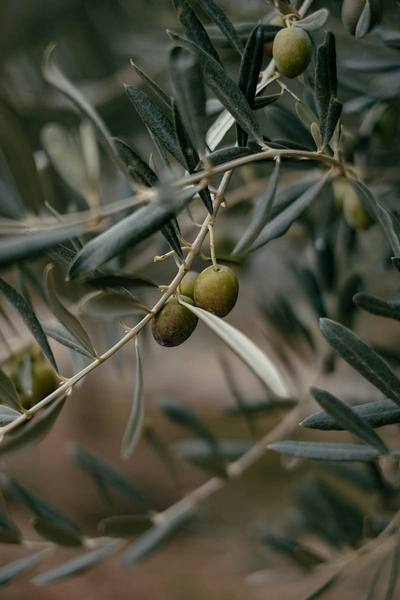
At the ancient Olympic Games, the winners did not get gold medals. Each was crowned with a wreath of wild olive, cut with a golden sickle from a sacred tree near the temple at Olympia (Pausanias). It was the highest glory a Greek could win. Within days, the leaves had dried and curled.
Al-Majīd is the All-Glorious. Its root joins two ideas: nobility and abundant generosity. Glory, in this Name, is not fame. It is excellence that overflows into giving. Every glory we know withers. His overflows.
Start with what we know
Start with something we know. Then take away everything it needs. What is left is not a bigger version of us: it is the Name.
Episode 1
In us
An Olympic victor's glory could be enormous. Cities built statues of their champions, poets wrote odes to them, and some were honoured for the rest of their lives. Yet the olive crown that was the actual prize withered within days, and most ancient champions are now forgotten names on broken stones. The same is true now: records are broken, medals tarnish, and fame passes to the next champion. Human glory is real, and it is lent for a season. Even the poets who praised the athletes knew it, and wrote about it.
Episode 2
In nature
During a total eclipse, when the Moon blocks the Sun's bright face, a pearly crown of light appears around it: the corona, the Sun's outer atmosphere. Strangely, it is hundreds of times hotter than the Sun's visible surface, over a million degrees against about 5,500, and scientists are still working out exactly why (NASA). It is one of the most glorious sights in nature. Yet we can see it only for a few minutes, from a narrow strip of Earth, and the star that wears it will one day swell and fade.
Episode 3
At our best
NASA's Parker Solar Probe flew through the Sun's corona on 24 December 2024, just 6.1 million kilometres from its surface. It was travelling at about 690,000 kilometres an hour: the closest any human-made object has come to a star, and the fastest we have ever built (NASA). Behind a shield of carbon foam it kept cool enough to work. It is a glorious human achievement. But it touched the glory without explaining it fully, it lasted only as long as its shield and fuel, and it was seen by almost no one on Earth.
Episode 4
The Break
Lay down the olive crown that dries, the few minutes of the eclipse, the heat shield that keeps the probe alive. Every glory we know fades, depends on something else, or is seen only briefly. Al-Majīd is glory that never withers. It is not kept for Himself: it overflows as generosity. The angels said it to the household of Abraham (peace be upon him): “They said: Wonderest thou at the commandment of Allah? The mercy of Allah and His blessings be upon you, O people of the house! Lo! He is Owner of Praise, Owner of Glory!” (Qur'an 11:73, Pickthall).
The Qur'an tells how messengers came to Abraham, and he hurried to serve them a roasted calf. When they did not touch it, he grew uneasy. “Do not be afraid,” they said. “We have been sent to the people of Lot.”
His wife, Sarah (peace be upon her), was standing by, and she laughed. Then they gave her the news: she would have a son, Isaac (peace be upon him), and after him a grandson, Jacob (peace be upon him).
She cried out: “Oh, woe is me. Shall I bear a child, when I am an old woman and this husband of mine is an old man? That would be a strange thing.”
They answered: “They said: Wonderest thou at the commandment of Allah? The mercy of Allah and His blessings be upon you, O people of the house! Lo! He is Owner of Praise, Owner of Glory!” (11:69-73, Pickthall).
The Torah tells the same visit in Genesis 18: Abraham's hospitality under the oaks of Mamre, Sarah's laughter, and the promise of a son, whose name Isaac means ‘he laughs’.
Muslims remember the angels' words every time they pray. The blessing on the Prophet Muhammad ﷺ (peace be upon him) said in every prayer ends: “as You blessed Abraham and the family of Abraham. You are Praiseworthy, All-Glorious” (Bukhari 3370). Glory and blessing, in this Name, arrive as a gift at an old couple's tent.
What each faith says
Read:
Judaism
“The heavens declare the glory of God, and the firmament showeth His handiwork”
The Hebrew word for God's glory is kavod, which also means weight. Psalm 19 says the heavens themselves tell of it, and Isaiah heard the angels say that the whole earth is full of it.
Genesis 18 tells of Sarah's laughter when she heard she would have a son in her old age, and God's answer: “Is any thing too hard for the LORD?” (18:14). Glory, in this story, is shown in an impossible gift.
Those words, ‘the whole earth is full of His glory’, are said standing in the Kedushah of the Amidah. Many worshippers rise on their toes at each ‘Holy’, reaching upward.
Christianity
“The Word became flesh and lived amongst us. We saw his glory, such glory as of the only born Son of the Father, full of grace and truth.”
Christians believe God's glory became visible in Christ. John's Gospel says “we saw his glory”, and links that glory to grace and truth, not to power or fame.
The Gloria, sung in many churches, begins with the angels' song at the birth of Jesus: “Glory to God in the highest, on earth peace” (Luke 2:14).
Many Christians end each psalm with the Gloria Patri, a short song of glory: “Glory be to the Father, and to the Son, and to the Holy Ghost” (Book of Common Prayer).
Islam
“Lord of the Throne of Glory, Doer of what He will.”
Al-Majīd appears in the Qur'an in 11:73 and 85:15, where God is “Owner of the Throne, the Glorious” (some translators render it ‘the Honourable’; both senses are in the word). The Qur'an itself is called al-Qurʾān al-Majīd, ‘Qaf. By the Glorious Qur'an.’ (50:1, Pickthall).
Classical scholars said majd joins noble essence with abundant giving: a person was called majīd in Arabic when they were both honourable and generous. Al-Majīd is glory that gives.
Same and different
All three faiths praise God's glory as filling heaven and earth, and all three remember the visit to Abraham and Sarah and the gift of a son. Judaism speaks of God's kavod, His weighty glory. Christianity believes that glory was seen in Christ, full of grace and truth. Islam names God al-Majīd, glory joined to generosity, and asks blessing in every prayer as He blessed Abraham's family. They differ on how God's glory is made visible; they agree that it is never selfish.
A moment to reflect
What is the most glorious moment you have witnessed? How long did the feeling last?
What would ‘glory that gives’ look like in a person?
Who do you know who shares their success generously, and how does that change it?
Watch
NASA Goddard: Parker Solar Probe, humanity's closest encounter with the Sun: the ‘At our best’ rung.
NASA Goddard: the closest images ever taken of the Sun's atmosphere.
National Geographic's Solar Eclipse 101: the corona and the ‘In nature’ rung.
Do it together
schools / familiesOlive crowns
Make olive or laurel crowns from garden leaves for a sports day or games afternoon, and give them to everyone who helped, not only the winners. After a few days, look at how they have dried, and talk about glory that lasts.
faith groups / neighboursAbraham's tent
Host a simple meal in the style of Abraham's hospitality: welcome guests before asking who they are. Read Genesis 18:1-15 and Qur'an 11:69-73 together.
families / faith groupsOn tiptoe
In synagogue, many people rise on their toes at each ‘Holy’ in the Kedushah, reaching upward. Try it together: say ‘Holy, holy, holy’ three times on tiptoe, then talk about why bodies reach up when we praise.
schools / choirsGloria!
Sing the carol ‘Ding dong merrily on high’ with its famously long ‘Gloria’, and read Luke 2:14, the angels' song at Jesus' birth. Talk about the difference between glory that shows off and glory that gives.

 Episode 1