Lifeguards in Britain are trained to a simple rule. Scan your whole zone of water every 10 seconds, and be able to reach anyone in it within 20 (Royal Life Saving Society). It sounds easy. It is not. Drowning is usually silent: no waving, no shouting, just a head low in the water.
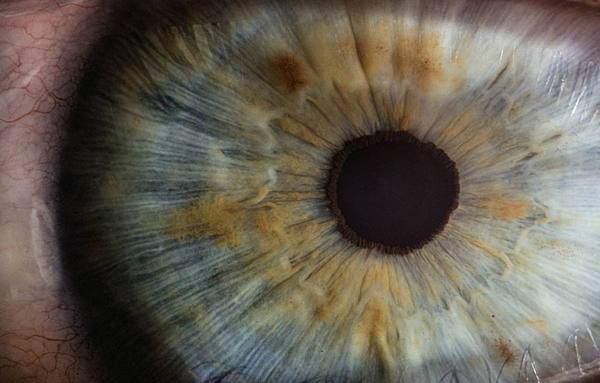
Ar-Raqīb is the Watchful: the One who watches over every person and every moment, without a lapse. It is a Name that can sound like being spied on. But in the Qur'an it is the watchfulness of care. What would watching without any gap mean?
Start with what we know
Start with something we know. Then take away everything it needs. What is left is not a bigger version of us: it is the Name.
Episode 1
In us
The ‘10:20 rule’ exists because human attention fails in predictable ways: it drifts, it gets distracted by noise and talk, and it tires. That is why pool lifeguards rotate positions, often every half hour, and why there must be enough of them for the size of the pool (Health and Safety Executive guidance). Good lifeguards save lives every summer. But they watch one patch of water, for one shift, and no rule can make a human being see two places at once or never blink at the wrong moment.
Episode 2
In nature
A chameleon can move each eye on its own, swivelling them in different directions. Between them they can see almost all the way around its body without turning its head. When it spots an insect, both eyes lock on together to judge the distance before the tongue shoots out (Ott, 2001). It is one of nature's most watchful animals. But it watches only by daylight, only in its line of sight, and only for food and danger. A leaf in the way is enough to hide what it cannot see.
Episode 3
At our best
High in the Chilean Andes, the Vera C. Rubin Observatory began a ten-year survey of the sky in 2026 with the largest digital camera ever built, 3,200 megapixels. It photographs the entire southern sky every few nights, and sends out alerts for anything that has changed: an exploding star, a passing asteroid (Rubin Observatory). It is the most watchful eye humanity has ever turned on the universe. But it sees only the southern sky, only at night, only in light, and only every few nights. Between its glances, much happens unseen.
Episode 4
The Break
Cross out the rotation of shifts, the blink, the leaf in the way, the gap between nights. Every watcher we know watches part of the time and part of the world. Ar-Raqīb watches every person and every moment, without a gap. His watching is care, not suspicion. The Qur'an names Him in a verse about family: “O mankind! Be careful of your duty to your Lord Who created you from a single soul and from it created its mate and from them twain hath spread abroad a multitude of men and women. Be careful of your duty toward Allah in Whom ye claim (your rights) of one another, and toward the wombs (that bare you). Lo! Allah hath been a watcher over you.” (Qur'an 4:1, Pickthall).
From the tradition: Classical: ar-Raqīb watches without lapse; the servant's share is murāqaba, self-watchfulness. Matthew 10:29-30 'Not one of them falls… the very hairs of your head are all numbered'; Psalm 139:7-12
On screen
Orwell's watcher watches to control. Ar-Raqīb watches the sparrow and numbers your hairs.
ʿUmar ibn al-Khaṭṭāb remembered a day when he and other companions were sitting with the Prophet Muhammad ﷺ (peace be upon him) in Medina. A man appeared among them with very white clothes and very black hair. There was no sign of travel on him, yet none of them knew him.
He sat down in front of the Prophet, knee to knee, and asked him a series of questions. What is islām, submission to God? What is īmān, faith? Each time the Prophet answered, and each time the stranger said: “You have spoken truly.” The companions were surprised that he asked questions and then confirmed the answers.
Then he asked: “Tell me about iḥsān, excellence.” The Prophet said: “It is to worship God as if you see Him; and if you do not see Him, He sees you.”
The stranger left. The Prophet asked ʿUmar: “Do you know who that was?” ʿUmar said God and His Messenger know best. “That was Gabriel. He came to teach you your religion” (Muslim 8).
Muslim spiritual teachers built a whole practice on that sentence, called murāqabah: watchfulness, being aware that one is always seen. They described it not as fear of a camera, but as living gently, honestly and beautifully, because Someone who loves the good is always looking.
What each faith says
Read:
Judaism
“Whither shall I go from Thy spirit? or whither shall I flee from Thy presence? If I ascend up into heaven, Thou art there; if I make my bed in the nether-world, behold, Thou art there.”
Psalm 139 asks where anyone could go to escape God's presence, and answers: nowhere, not the heights of heaven nor the depths of the earth. For the psalmist, this is wonder and comfort as much as warning.
Psalm 33 says God looks out on all the inhabitants of the earth, the One “that fashioneth the hearts of them all”. The Mishnah advises: know what is above you, “an eye that sees and an ear that hears” (Pirkei Avot 2:1).
Christianity
“For the eyes of the Lord are on the righteous, and his ears open to their prayer”
The first letter of Peter quotes Psalm 34: the eyes of the Lord are on the righteous, and His ears open to their prayer. Christians understand God's watchfulness as the attention of a Father who cares.
Jesus told his followers to “watch and pray” (Mark 14:38): watchfulness is something God gives and something believers practise.
Brother Lawrence, a seventeenth-century Carmelite lay brother who worked in a Paris monastery kitchen, called this ‘the practice of the presence of God’. He said he could pray as well among the pots and pans as in church, because he never stopped remembering that he was seen and loved.
Islam
“He uttereth no word but there is with him an observer ready.”
Ar-Raqīb appears three times as a Name in the Qur'an (4:1; 5:117; 33:52). Jesus (peace be upon him), in the Qur'an's account, says to God of his followers: “I spake unto them only that which Thou commandedst me, (saying): Worship Allah, my Lord and your Lord. I was a witness of them while I dwelt among them, and when Thou tookest me Thou wast the Watcher over them. Thou art Witness over all things.” (5:117, Pickthall). Classical scholars said ar-Raqīb watches without lapse, and the servant's share is murāqabah, watching oneself.
The Qur'an also speaks of a watcher who records every word (50:18). Scholars emphasised that this is about honesty and accountability, not about being spied on: the purpose of watching, in God's case, is mercy and justice.
Same and different
All three faiths teach that God watches over every person, everywhere, and all three hear that as care more than threat. Think of Psalm 139's ‘Thou art there’, Peter's ‘the eyes of the Lord are on the righteous’, the Qur'an's ‘God is ever Watchful over you’. All three also turn God's watching into a human practice: knowing you are seen, and living well because of it. They differ on many things, but here the words almost overlap.
A moment to reflect
How do you behave differently when you know someone is watching?
What is the difference between being watched over and being watched?
What would change if you lived one day as if someone who loves you were watching?
Watch
A 4K tour of the Rubin Observatory's first images: the ‘At our best’ rung.
David Attenborough on the chameleon: the ‘In nature’ rung.
Do it together
schools / familiesSpot the swimmer
At a pool or beach with lifeguards, ask a lifeguard (when it is quiet) how they scan their zone and why they rotate. Then try the 10-second scan of a playground yourselves. Talk about what never needing a break would mean.
faith groupsMurāqabah evening
Spend five quiet minutes, each person recalling their day as if it had been watched by someone who loves them. Then read Psalm 139:1-12, 1 Peter 3:12 and the Gabriel hadith (Muslim 8).
families / schoolsKnow what is above you
Pirkei Avot 2:1 says: know what is above you, an eye that sees and an ear that hears. Talk about it honestly: does it feel like a warning, a comfort, or both? Then each choose one thing you would do differently today if you remembered it.
familiesPrayer among the pots and pans
Try Brother Lawrence's kitchen practice: while doing the washing-up or making dinner together, do it slowly and carefully, as if for someone you love who is watching. Talk afterwards about whether it changed the chore.

 Episode 1