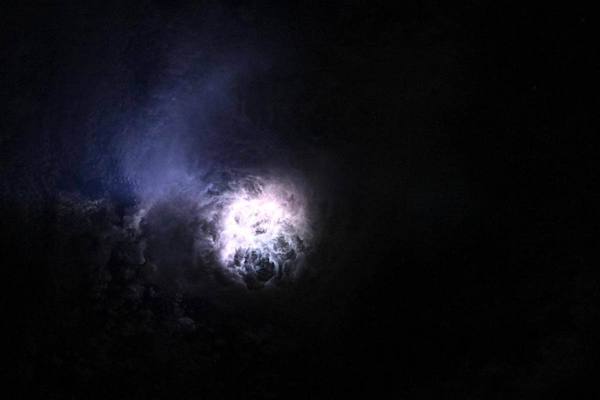
Every second, somewhere on Earth, lightning strikes about 44 times (NASA). Each bolt heats the air around it to around 30,000 °C, roughly five times hotter than the surface of the Sun. It lasts a fraction of a second, and the air explodes outward as thunder.
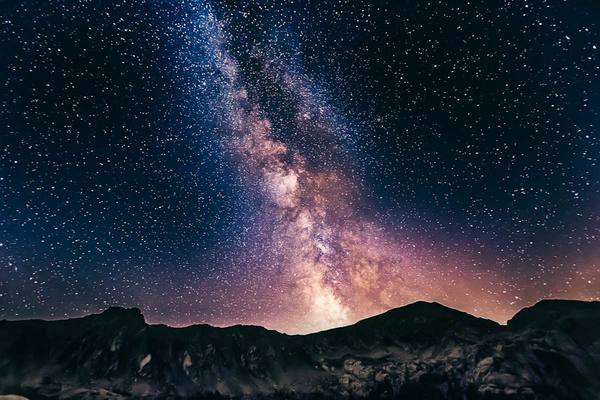
People have always felt something in a thunderstorm that is not just fear. Al-Jalīl is the Majestic. The Qur'an pairs majesty with generosity: God is dhū l-jalāli wa l-ikrām, “Owner of Majesty and Honour”. The most majestic things we know are dazzling. Yet the Qur'an tells of a mountain that could not bear the majesty of God.
Start with what we know
Start with something we know. Then take away everything it needs. What is left is not a bigger version of us: it is the Name.
Episode 1
In us
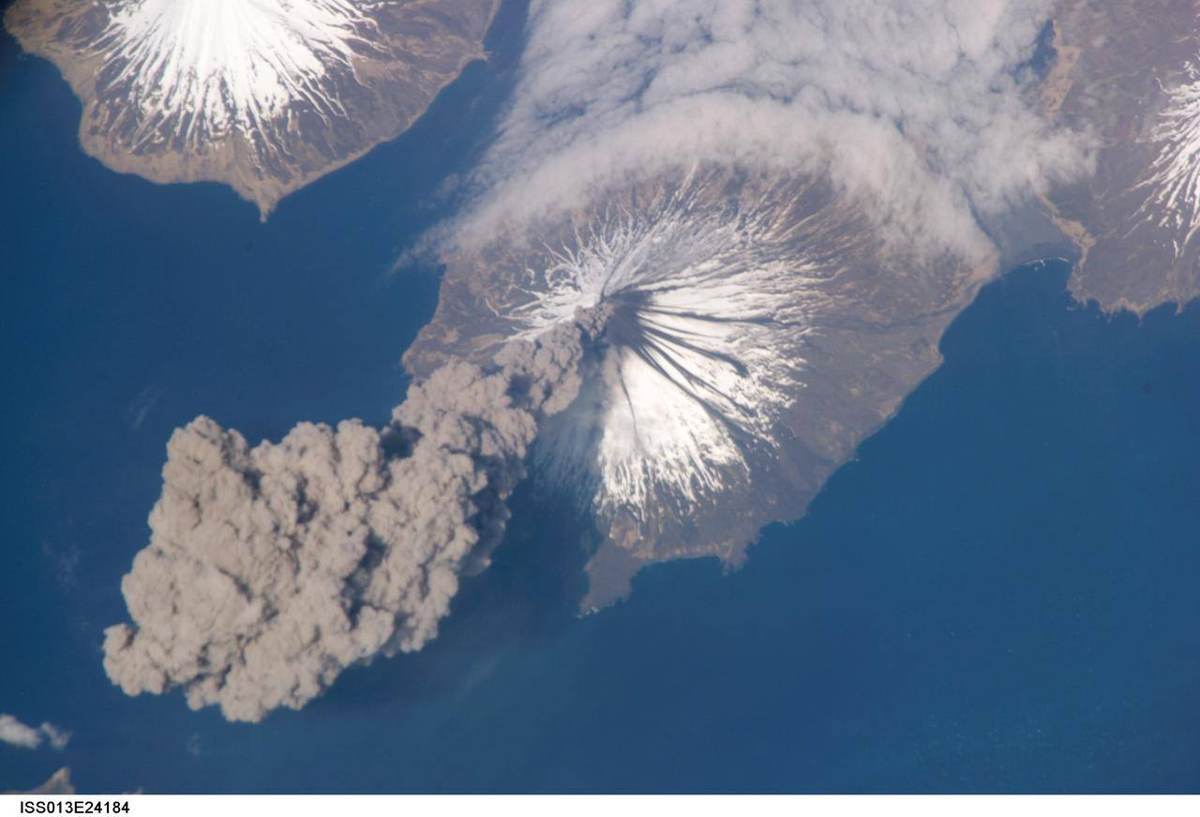
When Handel's Messiah was first performed in London in 1743, tradition says King George II rose to his feet during the Hallelujah chorus, and the whole audience stood with him. Audiences still stand today. Whether or not the king really did, the custom shows something real: great music can make a crowd feel it is in the presence of majesty. But the feeling lasts as long as the chorus, about four minutes. It needs an orchestra, a choir and a hall, and the next day, the same people go back to ordinary life.
Episode 2
In nature
A single lightning bolt carries enough charge to light a town for an instant. Its channel is only a few centimetres wide, yet a single flash can stretch more than ten kilometres across the sky (US National Weather Service). Thunder from it can be heard about 15 kilometres away. Few sights on Earth are more majestic. Yet each bolt lasts less than a second. Lightning follows physics it cannot choose: it takes the easiest path, strikes the tallest point, and is gone. Nature's majesty is dazzling, brief and blind.
Episode 3
At our best
Salisbury Cathedral's spire, finished around 1330, rises 123 metres, the tallest in Britain. Its builders put thousands of tonnes of stone on top of a building never designed to hold it, to point every eye in the valley upward (Salisbury Cathedral). It is one of the most majestic things human hands have made. But it leans: the top is about 70 centimetres off true, held up for centuries by iron bands, buttresses and constant repair. Our majesty is made of stone, and stone has to be propped up.
Episode 4
The Break
Set the four-minute chorus beside the bolt that is gone in a blink and the iron bands holding up the spire. Every majesty we know is brief, borrowed or propped up. Al-Jalīl is majesty that does not fade and needs no support. It is always joined to generosity. “Everyone that is thereon will pass away; There remaineth but the Countenance of thy Lord of Might and Glory.” (Qur'an 55:26-27, Pickthall).
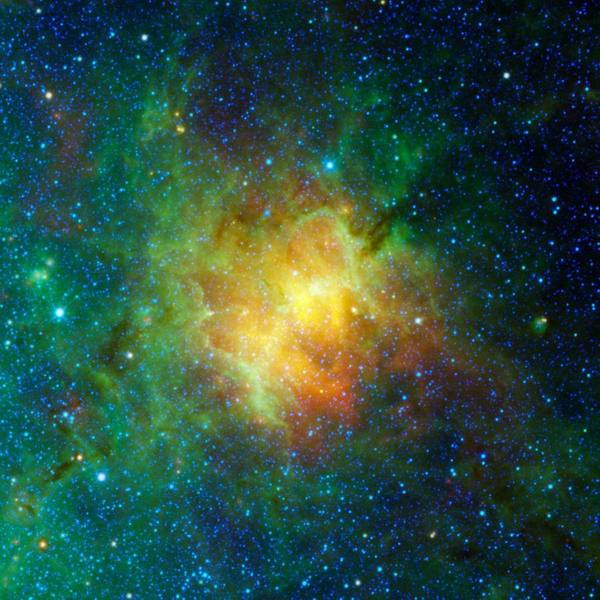
NASA: the Sun's corona and coronal mass ejections 'blasted into space… at over a million miles per hour' (NASA Sun facts)
In nature
Thunderstorms and Himalaya; Seven Worlds, One Planet trailer (BBC Earth)
In people
Awe studies: people report feeling small and more generous after awe (Piff et al. 2015)
In science
Atmospheric physics: lightning
Living it
Awe (khashya); reverence
Its kind
Beyond: majesty: what He is not, and how far beyond.
In the Qur'an: cf. 55:27 (dhū l-jalāl) (not in the Qur'an verbatim)
The mountain
The Qur'an tells how Moses (peace be upon him) went up the mountain to meet God at the appointed time, and God spoke to him. Moses, overwhelmed, asked for more: “My Lord, show Yourself to me, so that I may look at You.”
God answered: “You will not see Me. But look at the mountain. If it stays firm in its place, then you will see Me.”
When his Lord manifested His glory to the mountain, the mountain crumbled to dust, and Moses fell down unconscious. When he came round, he said: “And when he woke he said: Glory unto Thee! I turn unto Thee repentant, and I am the first of (true) believers.” (7:143, Pickthall).
The Torah tells a closely related story. Moses asks: “Show me, I pray Thee, Thy glory.” God says He will make His goodness pass before him, but “Thou canst not see My face, for man shall not see Me and live.” He places Moses in a cleft of the rock and covers him, and Moses sees only the passing of His glory (Exodus 33:18-23).
Both stories teach the same thing about majesty. It is not something to look at. A mountain could not bear it. And both end not with fear, but with Moses turning towards God.
What each faith says
Read:
Judaism
“Bless the LORD, O my soul. O LORD my God, Thou art very great; Thou art clothed with glory and majesty.”
Psalm 104, a great hymn to creation, opens by praising God as clothed in glory and majesty, and goes on to describe light, wind, springs, birds and the sea. Jewish tradition calls God's majestic presence the Kavod, the Glory, and sometimes the Shekhinah, God's indwelling presence.
The story of Moses in the cleft of the rock is read in synagogues on festivals; it is followed by God proclaiming His merciful attributes. Majesty and mercy come together.
Jewish tradition gives a storm its own blessings. On seeing lightning, Jews bless God ‘who makes the work of creation’; on hearing thunder, God ‘whose strength and might fill the world’ (Mishnah Berakhot 9:2).
Christianity
“For he received from God the Father honour and glory, when the voice came to him from the Majestic Glory, “This is my beloved Son, in whom I am well pleased.”
The New Testament calls God “the Majestic Glory”. In the account of the Transfiguration, Peter, James and John see Jesus shining on a mountain. They hear a voice from the cloud, and fall on their faces in fear.
Christians sing of God's majesty in hymns and in the Gloria: “we praise you, we bless you, we glorify you, for your great glory.”
Orthodox Christians keep the Transfiguration on 6 August as one of their twelve great feasts, and bring grapes and fruit to church to be blessed that day. Catholic and Anglican churches keep the feast on the same date.
Islam
“Blessed be the name of thy Lord, Mighty and glorious!”
Al-Jalīl appears in the traditional lists of the 99 Names, though some scholars note it is not found word for word as a Name in the Qur'an. The Qur'an's own phrase is dhū l-jalāli wa l-ikrām, “Owner of Majesty and Honour” (55:27, 55:78): majesty is never alone, always with generosity.
Muslims say this phrase after every prayer: “O God, You are Peace and from You is peace; blessed are You, Owner of Majesty and Honour” (Muslim 591). The Prophet told his followers to hold on to it in their prayers: “Keep saying, Yā dhā l-jalāli wa l-ikrām” (Tirmidhi 3524).
Same and different
The Torah and the Qur'an both tell of Moses asking to see God and being shown that no one could bear it. Both end with him turning to God, not fleeing. Jews praise God clothed in majesty, Christians the Majestic Glory seen at the Transfiguration, Muslims the Owner of Majesty and Honour. Christians believe God's glory was seen in the face of Christ; Jews and Muslims hold that no human can see God in this life. All three join majesty to mercy or generosity.
A moment to reflect
What is the most majestic thing you have seen or heard? How did it change you, even briefly?
Who do you admire for being both impressive and kind? Which of the two matters more to you?
Does the idea that some things are too great to look at straight comfort you or unsettle you?
Watch
The Slow Mo Guys film lightning at 103,000 frames a second: the ‘In nature’ rung.
The American Geophysical Union's slow-motion video of lightning striking a building.
Do it together
familiesStorm watching, safely
Next time there is a thunderstorm, watch from indoors. Count the seconds between the flash and the thunder and divide by three to find the distance in kilometres. Read Psalm 104:1-4 and Qur'an 13:13 (‘the thunder glorifies His praise’).
schools / community groupsLook up
Visit a cathedral, a large mosque or a historic synagogue. Spend five minutes in silence looking up, then talk about why builders reached for height to show majesty, and what the faiths say majesty really is.
familiesBlessings for a storm
Learn the two short Jewish blessings for a thunderstorm: one for lightning (‘who makes the work of creation’) and one for thunder (‘whose strength and might fill the world’). Next storm, say them, or your own words, between the flash and the rumble.
neighbours / choirsStand for the Hallelujah
Listen together to the Hallelujah chorus from Handel's Messiah, and stand, as audiences have done for nearly three centuries. Talk about what makes people want to stand up for something.
 Episode 1