Who is Allah?

Reading settings

Text size

Easier reading

More space between lines and letters, plain font for headings, no italics.

Calm mode

No moving backgrounds or animations; softer images.

Save data

No background video and no card photos: good on a slow or capped connection.

Saved on this device only. Nothing is sent to us.

The 99 Names · Name 40 of 99 · Act

The Reckoner, and the One who suffices

al-Ḥasīb الْحَسِيبُ

Start with what we know ↓

Say it: al-Ḥasīb. A recording by our own reciter is on its way.

Heard together with: al-Ḥasīb / al-Muḥṣī

NASA's new electronic computers worked out John Glenn's flight path in February 1962. He was about to become the first American to orbit the Earth. Glenn did not entirely trust them. According to NASA, he asked for one person to check the numbers by hand. “If she says they're good, then I'm ready to go.” She was Katherine Johnson, a Black mathematician from West Virginia.

Al-Ḥasīb has two meanings, and both matter. He is the Reckoner, the One who keeps exact account of everything; and He is the One who suffices, who is enough. What would it be like to be in the hands of One whose sums are never wrong?

Start with what we know

Start with something we know. Then take away everything it needs. What is left is not a bigger version of us: it is the Name.

Episode 1

In us

Katherine Johnson worked at NASA and its forerunner for 33 years. She calculated the trajectory for Alan Shepard's first American spaceflight in 1961, checked Glenn's orbit by hand, and worked on the Apollo flights to the Moon. In 2015 she received the Presidential Medal of Freedom, and she lived to 101 (NASA). Her story is a reminder of what one careful human mind can do. But even she worked from equations others had written, took days to do by hand what a machine did in hours, and depended on measurements that could themselves be wrong.

Episode 2

In nature

Almost every living thing keeps time. Inside your cells, a set of genes switch on and off in a cycle of about 24 hours, telling your body when to sleep, eat and repair. The scientists who discovered how, Jeffrey Hall, Michael Rosbash and Michael Young, won the 2017 Nobel Prize (Nobel Foundation). It is a clock built into life. But it is not exact. Kept away from daylight, the human clock drifts to a cycle a little longer than a day, and needs the morning sun to reset it (Czeisler and others, Science, 1999). Nature reckons, and needs correcting.

Episode 3

At our best

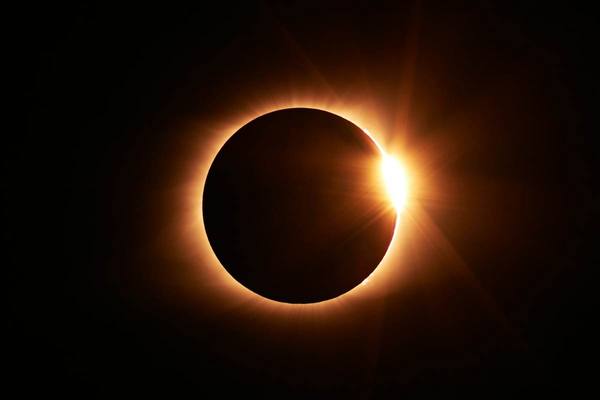
NASA's Five Millennium Canon of Solar Eclipses lists every solar eclipse from 2000 BCE to 3000 CE: 11,898 of them, each timed and mapped (Espenak and Meeus, NASA). It is one of the most precise reckonings human beings have ever made. Yet even it depends on an estimate. The Earth's spin is very slowly slowing down, by an amount that cannot be predicted exactly. So eclipse tracks far in the past and future carry an uncertainty that grows with time. Our best accounts are exact only within error bars.

Episode 4

The Break

Rub out the equations someone else wrote, the drift of the inner clock, the error bars that widen with time. Every reckoning we know is approximate, and every reckoner needs someone to check them. Al-Ḥasīb keeps an account with no error and no forgetting, and because His reckoning is perfect, He is enough. “And will provide for him from (a quarter) whence he hath no expectation. And whosoever putteth his trust in Allah, He will suffice him. Lo! Allah bringeth His command to pass. Allah hath set a measure for all things.” (Qur'an 65:3, Pickthall).

Read: Q 4:6; 33:39; 4:86; 65:3

From the tradition: Two senses: reckoner and sufficer ('ḥasbunā Allāh', 3:173). Classical: He suffices without being sufficed

Watch and listen

Films, documentaries and voices that reach towards this Name. Each links out to where you can watch it.

On screen

Glenn trusted a human to check the computer. Al-Ḥasīb needs no checker, and is enough for whoever trusts Him.

Where it shows up

In scripture
Q 55:5; 4:86; 65:3; 3:173
The same thread in Jewish and Christian scripture
Weak
In the universe
NASA GSFC eclipse catalogue (Espenak and Meeus)
In nature
Night sky: The Planets (BBC)
In people
Katherine Johnson's checking of Glenn's orbit
In science
Celestial mechanics; ΔT and the slowing of Earth's rotation

Living it

Hold yourself to account; 'ḥasbunā Allāh' (3:173)

Its kind

Act: something done: mercy shown, provision given, a prayer answered.

In the Qur'an: 4:6; 4:86; 33:39

‘God is enough for us’

ʿAbdullāh ibn ʿAbbās said that the words “God is enough for us, and He is the best One to trust” were said twice in history at moments of great danger.

The first time, he said, was by Abraham (peace be upon him), when his people built a great fire and threw him into it for breaking their idols. His last words before the flames were: Ḥasbiya llāhu wa niʿma l-wakīl, “God is enough for me, and He is the best One to trust.” The Qur'an says the fire was told: “We said: O fire, be coolness and peace for Abraham.” (21:69, Pickthall).

The second time was after the battle of Uḥud. The Prophet Muhammad ﷺ (peace be upon him) and his companions were wounded and exhausted when someone came to warn them: “The people have gathered against you, so fear them.” The Qur'an says it only increased their faith, and they said: “Those unto whom men said: Lo! the people have gathered against you, therefor fear them. (The threat of danger) but increased the faith of them and they cried: Allah is Sufficient for us! Most Excellent is He in Whom we trust!” (3:173, Pickthall (1930); Bukhari 4563).

Muslims still say these words, ḥasbunā llāhu wa niʿma l-wakīl, when they are frightened, overwhelmed or wronged. They hold both meanings of al-Ḥasīb at once: He keeps the true account of what is happening, and He is enough.

What each faith says

Read:

Judaism

“So teach us to number our days, that we may get us a heart of wisdom.”

Psalm 90:12 · JPS 1917

Jewish tradition is full of reckoning. On Rosh Hashanah and Yom Kippur, God is pictured opening the books in which every deed is written, and the prayer Unetaneh Tokef asks who will be written for life.

The Psalms ask God to teach people to count rightly: not money or years for their own sake, but days, so that they grow wise.

Pirkei Avot gives the reckoning a human scale: know where you came from, where you are going, and before whom you will one day give account (3:1). At the Passover Seder, families sing Dayenu, ‘It would have been enough for us’. They count fifteen of God's gifts one by one, and say after each that it alone would have been enough.

Christianity

“My God will supply every need of yours according to his riches in glory in Christ Jesus.”

Philippians 4:19 · WEB

In Christianity both meanings are present. Jesus told parables about servants called to give account of what they were entrusted with. And Paul wrote from prison, thanking a church for its gifts, that God would supply everything they needed.

Christians often pray in hard times with the confidence that God's grace is sufficient (2 Corinthians 12:9).

Teresa of Ávila, the sixteenth-century Spanish Carmelite, left a short prayer, Nada te turbe, ‘Let nothing disturb you’. It ends Solo Dios basta, ‘God alone is enough’, and is sung today as a chant in the Taizé community and in churches of many traditions.

Islam

“When ye are greeted with a greeting, greet ye with a better than it or return it. Lo! Allah taketh count of all things.”

Qur'an 4:86 · Pickthall (1930)

Al-Ḥasīb appears in the Qur'an in the phrase “Allah sufficeth as a Reckoner.” (4:6, Pickthall (1930); 33:39) and “When ye are greeted with a greeting, greet ye with a better than it or return it. Lo! Allah taketh count of all things.” (4:86, Pickthall). The first of these comes at the end of a verse about guardians handling orphans' money: be scrupulously fair with what belongs to others, because God is keeping the account.

The other meaning, sufficer, is in ḥasbunā llāh, ‘God is enough for us’. The Qur'an also ties reckoning to courtesy: when someone greets you, greet them back with something better, or at least the same, because God keeps account of everything (4:86).

Same and different

All three faiths teach that God keeps account of every deed, and all three trust that He is enough for those who rely on Him. Judaism opens the books on the High Holy Days. Christianity speaks of giving account and of grace that is sufficient. Islam names God al-Ḥasīb, Reckoner and Sufficer, and puts ‘God is enough for us’ on believers' lips. None of them treats God's reckoning as cold bookkeeping: in all three it goes with mercy.

A moment to reflect

  1. Is there something you are trying to keep account of that you could hand over?
  2. What would it take, today, for you to feel you have enough?
  3. How carefully do you handle what belongs to other people?

Watch

National Geographic on NASA trailblazer Katherine Johnson: the ‘In us’ rung.

The Nobel Prize on why the circadian clock matters: the ‘In nature’ rung.

NASA Goddard: chasing solar eclipses with NASA pilots: the ‘At our best’ rung.

Do it together

schoolsCheck the numbers

Give pupils a simple problem worked out by a calculator and ask them to check it by hand, as Katherine Johnson did. Talk about trust: when do we need someone to check our sums, and who checks the checker?

neighbours / familiesGreet better

Try Qur'an 4:86 for a week: whenever someone greets you, answer with something a little warmer than they gave. Notice what happens.

familiesDayenu

Sing or say Dayenu, the Passover song that counts gifts and says ‘it would have been enough’ after each. Write your own verse: ten things in your life, each followed by ‘that would have been enough’.

faith groups / choirsNada te turbe

Learn the Taizé chant of Teresa of Ávila's prayer, ‘Let nothing disturb you… God alone is enough’. Sing it slowly together at the end of a hard week.
Go deeper

Sources (5)
  1. Glenn asked Katherine Johnson to check the computer's numbers in 1962; Medal of Freedom 2015: NASA, Katherine Johnson biography
  2. Circadian clock genes; Nobel Prize 2017: Nobel Foundation
  3. Human intrinsic circadian period slightly over 24 hours: Czeisler and others, Science 284:2177, 1999
  4. 11,898 solar eclipses from 2000 BCE to 3000 CE; ΔT uncertainty: Espenak and Meeus, NASA Five Millennium Canon
  5. ‘God is enough for us’ said by Abraham and by the Prophet's companions: Sahih al-Bukhari 4563
الْجَلِيلُ
Up next · Name 41 of 99The Majestical-Jalīl
Next →

Watch more: The Reckoner, and the One who suffices

6 films and talks, chosen for this page. They play here.

  • Why Doesn’t Allah Stop Injustice Immediately? | Allah’s Names | Dr. Omar Suleiman | Ep. 20

    Yaqeen Institute · 16 min

    Yaqeen: Dr Omar Suleiman on al-Hasib and the Names of justice (episode 20).

  • Why Your Small Deeds Matter Most | The Names Class 26: Al - Haseeb | Shaykh Mikaeel Smith

    Qalam Institute · 50 min

  • 07 - The Divine Names Al-Shakur until Al-Jalil - Ninety-Nine Names of Allah for Youth - Imam Yama

    SeekersGuidance · 62 min

    SeekersGuidance: Imam Yama Niazi on the Names from ash-Shakur to al-Jalil, including al-Hasib.

  • Parashat Bechukotai: Sins and Accountability | Weekly Torah Study with Rabbi Aryeh Bernstein

    myjewishlearning · 40 min

  • A Tour of NASA’s 2024 Solar Eclipse Map

    NASA Goddard · 2 min

  • What it’s like to watch a Total Solar Eclipse

    Veritasium · 5 min

  • More films and talks on F-ILMWatch free