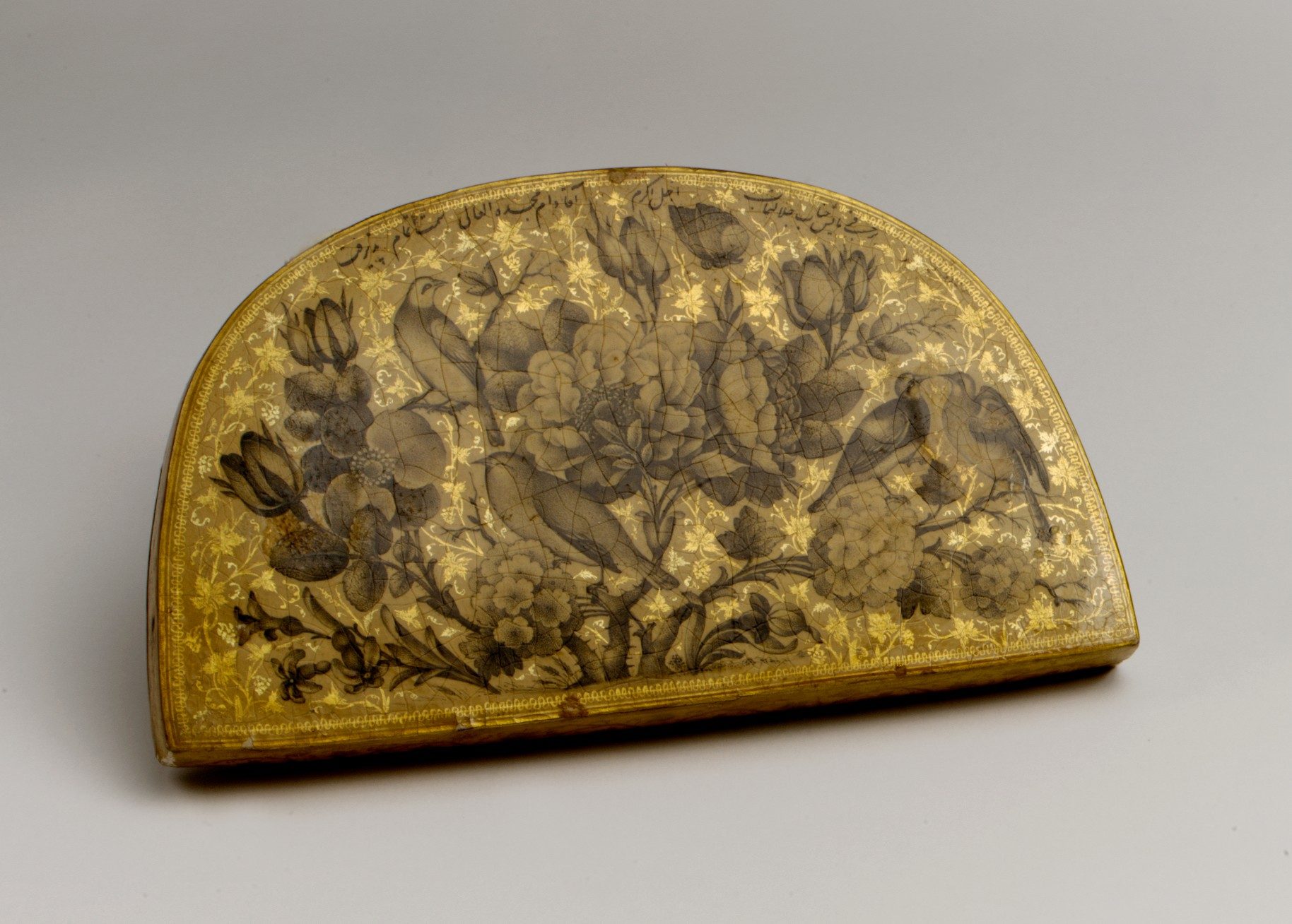
The boy and the little bird
Anas ibn Mālik grew up in the household of the Prophet Muhammad ﷺ (peace be upon him) in Medina. Anas had a little brother, nicknamed Abū ʿUmayr, who kept a small bird, a nughayr, something like a sparrow or a finch. In fuller versions of the report, the bird died, and the small boy was heartbroken.
The Prophet was by then the leader of a whole community, carrying the weight of its prayers, its quarrels and its wars. Yet whenever he came to the house, he would stop and greet the child, teasing him gently in rhyme: “O Abū ʿUmayr, what happened to the little nughayr?”
It is one line, about a bird, said to a child. Muslims have treasured it for fourteen centuries. One early scholar is said to have drawn dozens of lessons from it. It is good to give a child a grown-up's nickname, and to play with words. It is good to take a small grief seriously, to visit people and to remember what matters to them.
Most of all, it shows what jabr looks like in a human life. The strongest man in the city stopped to mend a small boy's heart. Muslims see in it a reflection, at human scale, of al-Jabbār: the Almighty who also sets what is broken.
What each faith says
Judaism
“Who healeth the broken in heart, And bindeth up their wounds.”
Psalms 147:3 · JPS 1917
The Hebrew word for mighty is gibbor. In Deuteronomy, God is “the great God, the mighty, and the awful”. In the very next breath He is the One who “doth execute justice for the fatherless and widow, and loveth the stranger” (Deuteronomy 10:17-18). In the Torah, might and tenderness are never far apart.
The Psalms put that tenderness into the language of a healer. The same psalm that says God counts the stars says He binds up wounds.
Jews pray the Amidah, the standing prayer, three times a day. Its second blessing is called Gevurot, “powers”, and the powers it praises are all acts of mending: God supports the falling, heals the sick and frees the captive.
Christianity
“He has sent me to heal the broken hearted, to proclaim release to the captives, recovering of sight to the blind, to deliver those who are crushed”
Luke 4:18 · WEB
Early in his ministry, Jesus stood up in the synagogue at Nazareth and read from the scroll of the prophet Isaiah. He chose the passage about good news for the poor, freedom for captives and healing for the broken-hearted, then told the people that it was being fulfilled that day.
Christians believe that God's power is shown most fully in that kind of mending, and finally in the cross, where, they say, strength looks like weakness. Paul wrote that God told him: “My power is made perfect in weakness” (2 Corinthians 12:9).
Many churches hold services of healing. In Catholic, Orthodox and Anglican churches the sick are anointed with oil and prayed over, following the Letter of James (James 5:14).
Islam
“He is Allah, than Whom there is no other God, the Sovereign Lord, the Holy One, Peace, the Keeper of Faith, the Guardian, the Majestic, the Compeller, the Superb. Glorified be Allah from all that they ascribe as partner (unto Him).”
Qur'an 59:23 · Pickthall (1930)
Al-Jabbār appears once in the Qur'an as a Name of God, among a run of Names of majesty. When the word describes people, it is always a warning. Strikingly, the Qur'an gives the infant Jesus (peace be upon him) words to speak from the cradle: “(He hath made me) dutiful toward her who bore me, and hath not made me arrogant, unblest.” (19:32, Pickthall).
So the Qur'an keeps the two senses apart. Compelling belongs to God alone; a human who tries it becomes a tyrant. What people may share in is the mending. Between the two prostrations of prayer, many Muslims ask: “Forgive me, have mercy on me, and mend me.”
Same and different
The Hebrew gibbor, mighty, is probably a cousin of the Arabic root j-b-r. All three faiths speak of God as mighty and as the One who binds up the broken-hearted, and all three are wary of human power that tries to play God. They differ on where mending is finally found. Christians see it in Jesus Christ, whose suffering and resurrection they believe heal the world. Jews and Muslims look to God's own direct care and forgiveness, and to the human duty to repair what we have damaged. In Judaism this is sometimes called tikkun, repair.
A moment to reflect
- Think of something in you that was broken and has since mended. Did it leave a seam? Is the seam part of who you are now?
- What is the difference between strength that forces and strength that repairs?
- Whose small grief could you take seriously this week?
Watch
What happens inside the body when a bone breaks and sets: jabr, in the original sense of the word.
NASA on the ozone hole, slowly closing since the world agreed to stop the chemicals that tore it.
Yellowstone's forests coming back after the great fires: a landscape mending itself.
Do it together
Set up a table in a hall, mosque, church or synagogue where people bring something broken (a toaster, a torn coat, a wobbly chair) and volunteers help them fix it. Talk over tea about the people and friendships that could do with mending too. Jewish tradition calls this work tikkun olam, “repairing the world”, and many church halls already host repair cafés.
Each day for a week, everyone says one kind, specific sentence to someone who seems low, the way the Prophet greeted Abū ʿUmayr. At the end of the week, share what you noticed, and read Psalm 147:3 and Luke 4:18 together.
Go deeper
- Psalm 147 (JPS 1917) on Sefaria · scripture
- Qur'an 59:22-24 with translations · scripture
- Sahih al-Bukhari 6129: ‘O Abū ʿUmayr’ · scripture
- NASA: ozone layer and the Montreal Protocol · article
- Luke 4 (WEB) on Bible Gateway · scripture
Sources (6)
- Kintsugi mends broken pottery with lacquer and powdered gold: Wikipedia, Kintsugi
- 'O Abū ʿUmayr, what happened to the nughayr?': Sahih al-Bukhari 6129
- The bird had died (fuller version): Sunan Abi Dawud 4969
- 'Has not made me a tyrant (jabbār)': Qur'an 19:32
- Deuteronomy 10:17-18: the mighty God who loves the stranger: JPS 1917, Sefaria
- Ozone hole recovering after the Montreal Protocol: NASA Ozone Watch