Young Explorers · ages 7–11
Counting the stars
Young Explorers · Counting the stars
Next: Who holds the birds up? (children) →On a clear night, far away from streetlights, go outside and look up. Let your eyes get used to the dark. Slowly, more and more stars appear. Tiny twinkles everywhere.
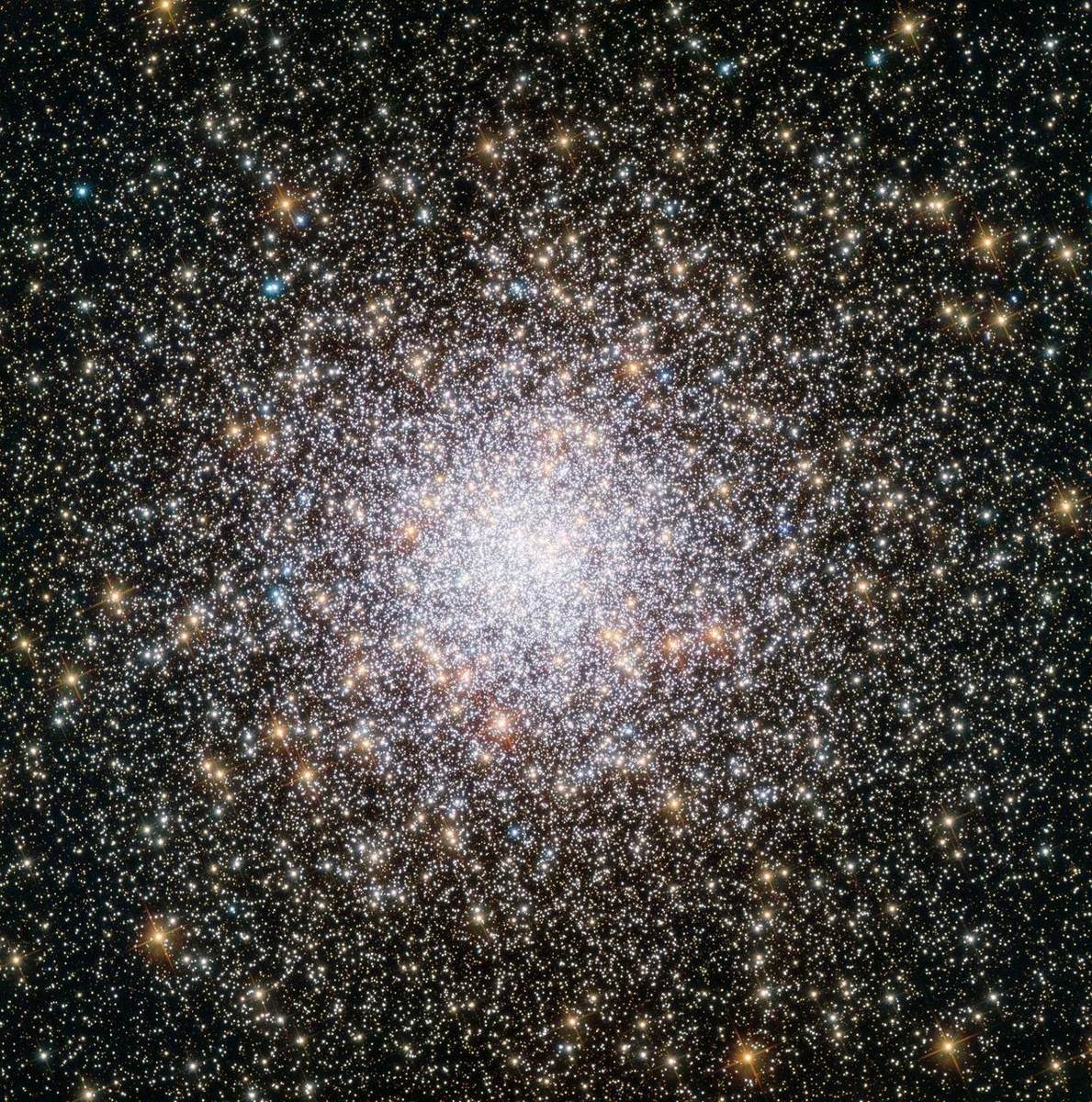
How many can you count? On a very dark night, you might be able to see a few thousand stars with just your eyes. But that is only a tiny fraction of them. Scientists think there are more stars in the universe than grains of sand on all the beaches on Earth.
What is a star? A star is a giant ball of very hot gas, glowing because of the energy deep inside it. Our sun is a star. It looks much bigger and brighter than the others only because it is so close to us.
The next nearest star is so far away that its light takes more than four years to reach us. That means when you look at a star, you are seeing light that set off a long time ago. Some of the starlight you see tonight left its star before you were born.
Stars come in different colours, if you look carefully. Some look a little bit blue, and those are the hottest. Some look a little bit orange or red, and those are cooler. Our sun is yellowish-white.
Stars are born and stars grow old. They are born inside huge clouds of gas and dust called nebulas. After millions or billions of years, some swell up into giants, and some explode. What is left drifts through space and helps make new stars and planets. The iron in your blood and the calcium in your bones were made inside stars, long ago.
Long ago, people joined the stars up into pictures, called constellations. In winter in Britain, look for Orion, with three bright stars in a row for his belt. And all year round you can find the Plough, seven stars that look like a saucepan.
Travellers used the stars to find their way, across deserts and across oceans. Muslims read in the Qur’an that God made the stars to guide people. By them, travellers find their way in the dark, on land and sea.
Long ago, Muslim astronomers studied the stars and wrote down their names. Many star names we still use come from Arabic. Aldebaran means “the follower”. Vega comes from a word for a swooping eagle.
In the Torah, the first part of the Jewish Bible, God takes Abraham (peace be upon him) outside one night. He tells him to look up and count the stars, if he can. Of course, he could not. And a Psalm says that God counts the number of the stars, and gives every single one a name.
At Christmas, Christians remember the wise men who followed a bright star a very long way. Many families put a star on top of their Christmas tree.
Imagine that. Every star has a name. Even the ones too faint to see.
So next time you are out on a clear night, look up. Choose one star. Give it a quiet hello.
Wonder with us
If every star has a name, what do you think yours means?
Take a cardboard tube. Cover one end with black paper held on with an elastic band. With a grown-up, use a pin to poke small holes in the paper. Make the shape of a constellation, such as the Plough. Hold it up to a light or a window and look through: your own night sky.
Watch together
What stars are, explained for young astronomers.
How to connect the dots and find constellations in the sky.
For grown-ups
The verses are Psalm 147:4 (“He counteth the number of the stars; He giveth them all their names”, JPS 1917), Genesis 15:5 and Qur’an 6:97 (“He it is Who hath set for you the stars that ye may guide your course by them amid the darkness of the land and the sea”). The wise men and the star are in Matthew 2:1–10. Aldebaran is from Arabic al-dabarān, “the follower”, and Vega from al-wāqiʿ, “the swooping” (eagle), names that came into European astronomy through Arabic star catalogues. Proxima Centauri, the nearest star after the Sun, is about 4.2 light years away. Under truly dark skies a person can see a few thousand stars with the naked eye. The “more stars than grains of sand” comparison is a common estimate, not an exact count. Dark Sky Discovery sites around the UK are great family trips. Talk about it: if you could visit one star, what would you hope to find?
Watch more: Counting the stars
6 films and talks, chosen for this page. They play here.
Let's Look at Constellations! | How We Study Space | SciShow Kids
SciShow Kids · 7 min
How to Spot Stars and Constellations in the Sky ⭐️| The Wonder List | Earth Month 🌎| @natgeokids
Nat Geo Kids · 3 min
Super Stars (Constellations): Crash Course Kids #31.1
Crash Course Kids · 5 min
Crash Course Kids: star patterns people have named.
Constellation Location: Crash Course Kids #31.2
Crash Course Kids · 4 min
Crash Course Kids: finding constellations.
Highlights: First Images from the James Webb Space Telescope (Official NASA Video)
NASA · 3 min
The first James Webb pictures: more stars than anyone can count.
Why Is the Night Sky Black?
Kurzgesagt – In a Nutshell · 1 min