Young Explorers · ages 7–11
The bee’s map
Young Explorers · The bee’s map
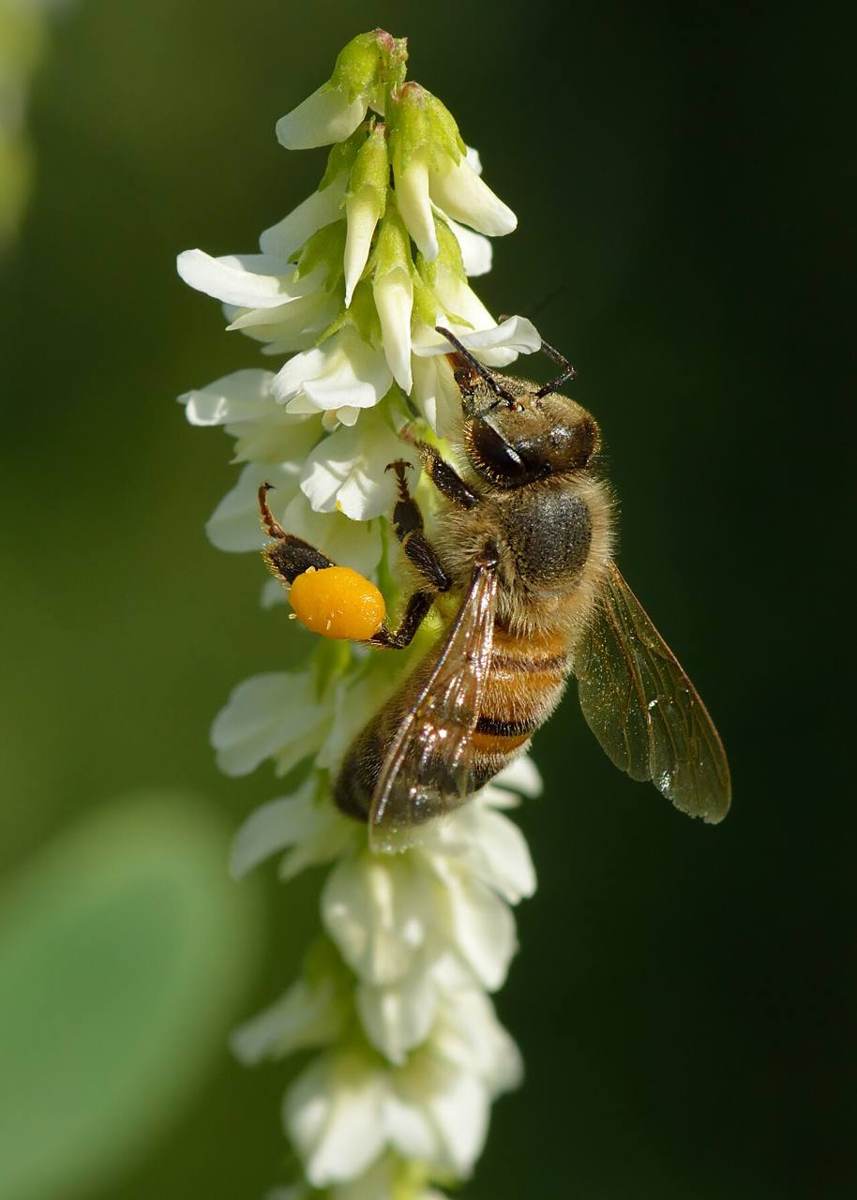
Next: Who holds the birds up? (children) →Buzz. A honeybee lands on a flower. She pushes her face deep inside and sips the sweet juice called nectar. Her legs get dusty with yellow pollen. Then she flies to the next flower, and the next, and the next.
By the time she has finished, she may have visited a hundred flowers. Now she is full. Time to go home.
Her home is a hive, full of thousands of her sisters. Inside, the walls are made of wax, shaped into little rooms with six sides. Each one fits snugly against the next, with no gaps. That shape is called a hexagon, and it is one of the strongest, neatest shapes there is.
Inside the hive, the bees work as a team. Some are cleaners. Some are nurses who feed the baby bees. Some guard the door. Some fan their wings to keep the hive cool. There is one queen, who lays the eggs, but she does not give orders. Everybody just knows their job.
But here is the clever part. The bee has found a field full of flowers. How can she tell her sisters where it is? Bees cannot talk. They do not have maps or phones.
So she dances.
On the honeycomb, in the dark, she walks in a little figure of eight. In the middle of each loop she runs in a straight line and waggles her body from side to side. Waggle, waggle, waggle.
The direction of her waggle tells the other bees which way to fly, compared with the sun. How long she waggles tells them how far. A short waggle means the flowers are close. A long waggle means they are far away.
Her sisters crowd round, feeling the dance in the dark. Then off they fly, straight to the field she found.
A scientist called Karl von Frisch worked out the secret of the waggle dance about a hundred years ago. He won a Nobel Prize for it.
Long before that, the Qur’an spoke about the bee. It says that God taught the bee to build homes in mountains, in trees and in places people build. She follows the ways made easy for her. And from inside the bees comes a drink “of many colours”, in which there is healing for people.
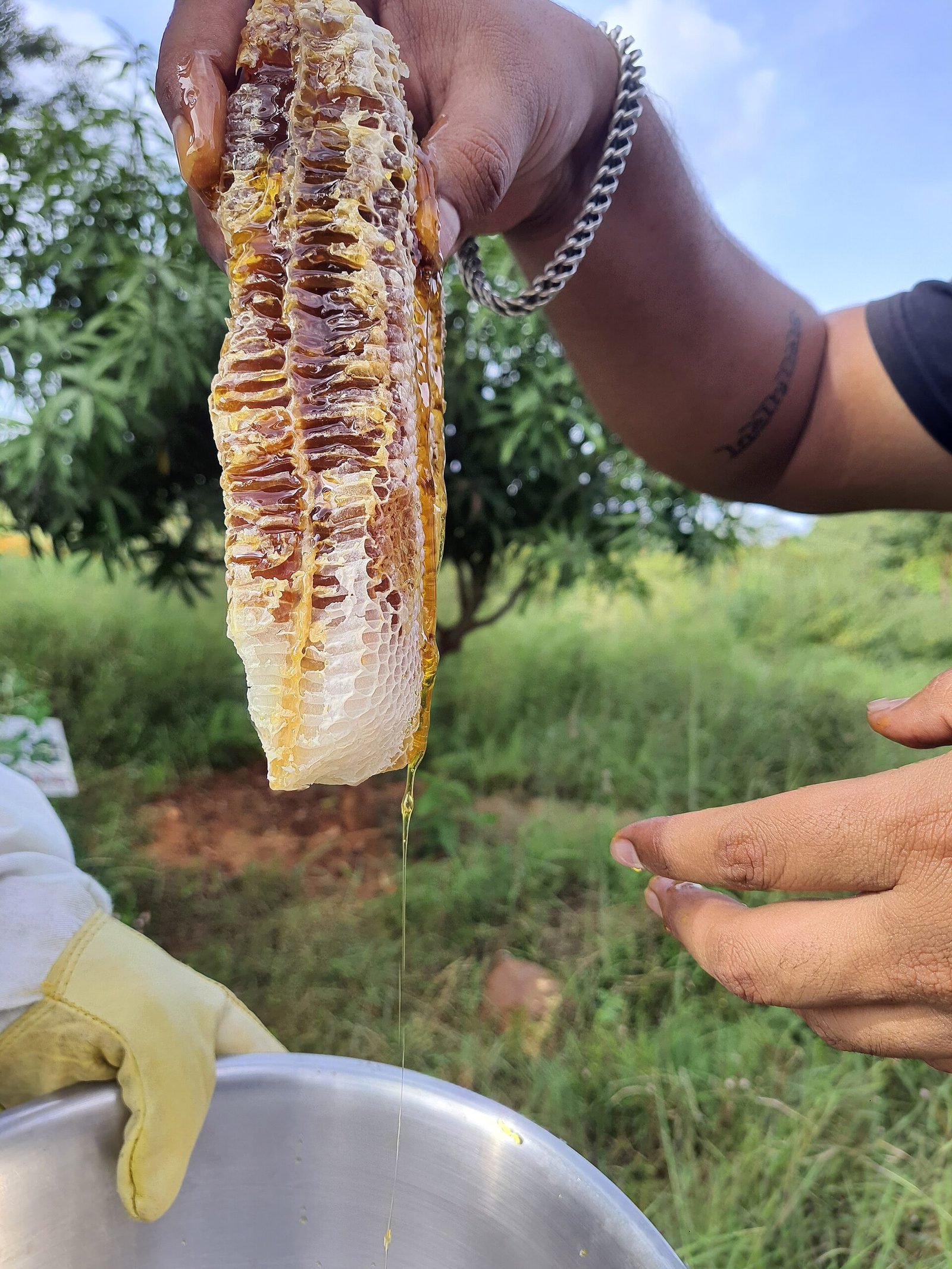
It is true that honey comes in many colours. Honey from clover is pale gold. Honey from heather is dark and thick. Honey from orange blossom is light and flowery. Each jar tastes of the flowers the bees visited.
Honey is part of Jewish and Christian life too. At Rosh Hashanah, the Jewish New Year, families dip apple in honey and wish each other a sweet year. At Easter, Catholic churches light a big candle in the dark. An old Easter song, the Exsultet, thanks the bees who made its wax.
Bees help the flowers, too. As a bee flies from flower to flower, she carries pollen with her. That helps the flowers make seeds and fruit. Without bees, there would be far fewer apples, strawberries and cherries.
One worker bee makes only about one twelfth of a teaspoon of honey in her whole life. So every spoonful you eat took a whole team of bees, flying and dancing, all summer long.
Wonder with us
Who taught the bee the way?
One person hides a toy flower somewhere in the room or garden. They come back and do a waggle dance. Point the straight waggle run towards the flower, and waggle longer if it is far away. Everyone else tries to find it using only the dance. Take turns.
Watch together
How bees make honey, explained for children.
The waggle dance filmed close up, from BBC Earth.
For grown-ups
The bee story comes from the Qur’an, Surah an-Nahl (The Bee), 16:68–69. The Bible praises honey too: the Promised Land is “a land flowing with milk and honey” (Exodus 3:8), and Psalm 19 says God’s words are “sweeter also than honey”. Apple dipped in honey is a Rosh Hashanah custom; the Exsultet, sung at the Catholic Easter Vigil, praises the bees whose wax made the Easter candle. Karl von Frisch shared the 1973 Nobel Prize in Physiology or Medicine for his work on bee communication. The figure of about 1/12 teaspoon of honey per worker bee is widely given by beekeeping organisations. We say what scripture says and what science says, and let children wonder; we never claim a verse foretold science. Talk about it: what is your favourite thing that bees help to grow?
Watch more: The bee’s map
8 films and talks, chosen for this page. They play here.
Busy Bees! | Bumblebees and Honeybees | Amazing Animals | SciShow Kids
SciShow Kids · 4 min
SciShow Kids explains bumblebees and honeybees for young children.
Why do honeybees love hexagons? - Zack Patterson and Andy Peterson
TED-Ed · 4 min
Why bees build their comb in perfect hexagons, the shape that wastes no wax.
Bee Ride Adventure with Andy Day! 🐝 | Brain Break & Movement Activity Fun for Kids | CBeebies
CBeebies · 6 min
CBeebies' Andy Day leads a waggle-dance game so children move like bees.
Could they bee any cuter? 🐝 | Secrets Of The Bees | @natgeokids
Nat Geo Kids · 2 min
A short Nat Geo Kids look at bees from Secrets of the Bees.
Like Fruit? Thank a Bee!
SciShow Kids · 4 min
SciShow Kids shows how bees help fruit grow by carrying pollen.
Honey Bees Make Honey ... and Bread? | Deep Look
Deep Look · 4 min
Deep Look films honeybees making honey and bee bread inside the hive.
Bees At Kew
Royal Botanic Gardens, Kew · 2 min
A minute with the bees at Kew Gardens in London.
The Amazing World of Bees
Animalogic · 7 min
A friendly tour of how many kinds of bee there are and how they live.