Young Explorers · ages 7–11
The ant’s view
Young Explorers · The ant’s view
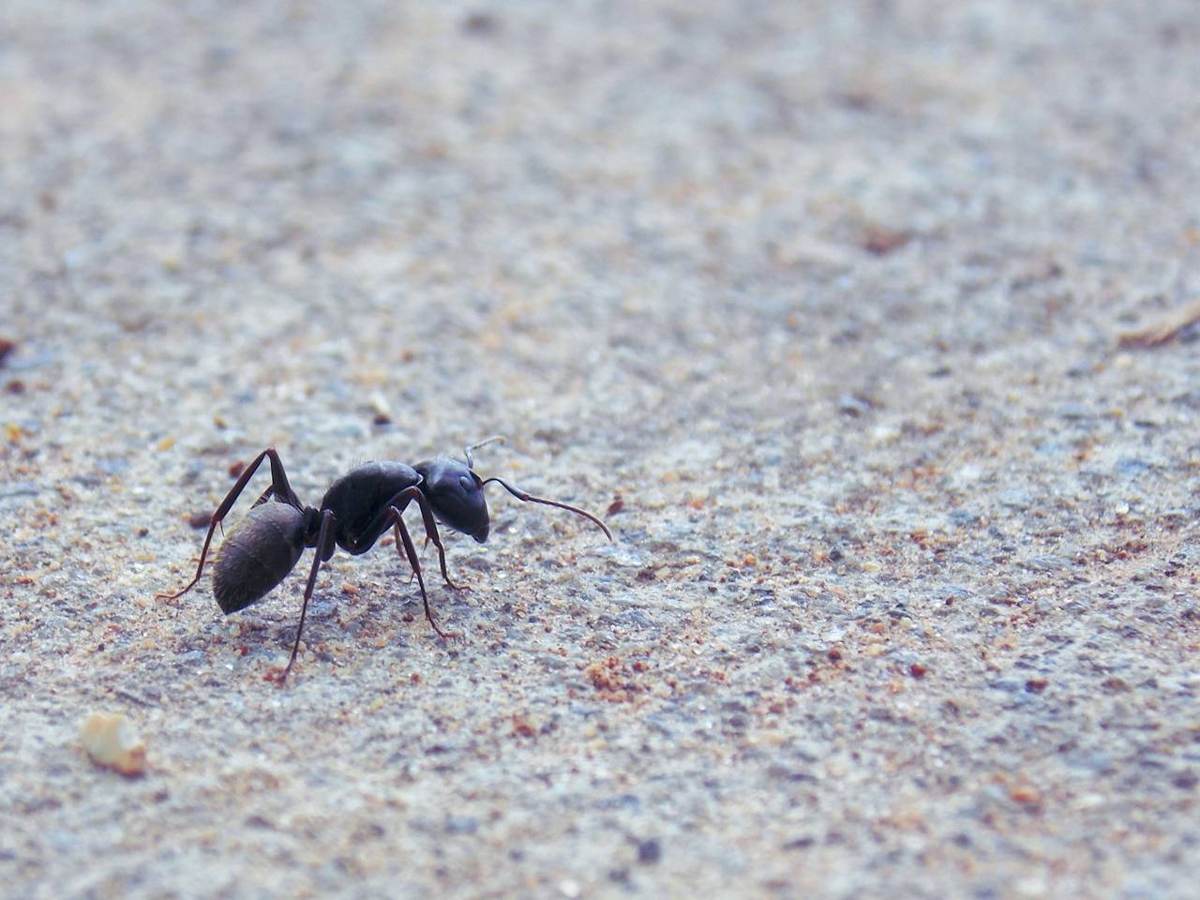
Next: Who holds the birds up? (children) →Far below your feet, under a stone or a crack in the path, there is a whole city. It has tunnels and rooms and nurseries. It has thousands of people. Only they are not people. They are ants.
Ants are tiny, but they are very good at working together. They have no boss telling them what to do. Each ant just helps. One carries a crumb. One cleans the tunnels. One looks after the eggs. Together they build something much bigger than any one of them.
Ants do not talk with words. They talk with smells. When an ant finds food, she leaves a smelly trail on the way home, so her sisters can follow it. When there is danger, she lets out a warning smell, and every ant nearby knows at once: hide.
Ants are strong, too. A tiny ant can carry something many times heavier than her own body. If you were that strong, you could lift a car above your head.
A very long time ago, says the Qur’an, a great king was marching his army across a valley. His name was Solomon (peace be upon him). He was wise, and God had taught him to understand the voices of creatures.
Down in the valley lived a colony of ants. One little ant felt the ground begin to shake. Tramp, tramp, tramp. The soldiers were coming.
“Into your homes, everyone,” she called. “Quickly. Or the king and his army might crush you without even knowing it.”
She was not angry with the king. She knew that big people do not always see small ones. She just wanted her friends to be safe.
Far above, King Solomon heard her. A whole army, and a king heard one tiny ant.
He smiled. He stopped his army. And then he did something kings do not always do. He said thank you to God. “My Lord,” he prayed, “help me to be grateful for all Your gifts, and help me to do good.”
The army waited. The ants hurried into their homes. And the valley was safe.
Jewish people read about an ant too, in the book of Proverbs in the Hebrew Bible. Lazy people are told: “Go to the ant… Consider her ways, and be wise.” The ant does not need anyone to tell her to work. She gathers food in summer so there is enough for later.
So next time you see an ant, crouch down and watch. Where is she going? What is she carrying? Is she following a trail you cannot see?
She is very small. But somebody once stopped a whole army to listen to her.
Scientists think there are about twenty quadrillion ants on Earth. That is twenty with fifteen zeros after it. So whenever you feel small, remember: the world is full of small things doing important work.
Wonder with us
Even an ant can be heard. Who listens to you, and who could you listen to?
Find some ants outside. Put a tiny crumb of biscuit a little way from them and wait. How long until one finds it? Do others follow the same path? Watch, but never squash or poke them. When you are done, leave the crumb for them.
Watch together
How ants find food and tell each other where it is, for young viewers.
Leaf-cutter ants working together, from BBC Earth.
For grown-ups
This story comes from the Qur’an, Surah an-Naml (The Ants), 27:18–19, and the book of Proverbs, 6:6–8 (JPS 1917). Solomon is honoured as a prophet in Islam and as a wise king in Judaism and Christianity. As on the whole site, we never show or voice a prophet: Solomon is only described by the narrator. The science is real: ants communicate mainly by scent (pheromones), and colonies organise themselves without any leader giving orders. A good question for the car or the dinner table: when have you felt too small to be noticed? For more, see the Solomon and the ant shared story on the main site.
Watch more: The ant’s view
7 films and talks, chosen for this page. They play here.
Ants Take on Giraffes | How Nature Works | BBC Earth Kids
BBC Earth Kids · 4 min
BBC Earth Kids watches tiny ants work together to defend their tree from giraffes.
Leafcutter ants work together to feed the colony
Earth Touch · 2 min
Leafcutter ants each do their own job so the whole colony can eat.
Where Are the Ants Carrying All Those Leaves? | Deep Look
Deep Look · 4 min
Deep Look follows leafcutter ants carrying leaves home to grow their food.
Honeypot Ants Turn Their Biggest Sisters into Jugs of Nectar | Deep Look
Deep Look · 5 min
Honeypot ants store nectar in their own bodies to feed the colony in hard times.
Fire Ants Build a Living Raft | A Perfect Planet | BBC Earth
BBC Earth · 3 min
Fire ants hold on to each other to make a raft that floats in a flood.
How Do Weaver Ants Build Their Nests? (ft. AntsCanada)
Animalogic · 7 min
Weaver ants team up to fold leaves and sew a nest together.
Can These Ants Survive the Scorching Desert Heat? | Narrated by David Attenborough | BBC Earth
BBC Earth · 4 min
Desert ants find their way home across scorching sand, narrated by David Attenborough.