In a minute
Torah means "teaching" or "instruction" (it is often translated "law", but that is too narrow). In its narrow sense it is the Five Books of Moses: Genesis, Exodus, Leviticus, Numbers and Deuteronomy. In its wider sense it is the whole of God's teaching to Israel. Jews believe the Torah was given by God to Moses at Mount Sinai, both written and oral: the text on the scroll, and the living explanation that goes with it, handed down from teacher to student and later written in the Mishnah and Talmud. Studying Torah is itself one of the highest forms of worship.
What it is and how it's lived
The written Torah and the Hebrew Bible
The Jewish Bible is called the Tanakh, a word made from the first letters of its three parts:
| Part | Hebrew | What it contains |
|---|---|---|
| T — Torah | תּוֹרָה | The Five Books of Moses: creation, the patriarchs, the exodus from Egypt, Sinai and the commandments, the journey to the promised land |
| N — Nevi'im (Prophets) | נְבִיאִים | Joshua, Judges, Samuel, Kings; Isaiah, Jeremiah, Ezekiel and the Twelve |
| K — Ketuvim (Writings) | כְּתוּבִים | Psalms, Proverbs, Job, the Song of Songs, Ruth, Lamentations, Ecclesiastes, Esther, Daniel, Ezra-Nehemiah, Chronicles |
These are the same books Christians call the Old Testament, in a different order; Jews call them the Hebrew Bible or Tanakh, because for Judaism there is no "new" testament that follows.
The scroll
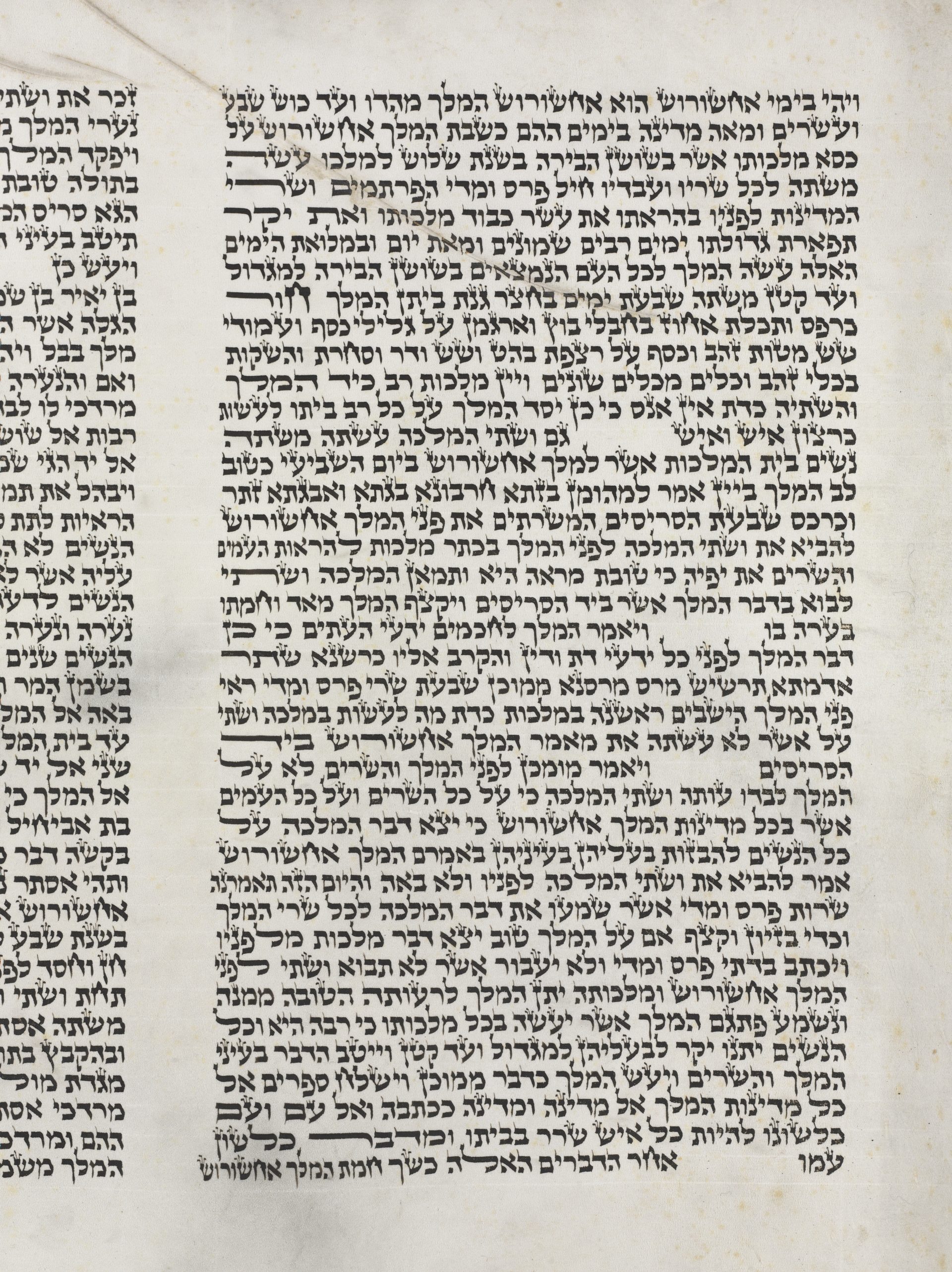
In every synagogue, the Torah is kept as a hand-written scroll (Sefer Torah) on parchment, copied letter by letter by a trained scribe (sofer). It takes about a year to write; a single mistake in a letter must be corrected before the scroll can be used. The scroll is kept in the ark (aron hakodesh) facing Jerusalem, dressed in a mantle and crowned with silver, and read with a pointer (yad, "hand") so that the parchment is not touched.
The Torah is read aloud in a yearly cycle, a portion (parashah) each Shabbat, with shorter readings on Monday and Thursday mornings, festivals and fast days. On the festival of Simchat Torah ("rejoicing in the Torah"), the last verses of Deuteronomy are read and the first verses of Genesis begin again at once, while the scrolls are carried round the synagogue in dancing. (Some communities follow an older three-year cycle.)
The oral Torah
Many commandments in the written Torah need explanation. It says "remember the sabbath day, to keep it holy" but does not say exactly what counts as work; it says to bind "these words" on the hand, but does not describe tefillin. Jews believe the explanations were given at Sinai too, and passed on by word of mouth:
Moses received the Torah from Sinai and handed it to Joshua, Joshua to the elders, the elders to the prophets, and the prophets to the men of the Great Assembly. (Paraphrased; Mishnah, Avot 1:1.)
After the destruction of the Second Temple in 70 CE, the oral teaching was written down to protect it:
- the Mishnah, edited by Rabbi Judah the Prince around 200 CE, in six "orders" covering agriculture, festivals, family, civil law, the Temple and purity;
- the Talmud, the record of centuries of discussion of the Mishnah: the Jerusalem Talmud (about 400 CE) and the larger Babylonian Talmud (about 500 CE);
- the Midrash, rabbinic interpretation and storytelling on the biblical text.
From these come halakhah ("the way to walk"), Jewish law, gathered in later codes such as Maimonides' Mishneh Torah (12th century) and the Shulchan Arukh (16th century), and still applied to new questions today.
A culture of argument
The Talmud preserves minority views alongside majority ones. When the schools of Hillel and Shammai disagreed for three years, a heavenly voice is said to have declared: these and these are the words of the living God, though the law follows Hillel, because his school was kind and humble and taught their opponents' views before their own. (Paraphrased; Babylonian Talmud, Eruvin 13b.) Jews call this machloket l'shem shamayim, "argument for the sake of heaven" (Mishnah, Avot 5:17; numbering varies by edition).
Its inner meaning
The Torah is described as a tree of life. In the synagogue, as the scroll is returned to the ark, the congregation sings words from Proverbs (about wisdom), which Jews apply to the Torah:
"She is a tree of life to them that lay hold upon her" (Proverbs 3:18, JPS 1917)
"Her ways are ways of pleasantness, And all her paths are peace." (Proverbs 3:17, JPS 1917)
Torah is meant to be close, not remote:
"For this commandment which I command thee this day, it is not too hard for thee, neither is it far off. It is not in heaven" (Deuteronomy 30:11–12, JPS 1917)
"But the word is very nigh unto thee, in thy mouth, and in thy heart, that thou mayest do it." (Deuteronomy 30:14, JPS 1917)
The rabbis taught that the study of Torah outweighs many other good deeds, because it leads to all of them (paraphrased; Mishnah, Peah 1:1; Babylonian Talmud, Kiddushin 40b). And: turn it and turn it, for everything is in it (paraphrased; Mishnah, Avot 5:22; numbering varies).
Key texts
"Moses commanded us a law, An inheritance of the congregation of Jacob." (Deuteronomy 33:4, JPS 1917)
Hebrew:
תּוֹרָה צִוָּה־לָנוּ מֹשֶׁה מוֹרָשָׁה קְהִלַּת יַעֲקֹב
(Torah tzivah lanu Moshe is often the first verse a Jewish child learns.)
"This book of the law shall not depart out of thy mouth, but thou shalt meditate therein day and night" (Joshua 1:8, JPS 1917)
"The law of the LORD is perfect, restoring the soul; the testimony of the LORD is sure, making wise the simple." (Psalm 19:8, JPS 1917)
"O how love I Thy law! It is my meditation all the day." (Psalm 119:97, JPS 1917)
Common misunderstandings, answered gently
- "Judaism is just the 'Old Testament'." Jews read the Hebrew Bible through the oral Torah: the Mishnah, Talmud and commentaries. A Jewish reading of a verse often differs from a Christian one, and Jews prefer "Hebrew Bible" or "Tanakh" to "Old Testament".
- "Torah means law, so Judaism is legalism." Torah means teaching. It includes stories, poetry, history and law, and Jews experience its commandments as a gift: the evening service thanks God for "the Torah and commandments" as signs of God's love.
- "The Talmud is a secret book." The Talmud is studied openly, in English and many other languages, and is published in full.
Across the movements
Orthodox Jews believe both the written and oral Torah were given by God at Sinai and that halakhah is binding. Masorti Jews hold that the Torah is divinely inspired, recorded and interpreted by people over time, and that halakhah is binding but develops. Reform and Liberal Jews regard the Torah as a sacred record of the Jewish people's encounter with God, and see Jewish law as guidance to be studied and chosen, not imposed. All read from the same scroll on Shabbat.
Reflection
The Talmud keeps the losing side of the argument. What might we learn by keeping the views we disagree with written beside our own?
In the other traditions
- Christianity: the Torah and the whole Hebrew Bible form the first part of the Christian Bible, read alongside the New Testament; Jesus said of the law and the prophets, "I didn’t come to destroy, but to fulfil." (Matthew 5:17, WEB)
- Islam: the Qur'an names the Torah (Tawrat) as a scripture revealed to Moses, "wherein is guidance and a light" (Qur'an 5:44, Pickthall), and belief in God's revealed books is one of the six articles of faith.
Watch
A Jewish telling
A Jewish telling
A Jewish telling