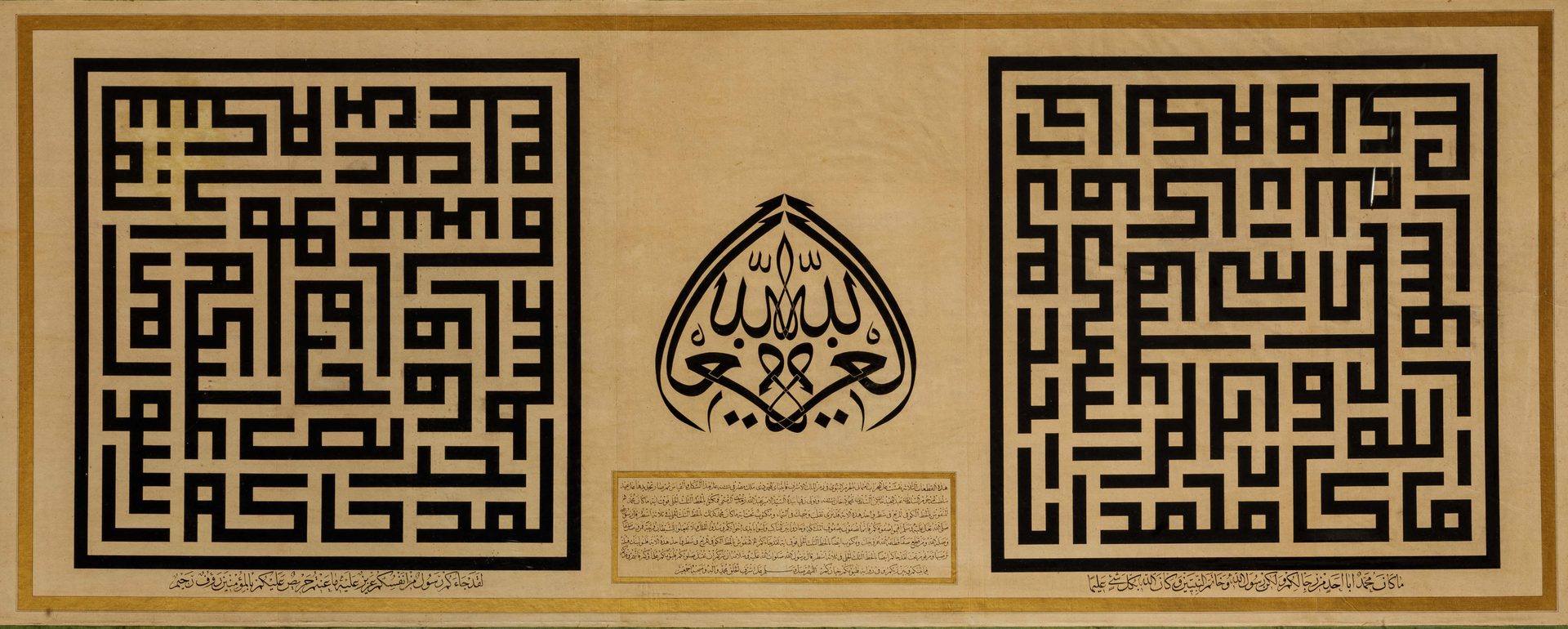
إِنْ شَاءَ اللّٰهُ
in shā' Allāh
'If God wills.' Said of anything planned for the future.
'See you tomorrow, inshallah.' Muslims say it about the bus, the exam, the wedding next spring. Arab Christians say it too. So, in their own words, do Christians in English, Latin and German, and Jews in Hebrew and Yiddish.
It is one of the most shared phrases on earth, and one of the most joked about. Underneath the jokes is something humble: the admission that we make plans, and we are not in charge of tomorrow.
In scripture
In the Hebrew Bible and Jewish tradition
“A man’s heart deviseth his way; But the LORD directeth his steps.”Proverbs 16:9, JPS 1917In Hebrew many Jews say im yirtzeh HaShem, 'if God wills', and b'ezrat HaShem, 'with God's help'.
In the New Testament and Christian tradition
“For you ought to say, “If the Lord wills, we will both live, and do this or that.”James 4:15, WEBIn the New Testament and Christian tradition
“I will return again to you if God wills.”Acts 18:21, WEBIn Latin, Deo volente; older British letters and chapel notices often wrote 'D.V.'.
In the Qur'an
وَلَا تَقُولَنَّ لِشَاْىْءٍ إِنِّى فَاعِلٌ ذَٰلِكَ غَدًا إِلَّآ أَن يَشَآءَ ٱللَّهُ
“And say not of anything: Lo! I shall do that tomorrow, Except if Allah will. And remember thy Lord when thou forgettest, and say: It may be that my Lord guideth me unto a nearer way of truth than this.”Qur'an 18:23-24, Pickthall (1930)In the Qur'an
“And when they came in before Joseph, he took his parents unto him, and said: Come into Egypt safe, if Allah will!”Qur'an 12:99, Pickthall (1930)How people use it
For any future event, large or small: a journey, a meeting, a baby's due date. It is good manners, and for many Muslims it is a direct response to the Qur'an's instruction.
As hope. 'Inshallah you will pass' is a prayer as well as a prediction.
In the Qur'an's own stories. When Joseph welcomed his family to Egypt after years apart, he said 'if God wills' about a homecoming that was already happening (12:99). The phrase is not only for doubtful plans; it can be a way of placing even a happy certainty in God's hands.
Across faiths. Ramez Atallah of the Bible Society of Egypt has said Arab Christians should say inshallah, linking it to James 4:15; some Arab Christians prefer in shā' al-Rabb, 'if the Lord wills'. Many Jews from Arab lands grew up with the Arabic phrase too.
What neighbours say. Jews say im yirtzeh HaShem, ‘if God wills’, and b’ezrat HaShem, ‘with God’s help’. Christians say ‘God willing’, or in Latin Deo volente, once written ‘D.V.’ after a date in chapel notices. Punjabis of every faith part with Rabb rakha, ‘God protect you’. Many Hindi-speaking Hindus say Bhagwan ne chaha to, ‘if God wishes it’. Non-religious people say ‘all being well’ or ‘fingers crossed’, the same humility in other words.
How it is misheard
The best-known joke is that inshallah means 'never', or 'don't hold your breath'. Like 'we'll see' in English, it can sometimes soften a polite no, and every culture has phrases like that.
But the joke can make a sincere promise sound like an excuse. When someone says inshallah, it is fairer to hear it as 'yes, God willing' unless they show you otherwise.
Say it
in-SHAA al-lah
Three beats: in, SHAA (long 'aa', as in 'father'), al-lah. Often run together as 'in-shal-lah'.
A moment to reflect
- How does it change a plan to add 'if God wills', or 'all being well'?
- Is there a phrase in your family that admits we are not fully in control?
- When does humility about the future become an excuse, and when is it wisdom?
Do it together
Look through old letters, parish magazines or chapel notice boards for 'D.V.' after a date. Ask older relatives whether they remember it. Then compare it with inshallah and im yirtzeh HaShem.
Pupils write one plan for next year, then the same sentence with 'if God wills', 'all being well' or 'hopefully'. Discuss how the feeling of the sentence changes.
Arrange a visit to a gurdwara for langar, or go to a church summer fête. Listen for the small phrases people use about tomorrow, and swap them over tea.
Go deeper
- Proverbs 16, ‘the LORD directeth his steps’ (Sefaria) · scripture
- James 4, ‘If the Lord wills’ (Bible Gateway, WEB) · scripture
Sources (4)
- Qur'an 18:23–24 and 12:99: Quran.com
- James 4:15; Acts 18:21 (WEB): Bible Gateway
- Proverbs 16:9 (JPS 1917): Sefaria
- Arab Christians and 'inshallah'; in shā' al-Rabb: Christianity Today, October 2020