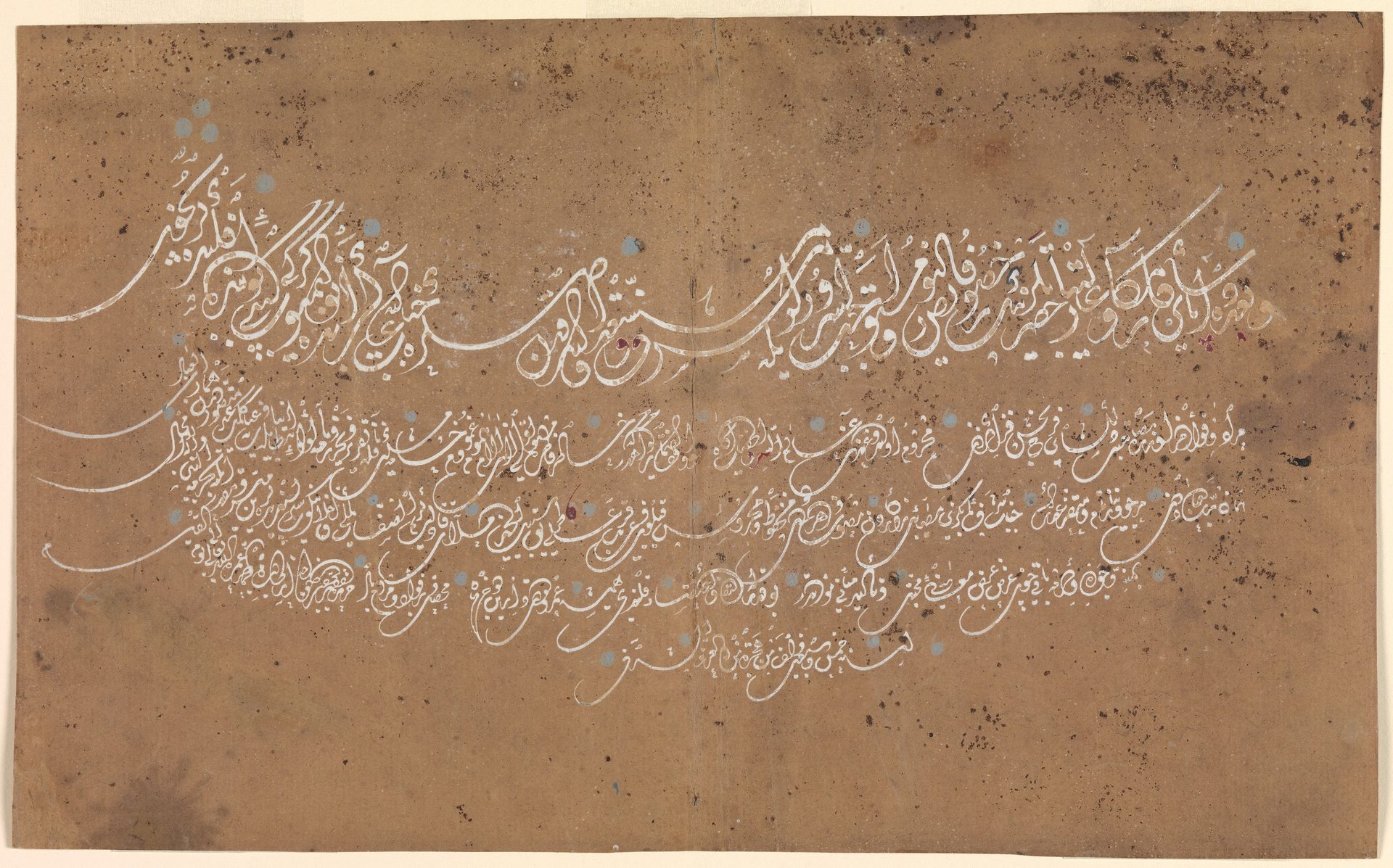
جَزَاكَ اللّٰهُ خَيْرًا
jazāk Allāhu khayran
'May God reward you with good.' A way of saying thank you that hands the repayment to God.
Someone carries your shopping to the door. You could say 'thanks'. Or you could say jazāk Allāhu khayran: 'may God reward you with good'. The idea is that no thank-you of ours could ever repay a real kindness, so we ask the One who can.
Ruth, the young widow in the Hebrew Bible, heard almost the same words from Boaz as she gleaned barley in his field. In Bavaria and Austria people still say Vergelt's Gott, 'may God repay it'.
In scripture
In the Hebrew Bible and Jewish tradition
“The LORD recompense thy work, and be thy reward complete from the LORD, the God of Israel, under whose wings thou art come to take refuge.”Ruth 2:12, JPS 1917After someone does a good deed, many Jews say yasher koach, 'may your strength increase'.
In the New Testament and Christian tradition
“so that your merciful deeds may be in secret, then your Father who sees in secret will reward you openly.”Matthew 6:4, WEB'God bless you' and the old German Vergelt's Gott carry the same hope.
In the Qur'an
هَلْ جَزَآءُ ٱلْإِحْسَٰنِ إِلَّا ٱلْإِحْسَٰنُ
“Is the reward of goodness aught save goodness?”Qur'an 55:60, Pickthall (1930)In the Qur'an
“(Saying): We feed you, for the sake of Allah only. We wish for no reward nor thanks from you.”Qur'an 76:9, Pickthall (1930)In the sayings of the Prophet (hadith)
“Whoever has a kindness done to him and says to the one who did it, 'jazāk Allāhu khayran', has praised him as fully as he can.”Jāmiʿ al-Tirmidhī 2035How people use it
As 'thank you', especially for a favour, a gift, help, advice or a good talk.
The usual reply is wa iyyāk, 'and you too', or wa antum fa-jazākumu Allāhu khayran, 'and may God reward you too'.
The ending changes with who you are thanking: jazāki Allāhu khayran to a woman, jazākum Allāhu khayran to a group.
Many people shorten it to 'JazakAllah', especially in text messages.
What neighbours say. Jews say yasher koach, ‘may your strength increase’, and tizku le-mitzvot, ‘may you merit more good deeds’. Christians say ‘God bless you’; in Welsh, Duw a’ch bendithio; in Bavaria and Austria, Vergelt’s Gott, ‘may God repay it’. Many Sikhs wish a helper chardi kala, ‘rising spirits’, the Sikh ideal of unshakeable optimism. Many Hindi-speaking Hindus say Bhagwan aapka bhala kare, ‘may God do you good’.
How it is misheard
Some Muslim teachers encourage people to keep the word khayran ('with good') rather than shortening the phrase, because jazāʾ on its own simply means 'recompense', good or bad. Most people who shorten it mean the full blessing.
There is also friendly debate about spelling in English: JazakAllah, Jazak Allah, Jazakallahu khair. None is wrong; it is a transliteration.
Say it
ja-ZAA-kal-laa-hu KHAY-ran
The 'kh' is the throat sound in Scottish 'loch'. To a woman: ja-ZAA-kil-laa-hu; to a group: ja-ZAA-kum-ul-laa-hu.
A moment to reflect
- Is there a kindness you have received that you could never really repay?
- What changes when we ask God, or life, to reward someone instead of trying to settle the debt ourselves?
- Do you find it easier to give thanks or to receive them?
Do it together
Make thank-you cards for local helpers: lollipop staff, bin crews, librarians, NHS staff. Write the thanks in English and in other languages people know, including jazāk Allāhu khayran and yasher koach.
For a week, each person does one kind thing a day without telling anyone, as Matthew 6:4 and Qur'an 76:9 suggest. Share stories only at the end, if you wish.
Mitzvah Day, started by the UK Jewish community, is a November day of social action open to every faith and none. Join a project together, then thank each other in as many languages as your group has.
Go deeper
- Ruth 2, Boaz blesses Ruth (Sefaria) · scripture
- Matthew 6 (Bible Gateway, WEB) · scripture
- Mitzvah Day · article
Sources (4)
- 'May God reward you with good' is the fullest praise: Jāmiʿ al-Tirmidhī 2035
- Qur'an 55:60; 76:9: Quran.com
- Ruth 2:12 (JPS 1917): Sefaria
- Matthew 6:4 (WEB): Bible Gateway