Object
A rabbi's
Arabic Torah
A thousand years ago, the greatest Jewish scholar of his age wrote “Allah” about 1,650 times.
The Word · A rabbi's Arabic Torah
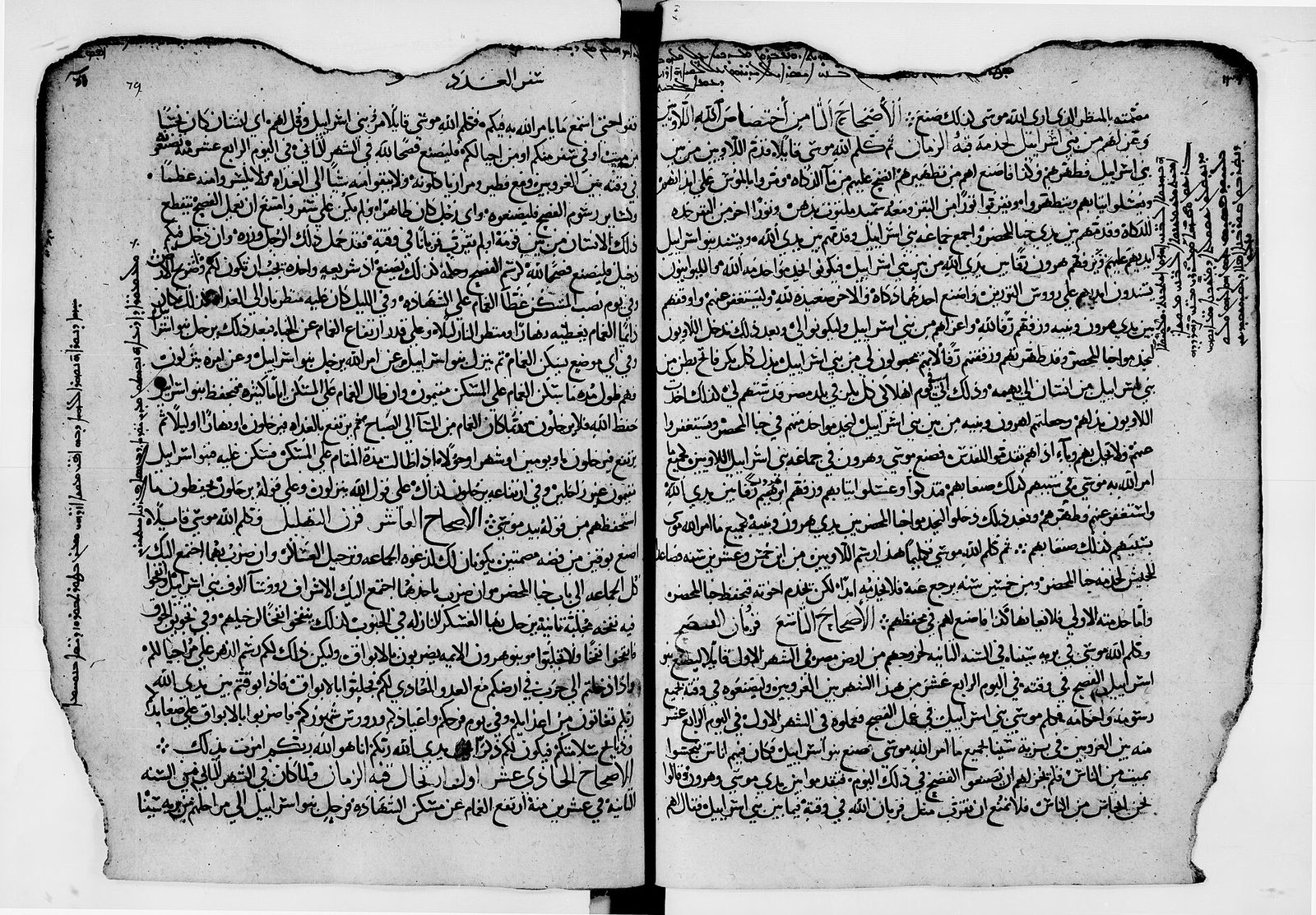
Next: Who is God to each of us? →Saadia Gaon (882–942) was born in Egypt and became head of the great Jewish academy of Sura in Babylonia. For Jews who spoke Arabic, which by then was most Jews in the Middle East, he translated the Torah into Arabic, written in Hebrew letters.
His translation, the Tafsīr, opens: awwal mā khalaqa Allāh al-samāwāt wa-l-arḍ, “At the first of what Allah created: the heavens and the earth” (Genesis 1:1).
His third commandment reads: “Do not swear by the name of Allah your Lord falsely.” For Saadia, Allah was simply the Arabic word for the God of Israel.
Sources: Saadia's Tafsīr, Derenbourg edition (Paris, 1893), on Sefaria; count by our own search of the text. English renderings for a Jewish reader to check.
The fuller story
A thousand years ago, the greatest Jewish scholar of his age translated the Torah into Arabic. Where the Hebrew says Elohim, he wrote Allāh: by our count of the printed text, about 1,650 times. For Saadia Gaon, Allah was simply the Arabic word for the God of Israel.
Who he was
Saadia ben Joseph was born in 882 in Dilāṣ, in the Fayyum, the green basin of Upper Egypt. As a young man he moved through the Jewish centres of the Middle East: Tiberias in the Galilee, Aleppo and finally Baghdad, then the capital of the Abbasid world. He was a prodigy. At about twenty he wrote a dictionary of biblical Hebrew. In 928 he was appointed gaon, head, of the great academy of Sura in Babylonia, the first scholar from outside Babylonia to hold the post.
He was a fighter as well as a scholar. He argued hard against the Karaites, Jews who rejected the rabbis' Oral Torah, and quarrelled so fiercely with the exilarch David ben Zakkai, the lay leader of Babylonian Jewry, that he was removed from office in about 932. The two were later reconciled. He died in 942.
Why Arabic?
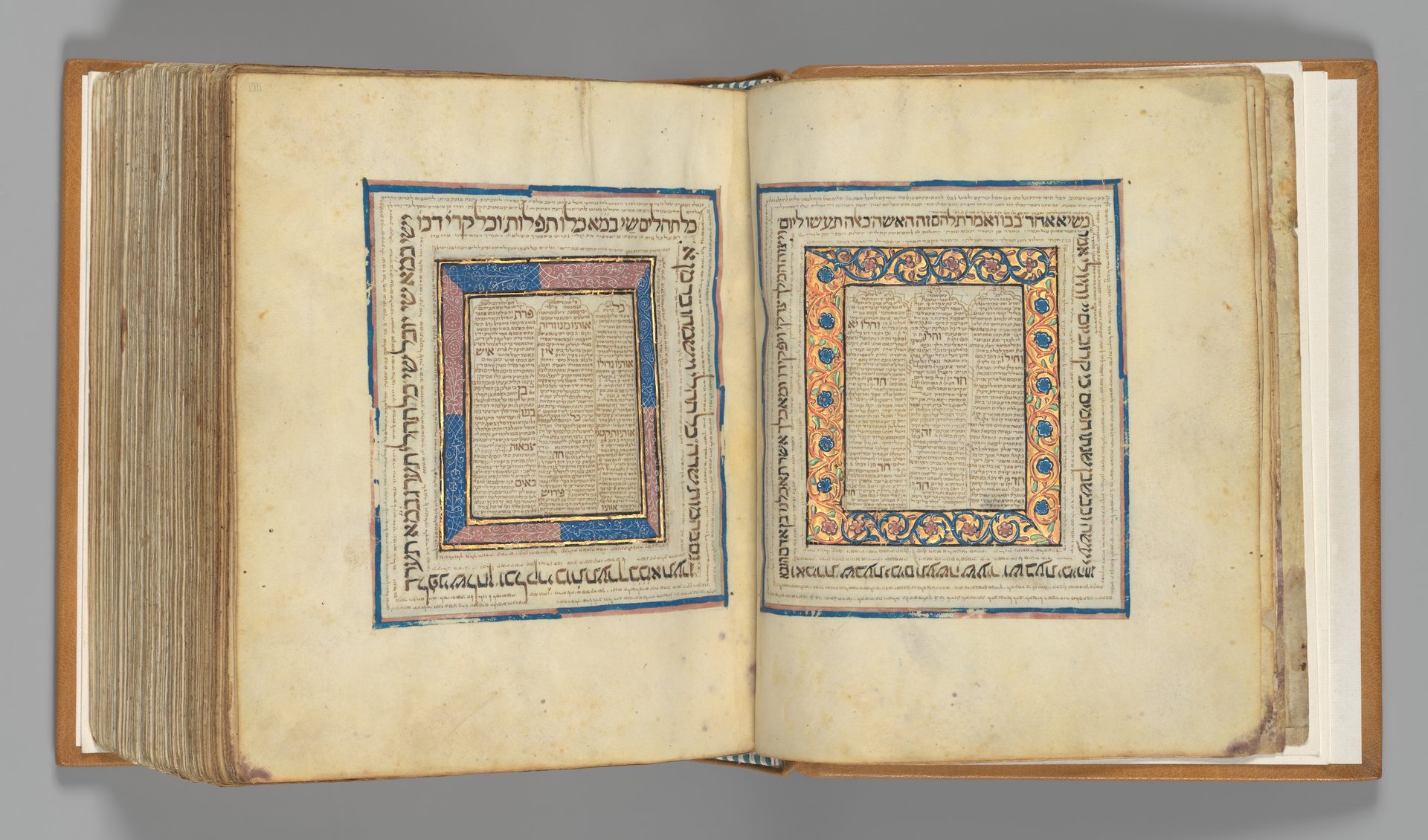
By Saadia's time Arabic had become the everyday language of Jews from Iraq to Spain. Many could follow Hebrew prayers but not the Hebrew Bible's poetry and law. Saadia gave them the Torah in the language they lived in, usually written in Hebrew letters: what scholars call Judeo-Arabic.
He called his work a Tafsīr, “explanation”, not a word-for-word translation. Where the Hebrew speaks of God in human terms, such as God “smelling” an offering, he rendered the sense rather than the picture, so that readers would not imagine God with a body. His opening line reads:
“At the first of what Allah created: the heavens and the earth.” Saadia's Tafsīr, Genesis 1:1
And the Shema, Judaism's great declaration of faith, becomes:
“Know, O Israel: Allah is our Lord, Allah the One.” Saadia's Tafsīr, Deuteronomy 6:4
His third commandment reads: “Do not swear by the name of Allah your Lord falsely.”
His other great book
In 933 Saadia wrote The Book of Beliefs and Opinions, the first great work of Jewish philosophy in the Middle Ages. In it he argued that the world is finite, made of parts and always changing, so it must have had a beginning and a Maker. Muslim theologians of the kalām were making similar arguments in the same city. His work is a reminder that Jews, Christians and Muslims in Baghdad were thinking about the same God, in the same language, at the same time.
Why it matters
- It shows that “Allah” was a Jewish word too, used for the God of Israel by the most respected rabbi of his day.
- His Tafsīr lasted. Yemenite Jews copied it into nearly all their handwritten Bibles, and Yemenite editions still print it beside the Hebrew.
- It travelled. The historian Ronny Vollandt has traced copies and adaptations among Jews, Samaritans, Christians and Muslims.
What scholars debate
- Which letters? The twelfth-century scholar Abraham ibn Ezra said Saadia wrote “in the language of Ishmael and in their script”, that is, Arabic letters. Most surviving early copies, including fragments from the Cairo Genizah, are in Hebrew letters. Scholars still discuss what his first copies looked like.
- Who was it for? Some have suggested he hoped Muslim readers would see it. David Freidenreich argues that it was written for Jews: Saadia borrowed Islamic words where they helped, such as calling Moses rasūl Allāh, “messenger of God”, but the work stays firmly Jewish.
- How free was he? Ibn Ezra criticised some of his identifications of places and creatures. Others admire exactly that freedom as the work of a teacher, not a dictionary.
Reflect
Saadia wrote the holiest words of his faith in the language of his neighbours. What would it mean for you to hear your own prayers, or your own deepest convictions, in someone else's language?
- Saadia Gaon, Tafsīr, ed. J. Derenbourg, Œuvres complètes de R. Saadia ben Iosef al-Fayyoûmî, vol. 1 (Paris, 1893); text on Sefaria as “Tafsir Rasag”: https://www.sefaria.org/Tafsir_Rasag. Count of “Allah” by our own search; English renderings for a Jewish reader to check.
- “R. Saadia Gaon: Intellectual Profile”, AlHaTorah.org: https://alhatorah.org/Commentators:R._Saadia_Gaon.
- David M. Freidenreich, “The Use of Islamic Sources in Saadiah Gaon's Tafsīr of the Torah”, Jewish Quarterly Review 93 (2003), pp. 353–395.
- Ronny Vollandt, “Saadiah Gaon and the Transmission of his Tafsīr”, manuscript cultures 24 (2024), pp. 141–193: https://journals.sub.uni-hamburg.de/hup4/mc/article/view/7.
- “Saadia Gaon”, Wikipedia (Yemenite codices; Book of Beliefs and Opinions, 933): https://en.wikipedia.org/wiki/Saadia_Gaon (read 8 Nov 2026).
Watch more: A rabbi's Arabic Torah
6 films and talks, chosen for this page. They play here.
Philosopher, Outsider, Rabbi: The Many Lives of Baghdad's Saadia Gaon
myjewishlearning · 64 min
Jewish, Muslim and Christian Arabic: Dr Esther-Miriam Wagner
WoolfInstitute · 8 min
Woolf Institute: Jewish, Muslim and Christian Arabic, the Judaeo-Arabic Saadia wrote in.
Cairo Geniza: Crumpled Papers, Revolutionary Prayers
Hadar · 49 min
WELCOME TO OUR EXHIBITION: Art history from below - the imagery of the Cairo Genizah
WoolfInstitute · 3 min
Woolf Institute: the imagery of the Cairo Genizah.
Podcast: Arabic Music in Middle Eastern Jewish Worship
WoolfInstitute · 15 min
Types of Jews: Ashkenazi, Sephardi, Mizrahi and More
myjewishlearning · 2 min
- More films and talks on F-ILMWatch free