Voices of scripture · Torah and prayer
Yossele
Rosenblatt
Cantor Yossele Rosenblatt (1882–1933), whom audiences called “the Jewish Caruso”. His voice, on records from 1913.
Snapshot
Yossele Rosenblatt was born in 1882 in Bila Tserkva, then in the Russian Empire and now in Ukraine, into a line of cantors. He sang in Vienna at 17, served congregations in Munkács, Pressburg and Hamburg, and in 1912 came to Ohab Zedek in Harlem, New York.
Audiences called him “the Jewish Caruso”. He sang in concert halls across America and appeared as himself, singing, in The Jazz Singer (1927), yet turned down the opera house on principle, keeping his voice for prayer. He died in Jerusalem in 1933, aged 51. His falsetto and the speed and precision of his ornaments are still the standard cantors measure themselves against.
Listen
Four recordings, 1913 to 1920
These recordings are in the public domain in the UK and the US, so they are hosted here. Courtesy of the Library of Congress National Jukebox and the University of California, Santa Barbara.
Library of Congress items: Kol Nidre, El Male Rachamim, VeLirushalayim, Achenu kol beth Israel.
The cantillation tradition
The Torah is never simply read aloud. It is chanted.
Above and below the Hebrew letters of every verse sit small signs, the taʿamei ha-mikra (“the meanings of the reading”), known in Yiddish and English as trope. They do three jobs at once: they mark the stressed syllable, they show how the verse divides, like punctuation, and they carry a short melodic motif.
The same marks are sung to different melodies depending on what is read: one for the Torah, another for the Haftarah from the Prophets, others for the Five Scrolls (Esther at Purim, Lamentations on the Ninth of Av) and special melodies for the High Holy Days. Each community keeps its own melodies, handed down by ear: Ashkenazi, Sephardi and Yemenite.
In the synagogue the baʿal koreh, “master of the reading”, chants from a hand-written scroll that has no vowels and no trope marks, so the reader has learned them by heart. A pointer, the yad, keeps the place. The ḥazzan, the cantor, leads the sung prayers. Their art reached a golden age in the early twentieth century, just as the gramophone arrived to record it.

Living voices
The reading, and the prayer
The Torah reader
A Yemenite reading
Shoham Simchi, a reader preserving his community's melodies, chants in the Yemenite tradition, which keeps a very old pattern of the trope. From his own channel, Your Voice in Zion.
Two more readings
The cantor
Cantor Azi Schwartz
Cantor of Park Avenue Synagogue, New York, carrying the art of ḥazzanut today. From his official channel.
Two more
Hear the difference: prayer as song, then and now
Rosenblatt's Kol Nidre, recorded in 1913, beside a cantor of today on Yom Kippur.
Still to come: one verse in Ashkenazi, Sephardi and Yemenite melodies side by side, from an archive that holds the rights.
Sources
- Wikipedia, “Hebrew cantillation”
- Wikipedia, “Yossele Rosenblatt”
- Library of Congress, National Jukebox (recordings and rights statement)
- UCSB, Discography of American Historical Recordings: Rosenblatt
- Films: the official channels of Shoham Simchi (@bobibobibobi7) and Cantor Azi Schwartz (@cantorazischwartz).
Picture credits
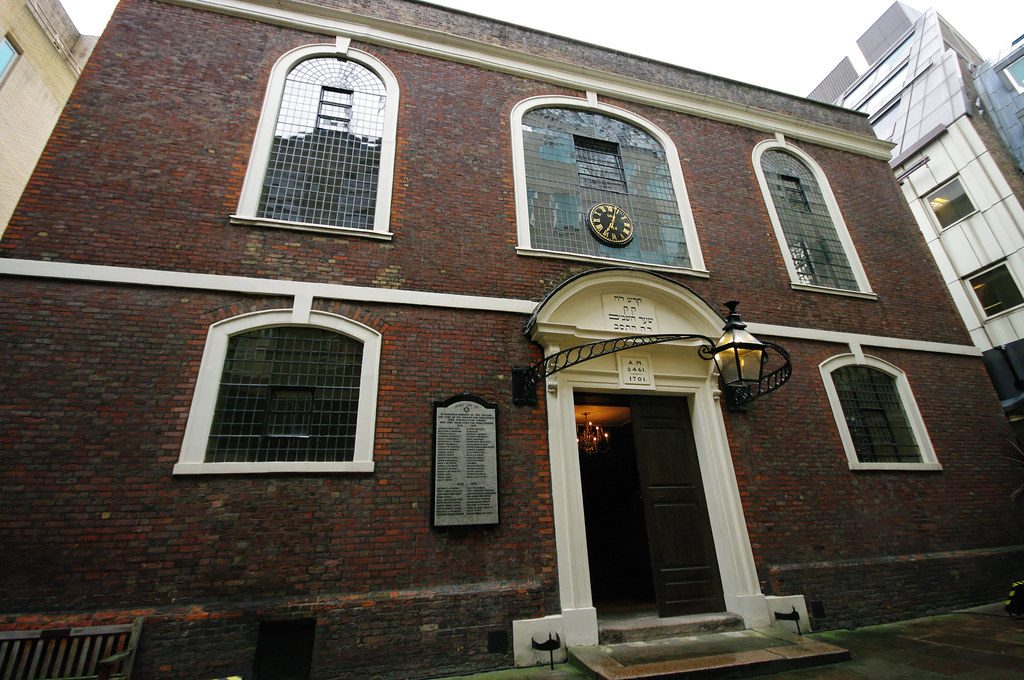
- Bevis Marks Synagogue - London, England, Emmanuel Dyan, CC BY 2.0
- Gramophone, pasukaru76, CC0 1.0
Watch more: Yossele Rosenblatt
8 films and talks, chosen for this page. They play here.
Amar Rabbi Elazar
Yossele Rosenblatt - Topic · 5 min
Yossele Rosenblatt sings "Amar Rabbi Elazar".
Cantor Netanel Hershtik - Mimkomcha (Yossele Rosenblatt)
Hampton Synagogue · 7 min
The Hazanim (Cantors) I Admire: What it Takes to Be a Hazan
Yiddish Book Center · 4 min
The Cantorial “Golden Age” in America
YIVO Institute for Jewish Research · 72 min
Ani Ma'amin (I Believe) - Cantor Yitzchak Meir Helfgot
Jewish Learning Institute · 3 min
A Chazan Sings Kaddish for the High Holiday
Chabad.org · 7 min
What Is a Cantor?
myjewishlearning · 2 min
K'vakoras
Cantor Yossele Rosenblatt - Topic · 4 min
Yossele Rosenblatt sings "K'vakoras", from his recordings.
- More films and talks on F-ILMWatch free