Jewish families around the world reach a moment children wait for at the Passover meal each spring. The leader reads out the plagues of Egypt one by one: blood, frogs, lice, wild beasts, and on to ten. At each name, everyone dips a finger or a spoon into their cup and lets a drop fall onto the plate. Ten plagues, ten drops. It is noisy and a little gruesome, and children love it.
But ask why the drops are taken out of a cup of celebration, and the answer is quieter. A cup of joy is made less full, the explanation goes, because people suffered, even people who were enemies. That is a good way into this story. It is full of frogs and locusts and a red river, but in all three traditions it is not really a story about special effects. It is about a powerful man offered one chance after another, and what he did with them.
“So We sent against them the flood and the locusts and the vermin and the frogs and the blood - a succession of clear signs. But they were arrogant and became a guilty folk. And when the terror fell on them they cried: O Moses! Pray for us unto thy Lord, because He hath a covenant with thee. If thou removest the terror from us we verily will trust thee and will let the Children of Israel go with thee.”
Qur'an 7:133-135 · Pickthall (1930)
The passage comes in Surah al-Aʿrāf, in the long story of Moses (peace be upon him) and Pharaoh. Just before it, God first sends 'And we straitened Pharaoh's folk with famine and dearth of fruits, that peradventure they might heed.' (7:130, Pickthall). The signs are called mufaṣṣalāt, which means set apart, coming one by one, and commentators say this left time between them to think. Some words are hard to pin down. Al-Rāghib's medieval dictionary of the Qur'an and Lane's nineteenth-century Arabic-English lexicon both discuss qummal. They say it may mean lice, small flies or a kind of tick, just as the Hebrew kinim in Exodus is read as lice or gnats. And ṭūfān can mean a flood or an overwhelming storm. Elsewhere the Qur'an says Moses was given 'And verily We gave unto Moses nine tokens, clear proofs (of Allah's Sovereignty). Do but ask the Children of Israel how he came unto them, then Pharaoh said unto him: Lo! I deem thee one bewitched, O Moses.' (17:101, Pickthall).
What historians and scientists say
First, honesty about history. No ancient Egyptian record mentions plagues like these or a mass escape of Hebrew slaves. Most historians and archaeologists today think the Exodus did not happen in the way the Bible describes it. Many think, though, that a real memory sits somewhere behind it, perhaps of a smaller group who came out of Egypt. Some scholars think the plague chapters were written much later as a carefully built story. Believing Jews, Christians and Muslims read it as something that truly happened. Neither history nor science can settle whether God sent these signs; what they can do is describe the creatures and the river in the story.
Several people have tried to explain the plagues as a natural chain of events. The best known is the Danish scholar Greta Hort, writing in 1957. She suggested that an unusually high Nile flood carried red earth and microscopic algae, turning the river red and killing the fish. Frogs fled the fouled water and then died on land. Insects bred in the rotting mess, and disease spread to cattle and people. Others have pointed to a volcanic eruption for the plague of darkness. Many biblical scholars are not convinced. They say these theories need a long string of coincidences and pick the parts of the text that fit. They also miss the story's own point: the plagues come and stop at Moses' word, and they come in a deliberate pattern.
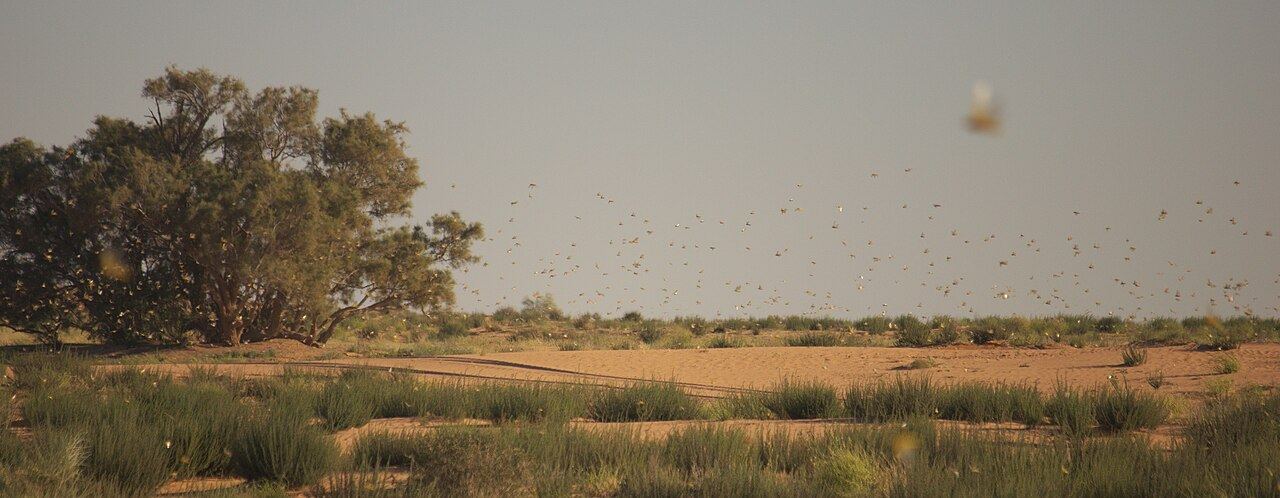
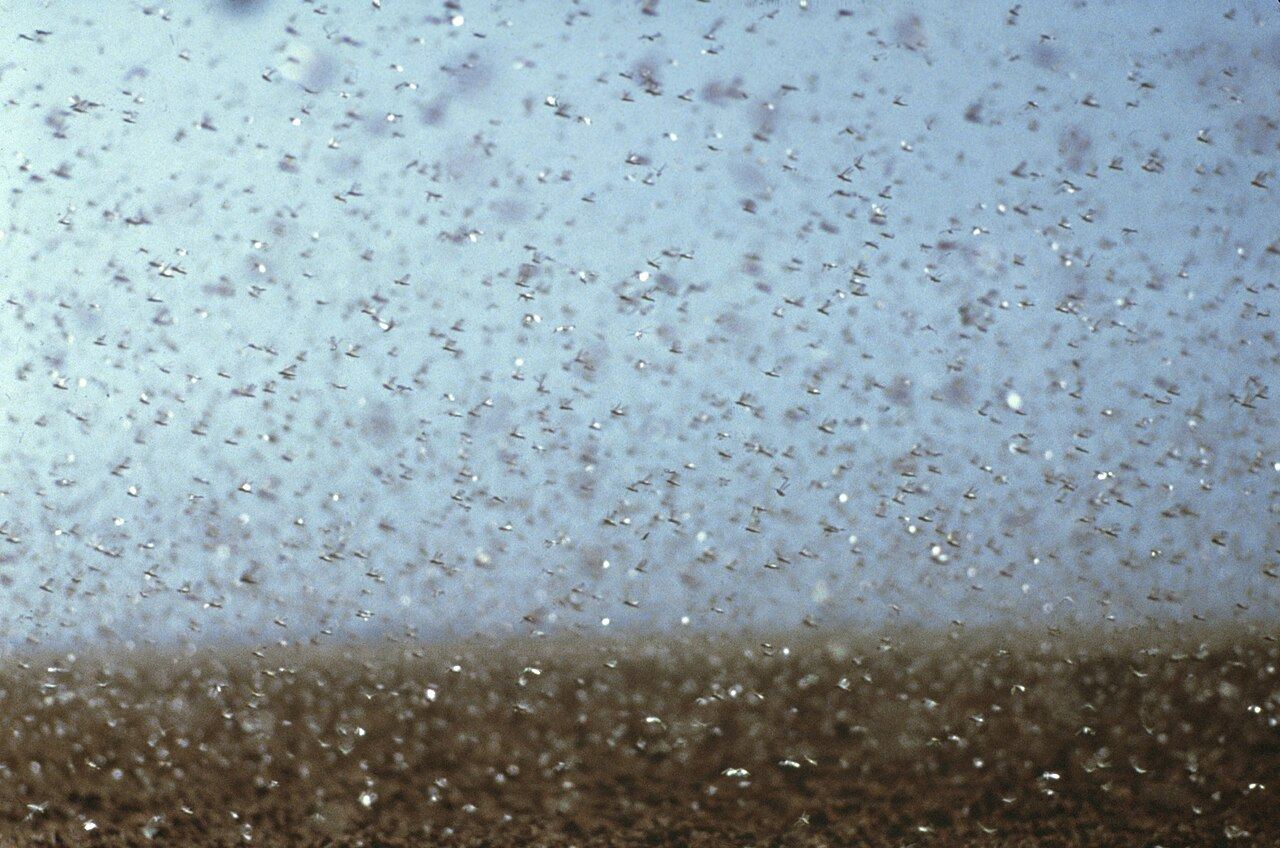
The animals themselves are real enough. The desert locust is a grasshopper that changes when crowded. Scientists found what happens when young locusts are packed together and keep bumping into each other. A rise in the brain chemical serotonin switches them from shy loners into a swarming form that seeks out others (Anstey and colleagues, Science, 2009). The UN Food and Agriculture Organization says a single square kilometre of swarm can hold up to 80 million adults. In one day they can eat as much food as 35,000 people. FAO teams spent 2019 to 2021 fighting huge swarms across East Africa and Yemen.
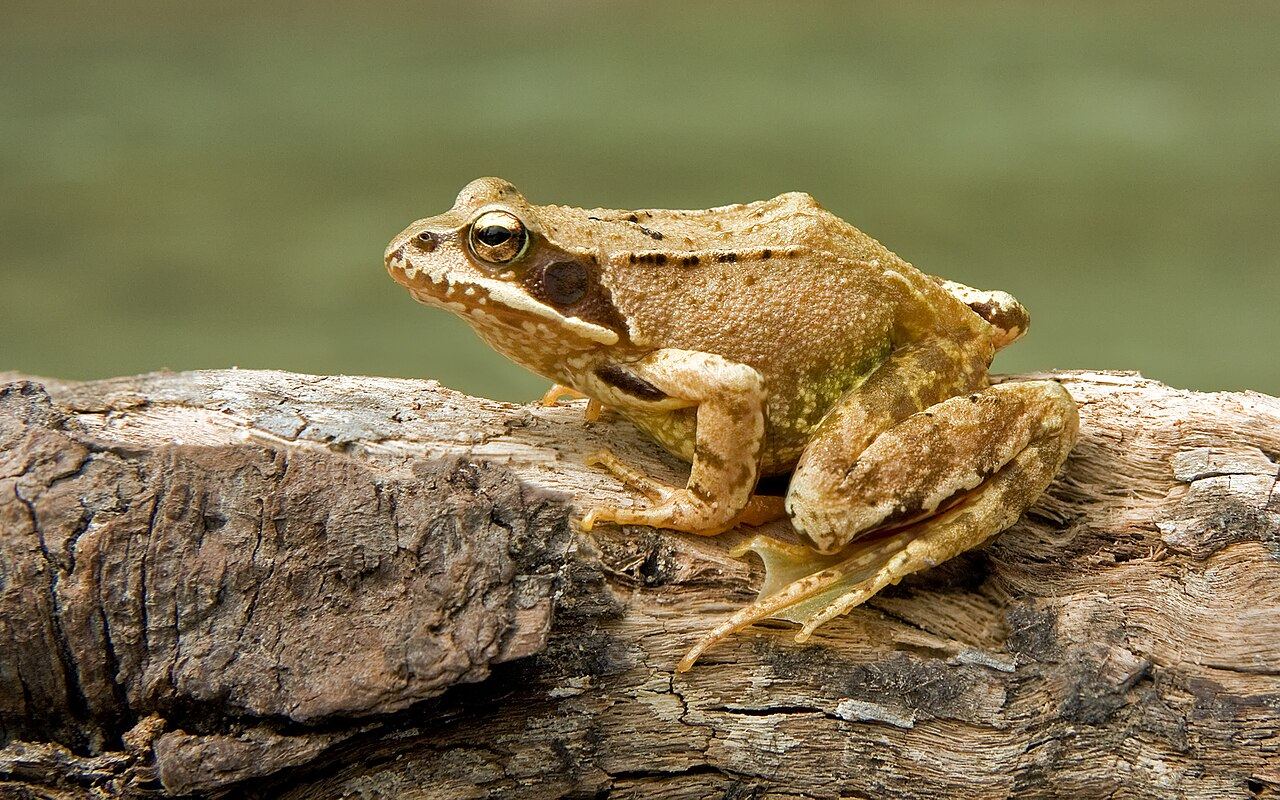
Frogs, today, are the ones in trouble. The second global survey of amphibians found that 40.7 per cent of species are threatened with extinction, more than mammals, birds or reptiles. The main causes are habitat loss, disease and climate change (Luedtke and colleagues, Nature, 2023). As for 'lice or gnats', lice are among our oldest companions. By comparing their genes, scientists estimate that clothing lice split from head lice at least 83,000 and possibly 170,000 years ago. That gives a clue to when people began wearing clothes (Toups and colleagues, Molecular Biology and Evolution, 2011).
So science can explain how a locust swarm forms, why a river can turn red, and why frog numbers rise and fall. What it cannot tell you is whether a swarm is a message. That is the question the story asks, and each tradition answers it in its own words.
What each faith says
Judaism
“And Pharaoh sent, and called for Moses and Aaron, and said unto them: 'I have sinned this time; the LORD is righteous, and I and my people are wicked. Entreat the LORD, and let there be enough of these mighty thunderings and hail; and I will let you go, and ye shall stay no longer.'”
Exodus 9:27-28 · JPS 1917
The plagues fill Exodus 7 to 12, and they have a shape. They come in sets: each time Moses and his brother Aaron warn Pharaoh, and each time Pharaoh's heart is hardened. After the third, even Pharaoh's own magicians give up and say, 'This is the finger of God' (Exodus 8:15). After the hail, Pharaoh admits, 'I have sinned this time,' and begs Moses to pray, then changes his mind once the storm stops. The Torah says at first that Pharaoh hardened his own heart, and later that God hardened it. Jewish teachers have discussed this for centuries. One common answer is found in the Midrash, the rabbis' collected interpretations of scripture, and in Maimonides. It is that a person who refuses again and again can lose the freedom to turn back.
The story is retold every year at Passover, the festival of freedom. It remembers the night of the tenth plague, when the Israelites marked their doors and death 'passed over' them (Exodus 12:13). The Talmud adds a famous scene at the Red Sea. The angels want to sing as the Egyptians drown, and God stops them, saying that the work of His hands is drowning (Sanhedrin 39b). That is part of why the drops are spilled from the cup. The seder remembers the women of the story too. There are the midwives Shiphrah and Puah, who refused Pharaoh's order to kill the baby boys (Exodus 1:17). And there is Miriam, whose cup of water many families, especially in Reform and Liberal communities, now set on the table beside Elijah's cup of wine.
Christianity
“They sang the song of Moses, the servant of God, and the song of the Lamb, saying, 'Great and marvellous are your works, Lord God, the Almighty! Righteous and true are your ways, you King of the nations.'”
Revelation 15:3 · WEB
Christians read Exodus as their own scripture, and the Passover is at the heart of how they understand Jesus. The Gospels place his last meal with his disciples at Passover time, and Paul writes, 'Christ, our Passover, has been sacrificed in our place' (1 Corinthians 5:7). When Jesus heals people, he says he does it 'by the finger of God' (Luke 11:20), the same phrase Pharaoh's magicians used. In his letter to the Romans, Paul quotes God's words to Pharaoh to say that God's power and name are made known 'in all the earth' (Romans 9:17). Every Easter Vigil, Catholic and Anglican churches read the crossing of the Red Sea (Exodus 14). The ancient Exsultet hymn sings of the night when Israel was led out of slavery. Enslaved Africans in America sang the same story as their own in the spiritual Go Down, Moses, with its refrain 'let my people go'.
The Book of Revelation, at the end of the Bible, echoes the plagues of Egypt with plagues of its own: water turned to blood, sores, darkness, hail. But the scene before them is a song. Those who have come through sing 'the song of Moses, the servant of God, and the song of the Lamb', praising God's ways as just and true. For Christians the story of Egypt is a picture of rescue: from slavery, from sin and from death.
Islam
“And speak unto him a gentle word, that peradventure he may heed or fear.”
Qur'an 20:44 · Pickthall (1930)
Moses is the prophet named most often in the Qur'an, and his story with Pharaoh is told many times, each time from a different angle. In Surah al-Aʿrāf the order matters. First come years of drought, 'And we straitened Pharaoh's folk with famine and dearth of fruits, that peradventure they might heed.' (7:130, Pickthall). Then the five signs, separate and spaced out. Each time, Pharaoh's people beg Moses to pray, and each time the punishment is lifted, 'for a set time'. Each time, they break their word. Surah al-Zukhruf tells the same pattern: 'But when We eased them of the torment, behold! they broke their word.' (43:50, Pickthall).
Before any of this, God tells Moses and his brother Aaron how to speak to the tyrant who was killing Israelite children. They are to speak gently. 'And speak unto him a gentle word, that peradventure he may heed or fear.' (20:44, Pickthall). Muslims see in this story the Name al-Ḥalīm, the Forbearing, who does not rush to punish: the signs are warnings, and every one was lifted when someone asked. The Qur'an's lesson is not 'look how terrible the plagues were' but 'look how many doors were left open'.
Same and different
All three traditions tell the story as one of warning, freedom and God's power over nature. Each refuses to make it a story of gloating: the spilled drops at the seder, the song of rescue in Revelation, the gentle words commanded in the Qur'an. They tell it differently. The Torah has ten plagues, ending with the death of Egypt's firstborn and the Passover night. The Qur'an names five in 7:133, speaks of nine signs in all, and does not describe a tenth plague of the firstborn. The Torah says God hardened Pharaoh's heart, which Jews and Christians have long discussed; the Qur'an puts the weight on Pharaoh's people's arrogance and their promises broken again and again. Christians read the whole story through Jesus and the Passover.
A moment to reflect
- Have you ever promised something in a hard moment and found it harder to keep once things got better?
- Is a warning a kind of kindness?
- Why might people take something out of a celebration when they remember those who suffered?
- What helps a person keep a promise they made in a hard moment?
Watch
A Yale Bible Study session on the plagues in Exodus, as text and story.
Professor Christine Hayes's Yale lecture on Exodus, including how historians read it.
TED-Ed on how an ordinary grasshopper turns into a plague.
Deep Look films locusts up close as they change and swarm.
The FAO on the desert locust crisis of 2019 to 2021.
Do it together
Invite a Jewish neighbour or synagogue to explain the ten drops at the Passover seder. Then ask each person present: when have you felt that your own good news was tinged with someone else's loss?
Print Exodus 9:27-35 and Qur'an 7:130-136 next to each other. In small mixed groups, underline every promise made and every promise broken. Talk about what is the same and what is different.
Frogs and toads need help today. Build a small wildlife pond in a school or community garden, or join a local spring 'toad patrol' that helps toads cross roads safely. Count what visits over a season.
Learn the spiritual Go Down, Moses and the story behind it: enslaved Africans in America who sang Exodus as their own hope of freedom. Then talk about who in the world, or near you, still needs to hear 'let my people go'.
Go deeper
- Qur'an 7:130-136 with translations · scripture
- Exodus 7 to 12 (JPS 1917) on Sefaria · scripture
- Revelation 15 (WEB) on Bible Gateway · scripture
- Sanhedrin 39b on Sefaria · scripture
- FAO Locust Watch · article
- Plagues of Egypt: historicity and scholarship (encyclopaedia) · article
In pictures
Try this · KS2 · 1 hour · Geography
A frog pond in a bowl
You need: a washing-up bowl or old sink, gravel and some large stones, rainwater (not tap water if possible), a pond plant or two
- Choose a shady corner of a garden or school ground and dig the bowl in so its rim is level with the ground.
- Put gravel in the bottom and a pile of stones so creatures can climb out.
- Fill with rainwater and add a plant.
- Check it each week and note who visits.
Safety: Children must be supervised near any water; cover or fence the pond if very young children are about.
Frogs once filled Pharaoh's houses; today they are the ones in danger, and anyone can give them a home.
Check yourself
Three quick questions. No score, nothing saved.
1. At the Passover meal, what happens as each plague is named?
2. Why is the cup of joy made less full?
3. What do historians say about Egyptian records of the plagues?
Sources (8)
- No consensus that the Exodus happened as described; many scholars see a historical core; some read the plagues as a late literary composition; scholars criticise natural-chain theories for needing coincidences and selective reading: Wikipedia, Plagues of Egypt (historicity section, citing Faust, Van Seters, Miller, Tigay and others), accessed 8 Nov 2026
- Greta Hort's 1957 natural explanation of the plagues: Hort, G., 'The Plagues of Egypt', Zeitschrift für die alttestamentliche Wissenschaft 69, pp. 84-103, 1957
- Serotonin triggers the switch to swarming in desert locusts: Anstey, Rogers, Ott et al., Science 323, 2009
- One square kilometre of swarm holds up to 80 million adults, eating as much in a day as 35,000 people: FAO Locust Watch
- FAO response to the 2019-2021 desert locust crisis in East Africa and Yemen: FAO video, 'Desert Locust: everything you need to know about FAO's response to the 2019-2021 crisis'
- 40.7 per cent of amphibian species threatened: Luedtke et al., Nature, 2023
- Clothing lice diverged from head lice at least 83,000 and possibly 170,000 years ago: Toups et al., Molecular Biology and Evolution, 2011
- qummal: lice, small flies or ticks; jarād; Hebrew kinim gnats or lice: al-Rāghib, Mufradāt; Lane, Arabic-English Lexicon