Picture a clear night in ancient Mesopotamia. No streetlights, no screens. A young man stands on a rooftop and watches one bright star climb above the horizon. It is beautiful. It is the most powerful-looking thing he can see. Then, slowly, it sinks and disappears.
The Qur'an tells this story about Abraham (peace be upon him). We never show his face; the camera is his eyes. And what he sees is something every one of us can see tonight: everything in the sky, however bright, goes down.
“When the night covered him, he saw a star. He said, “This is my Lord.” But when it set, he said, “I do not love things that set.” Then when he saw the moon rising, he said, “This is my Lord.” But when it set, he said, “If my Lord does not guide me, I will surely be among those who go astray.” Then when he saw the sun rising, he said, “This is my Lord; this is greater.” But when it set, he said, “And when it set he exclaimed: O my people! Lo! I am free from all that ye associate (with Him). Lo! I have turned my face toward Him Who created the heavens and the earth, as one by nature upright, and I am not of the idolaters.”
Qur'an 6:75-79 · Pickthall (1930)
The passage begins: “Thus did We show Abraham the kingdom of the heavens and the earth that he might be of those possessing certainty.” (6:75, Pickthall). Abraham's people worshipped idols and heavenly bodies. Commentators disagree on whether he was genuinely searching or leading his people step by step to see the problem for themselves; Ibn Kathīr, the fourteenth-century commentator, favours the second. Either way, the argument is the same: a god cannot be something that disappears.
What science shows
Everything in the sky rises and sets for one reason: the Earth turns. It spins from west to east, so the Sun, Moon and stars all appear to cross the sky from east to west. Near the poles, some stars circle without setting, but from Mesopotamia, as from Britain, most of the sky's lights do go down.
The sky also shifts through the year. Because the Earth is moving around the Sun as well as spinning, any given star rises about four minutes earlier each night. Over a year, that adds up to a whole day, and the constellations of winter give way to those of summer. The Moon rises on average about 50 minutes later each day as it moves along its monthly path.
And the lights themselves set, in a deeper sense. NASA explains that the Sun formed about 4.6 billion years ago and is a little less than halfway through its life. In roughly 5 billion years it will swell into a red giant and then shrink to a white dwarf. The Moon is drifting away from Earth by about 3.8 centimetres a year, roughly the rate your fingernails grow. Scientists measure it by bouncing lasers off mirrors left on the Moon by Apollo astronauts.
Stars are born and die too. Some of the stars you see are so far away that their light set out thousands of years ago. Huge stars like Betelgeuse, the red shoulder of Orion, will end in supernova explosions. The European Space Agency's Gaia mission has charted the positions and motions of nearly two billion stars in our galaxy. Every one of them is on its own long arc from birth to death.
Abraham did not need any of this to see his point. But modern astronomy makes it stronger: there is nothing in the sky, however vast, that does not change and, in the end, set.
What each faith says
Judaism
“And lest thou lift up thine eyes unto heaven, and when thou seest the sun and the moon and the stars, even all the host of heaven, thou be drawn away and worship them, and serve them.”
Deuteronomy 4:19 · JPS 1917
The Torah does not tell this story, but Jewish tradition remembers Abraham reasoning his way to the One God. The great medieval scholar Maimonides writes that as a child Abraham began to wonder how the heavens could keep turning with no one turning them. In the end he understood that there is one God who moves them and created everything, and that the people around him were mistaken. Maimonides tells it in his code of Jewish law (Mishneh Torah, Laws of Idolatry 1:3). The historian Josephus, in the first century, also describes Abraham arguing from the movements of the Sun, Moon and stars that they obey a power greater than themselves.
The Book of Jubilees, an ancient Jewish work, pictures Abram sitting up at night watching the stars, and realising that all of them are in God's hand. In Genesis, God brings Abraham outside and tells him to look up and count the stars. And the Torah warns: when you see the sun, moon and stars, do not be drawn away to worship them. Abraham is still in Jewish prayer every day. The Amidah, the standing prayer said three times a day, begins with “the God of Abraham, the God of Isaac and the God of Jacob”. Many Reform, Liberal and Masorti congregations now add the matriarchs too: Sarah, Rebecca, Rachel and Leah.
Christianity
“For he was looking for the city which has foundations, whose builder and maker is God.”
Hebrews 11:10 · WEB
Christians honour Abraham as the father of faith. The Letter to the Hebrews describes him leaving home “not knowing where he went”, and living in tents. He did it because “he looked for the city which has the foundations, whose builder and maker is God”. The tents rise and fall; the city God builds does not.
Paul writes that all who share Abraham's faith are his children (Galatians 3:7). For Christians, that faith is completed in trust in Jesus, whom they believe to be the fulfilment of God's promises to Abraham. The night sky of Genesis 15, with its uncountable stars, is the picture of that promise. Catholics hear his name at the altar: the oldest Eucharistic Prayer of the Mass remembers “Abraham, our father in faith”.
Islam
“When the night grew dark upon him he beheld a star. He said: This is my Lord. But when it set, he said: I love not things that set.”
Qur'an 6:76 · Pickthall (1930)
In Islam, Abraham is the model of the ḥanīf, a person who turns from everything false towards the One God. The Qur'an calls him khalīl, God's close friend (4:125), and asks Muslims to follow “And afterward We inspired thee (Muhammad, saying): Follow the religion of Abraham, as one by nature upright. He was not of the idolaters.” (16:123, Pickthall). The Prophet Muhammad ﷺ (peace be upon him) is described as renewing that way. Every day in prayer, Muslims ask God to bless Muhammad and his family as He blessed Abraham and his family.
The lesson of the lights is also stated directly: “And of His portents are the night and the day and the sun and the moon. Do not prostrate to the sun or the moon; but prostrate to Allah Who created them, if it is in truth Him Whom ye worship.” (41:37, Pickthall). One of the 99 Names, al-Awwal, the First, answers Abraham's problem: before any star rose, God was.
Same and different
All three faiths claim Abraham as their father in faith, and each remembers him turning from idols to the One God. The story of his reasoning through the star, moon and sun is told in the Qur'an and in Jewish tradition outside the Bible, by Maimonides, Josephus and Jubilees. It is not in the Bible itself. Christians see Abraham's faith coming to fulfilment in Christ; Jews see it carried in the covenant with his descendants; Muslims see it renewed in the message of Muhammad.
A moment to reflect
- What are the “lights” people look up to today that might one day set?
- Is it easier to trust something you can see, or something you can't? Why?
- Abraham worked his way to his answer one step at a time. Have you ever changed your mind that way?
- Does knowing that even the Sun will one day die make you feel small, or free?
Watch
BBC Stargazing explains why the stars move across the sky.
NASA shows how the Moon's phases and rising times work.
ESA's Gaia mission animates our galaxy of moving stars.
A size comparison of stars, from our Sun to the giants.
Do it together
On a clear evening, pick a bright star or planet low in the west and note which roof or tree it is near. Check every 15 minutes until it disappears. Read Qur'an 6:76 and Deuteronomy 4:19 when it goes.
For a week, note the time the Moon rises (any weather app lists it) and see whether you can spot it. Work out how much later it rises each day.
Ask a Jewish, a Christian and a Muslim speaker to tell one story about Abraham from their own tradition, in ten minutes each. Finish outside with a few minutes of looking at the sky.
Jewish families end Shabbat on Saturday evening once three stars are out, with Havdalah, “separation”: a braided candle, wine and sweet spices. Go outside together at dusk on a Saturday, count the first three stars you can see, and light a candle of your own.
Christians have long seen pilgrimage as following Abraham, who left home “not knowing where he went”. Walk one stage of an old pilgrim route, such as the Pilgrims' Way to Canterbury or St Cuthbert's Way in the Borders. On the way, talk about what you would leave behind.
Go deeper
- Qur'an 6:74-83 with translations · scripture
- Maimonides, Mishneh Torah, Laws of Idolatry 1:3, on Sefaria · scripture
- NASA: Sun facts · article
- ESA: Gaia · article
- Hebrews 11 (WEB) on Bible Gateway · scripture
In pictures
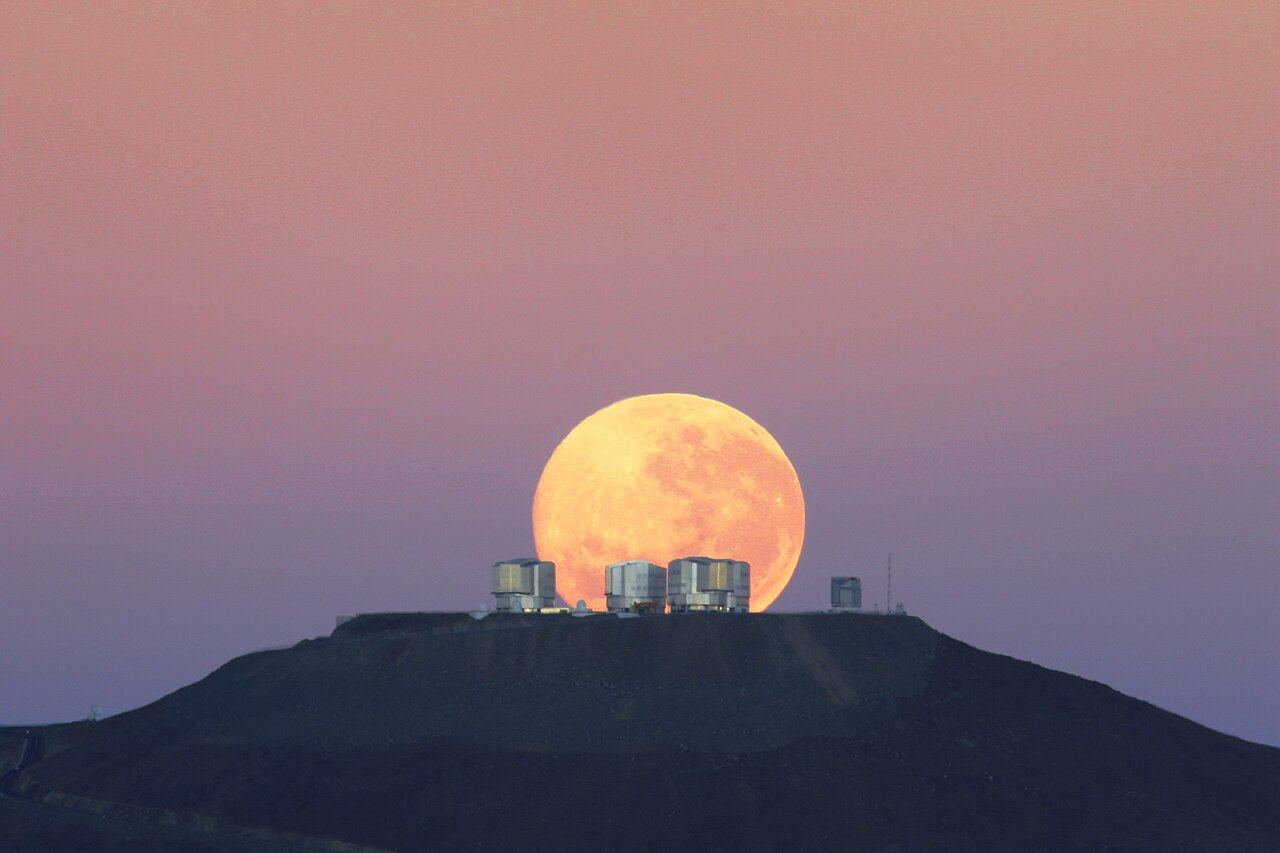
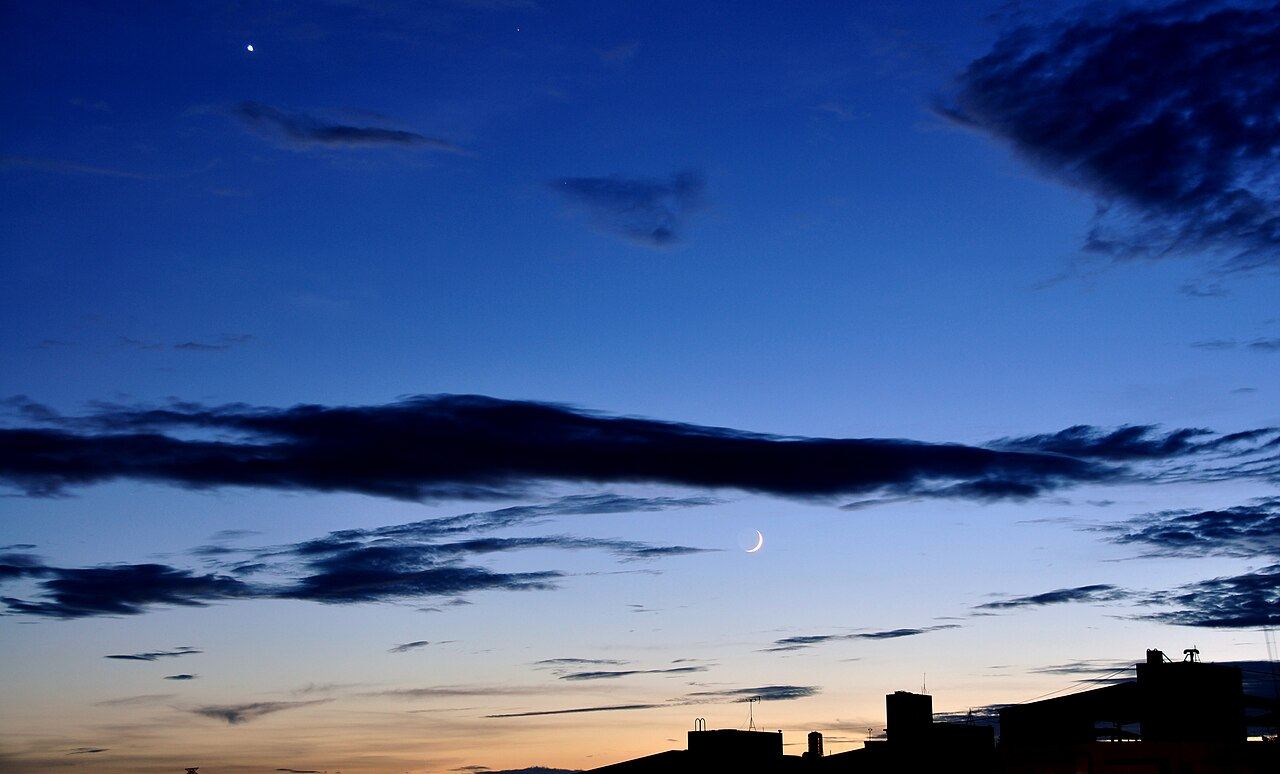
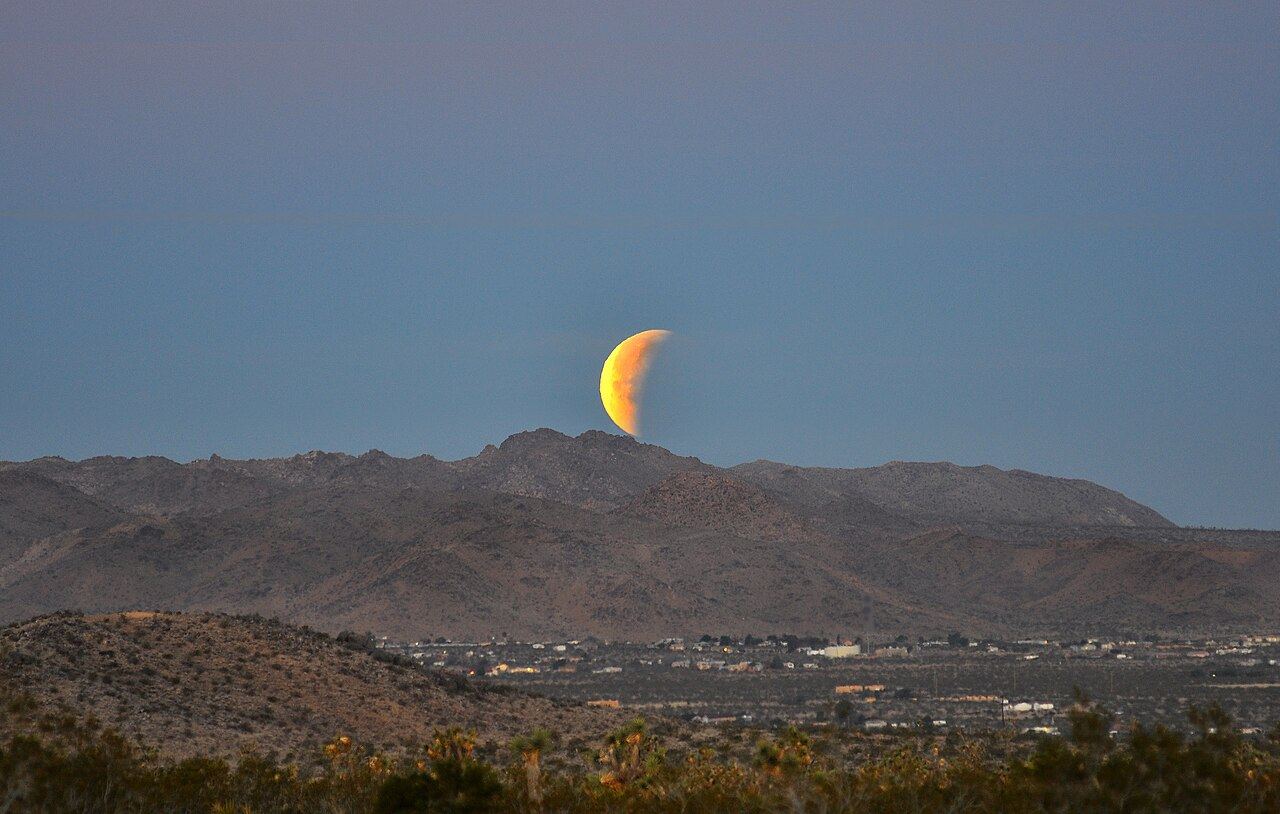
Try this · KS2 · 5 min a night for 3 nights · Science
Watch the moon move
You need: a window with a view of the sky, a notebook, a clock
- Pick a time, say 7 pm, and look for the moon from the same spot.
- Sketch where it is against a roof, tree or chimney.
- Do the same at the same time on the next two nights.
- Where has it gone? Has its shape changed?
Safety: Look out from indoors or with an adult.
A star, the moon, the sun: each rose and each set. Abraham asked what does not set.
Sources (5)
- Sun formed 4.6 billion years ago, a little less than halfway through its life, about 5 billion years left: NASA Science, Sun facts, accessed Nov 2026
- Moon recedes about 3.8 cm a year, measured by lunar laser ranging: NASA Goddard, Measuring the Moon's distance (Apollo laser ranging)
- Stars rise about 4 minutes earlier each night (sidereal day 23 h 56 min): Wikipedia, Sidereal time (with sources)
- Gaia has measured nearly two billion stars: ESA, Gaia
- Maimonides on Abraham reasoning from the turning heavens: Mishneh Torah, Avodah Zarah 1:3