Switch off every light in a room at night and wait. At first there is nothing. After a minute you can see the outline of the window. After twenty minutes, the door, the edge of the bed, your own hand. The dark did not change. You did.
The Qur'an has a small habit that most readers never notice. Whenever it speaks of darkness, the word is plural: ẓulumāt, “darknesses”, in twenty-three verses, never once singular. Its word for light, nūr, is always singular. Many darks, one light.
“Praise be to Allah, Who hath created the heavens and the earth, and hath appointed darkness and light. Yet those who disbelieve ascribe rivals unto their Lord.”
Qur'an 6:1 · Pickthall (1930)
This is the first verse of Surah al-Anʿām (The Cattle), a chapter about recognising the One God behind every part of creation. Opening with darkness and light matters: some religions of the ancient world, such as the Manichaeans, taught that light and darkness were two rival powers. The Qur'an says both were made by the One God. The same pairing returns in 2:257: God 'brings them out of the darknesses into the light'.
What science shows
In physics, darkness is not a thing at all. It is simply what we call the absence of light. Light, on the other hand, is very much a thing: it carries energy, travels at nearly 300,000 kilometres a second, and comes in packets called photons. And the light we can see is only a tiny slice of it. NASA notes that the human eye detects wavelengths from about 380 to 700 nanometres. Radio waves, infrared, ultraviolet, X-rays and gamma rays are all the same kind of radiation, invisible to us.
Our eyes are astonishingly sensitive in the dark. Rod cells in the retina can respond to a single photon. In 2016 a team in Vienna showed that people can sometimes detect a single photon of light, reporting it better than chance (Tinsley and colleagues, Nature Communications). That takes time: after you enter a dark room, the eye goes on becoming more sensitive for twenty minutes or more.
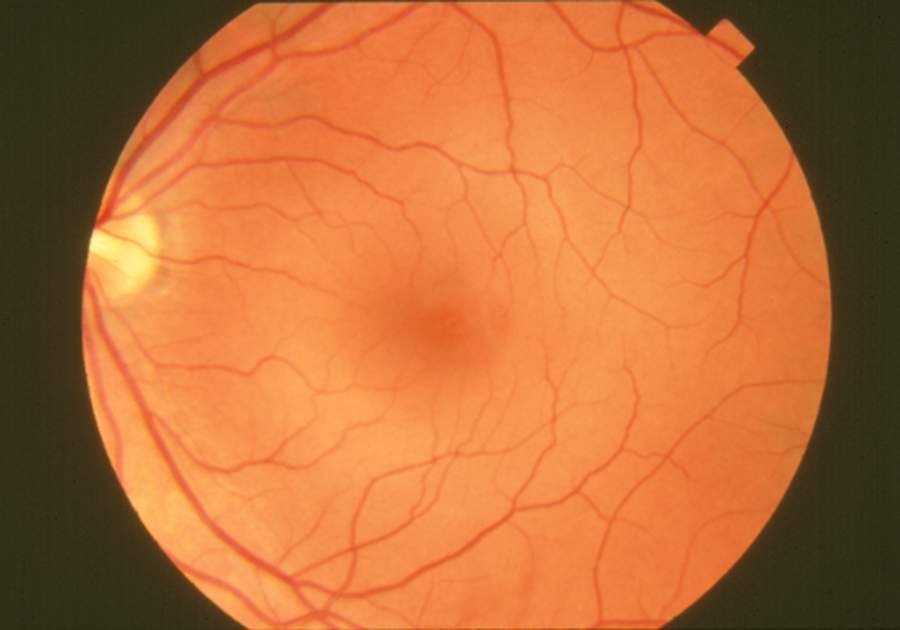
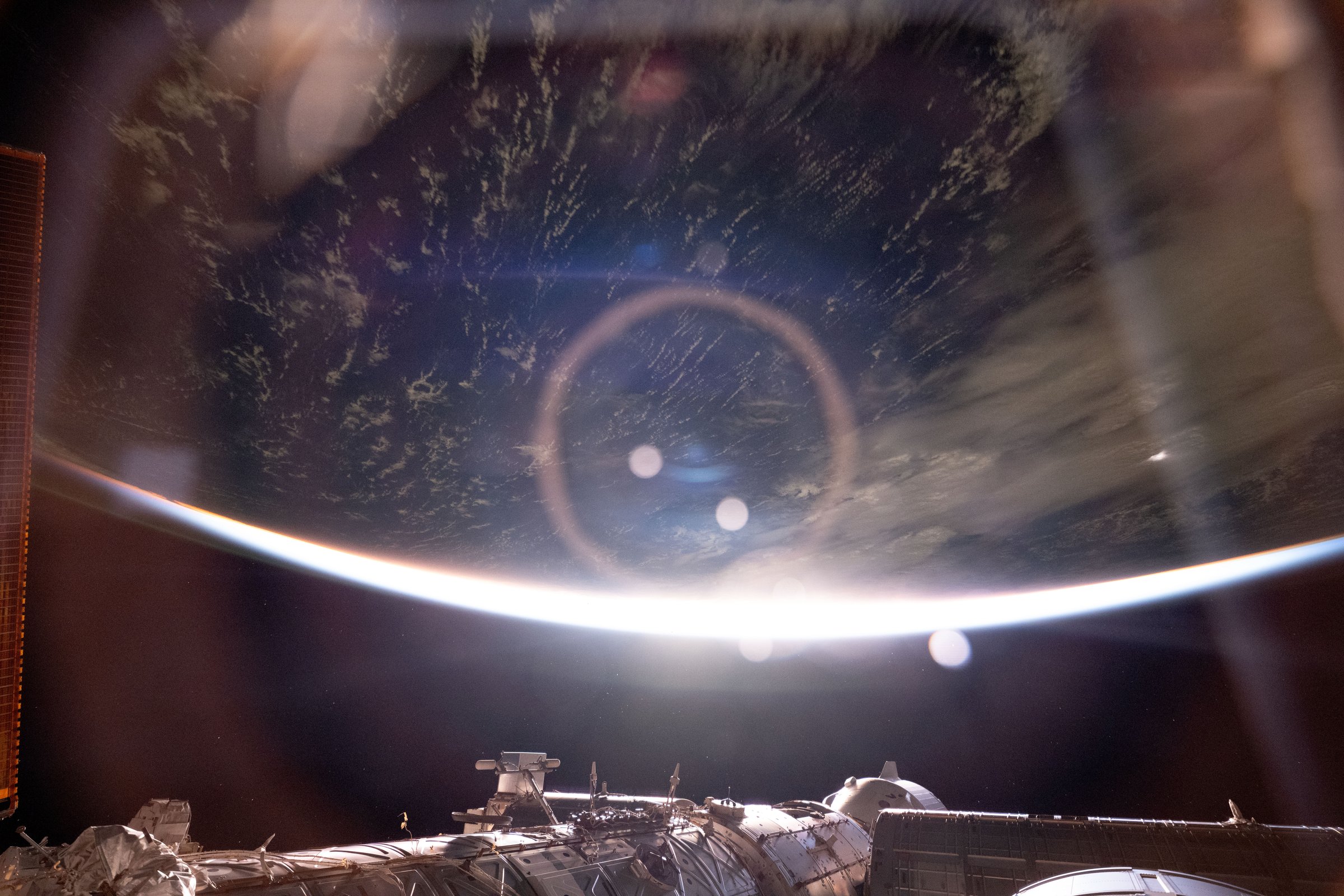
Darkness comes in many kinds and depths. Night is the Earth's own shadow. In the ocean, NOAA explains, light may be detected down to about 1,000 metres, but there is rarely any significant light below 200 metres. Beneath that is the midnight zone, where the only light is made by living things. Caves, the space between galaxies and the inside of a closed fist are all dark in their own ways.
Modern life has added a strange new kind. A world atlas of night skies found that more than 80 percent of the world's people live under light-polluted skies. In Europe and the US the figure is more than 99 percent. The Milky Way is hidden from more than a third of humanity (Falchi and colleagues, Science Advances, 2016). Citizen scientists counting stars from 2011 to 2022 found the sky getting brighter by about 7 to 10 percent a year (Kyba and colleagues, Science, 2023). Our own lights have made a darkness that hides the stars.
None of this explains a grammar pattern in an ancient text. But it sits well beside it. Darkness has no single source; it is many absences, in many places. Light always comes from somewhere.
What each faith says
Judaism
“I form the light, and create darkness; I make peace, and create evil; I am the LORD, that doeth all these things.”
Isaiah 45:7 · JPS 1917
The Torah's first spoken words are 'Let there be light', and God divides light from darkness and names them Day and Night. The darkness was there first, 'upon the face of the deep', and it is not called evil; it is given a name and a place. The prophet Isaiah goes further, in words that deliberately reject the idea of two rival powers. The God of Israel, he says, forms the light and creates the darkness too.
Jews say a version of Isaiah's words every morning in the blessing before the Shema: 'Blessed are You, LORD our God, King of the universe, who forms light and creates darkness, who makes peace and creates all things.' Psalm 139 offers comfort to anyone frightened of the dark: even if darkness covers me, 'even the darkness is not too dark for Thee, but the night shineth as the day'.
Christianity
“The light shines in the darkness, and the darkness hasn't overcome it.”
John 1:5 · WEB
The Gospel of John opens by echoing Genesis: 'In the beginning was the Word', and in that Word 'was life, and the life was the light of men'. Then comes one of the most hopeful lines in the New Testament: the light shines in the darkness, and the darkness has not overcome it. For Christians, that light is Christ, who later says, 'I am the light of the world' (John 8:12).
The First Letter of John puts it in the simplest possible words: 'God is light, and in him is no darkness at all.' Christian tradition has used darkness as a picture of sin, ignorance and sorrow. Mystics such as the author of The Cloud of Unknowing, an anonymous fourteenth-century English guide to prayer, also used it for the mystery of God beyond understanding. In the same century, in a time of plague, Julian of Norwich wrote down the hope she had been given. 'All shall be well, and all shall be well, and all manner of thing shall be well.' At Easter, many churches begin the vigil in total darkness and light one candle, which is passed from hand to hand until the whole building glows.
Islam
“Allah is the Protecting Guardian of those who believe. He bringeth them out of darkness into light. As for those who disbelieve, their patrons are false deities. They bring them out of light into darkness. Such are rightful owners of the Fire. They will abide therein.”
Qur'an 2:257 · Pickthall (1930)
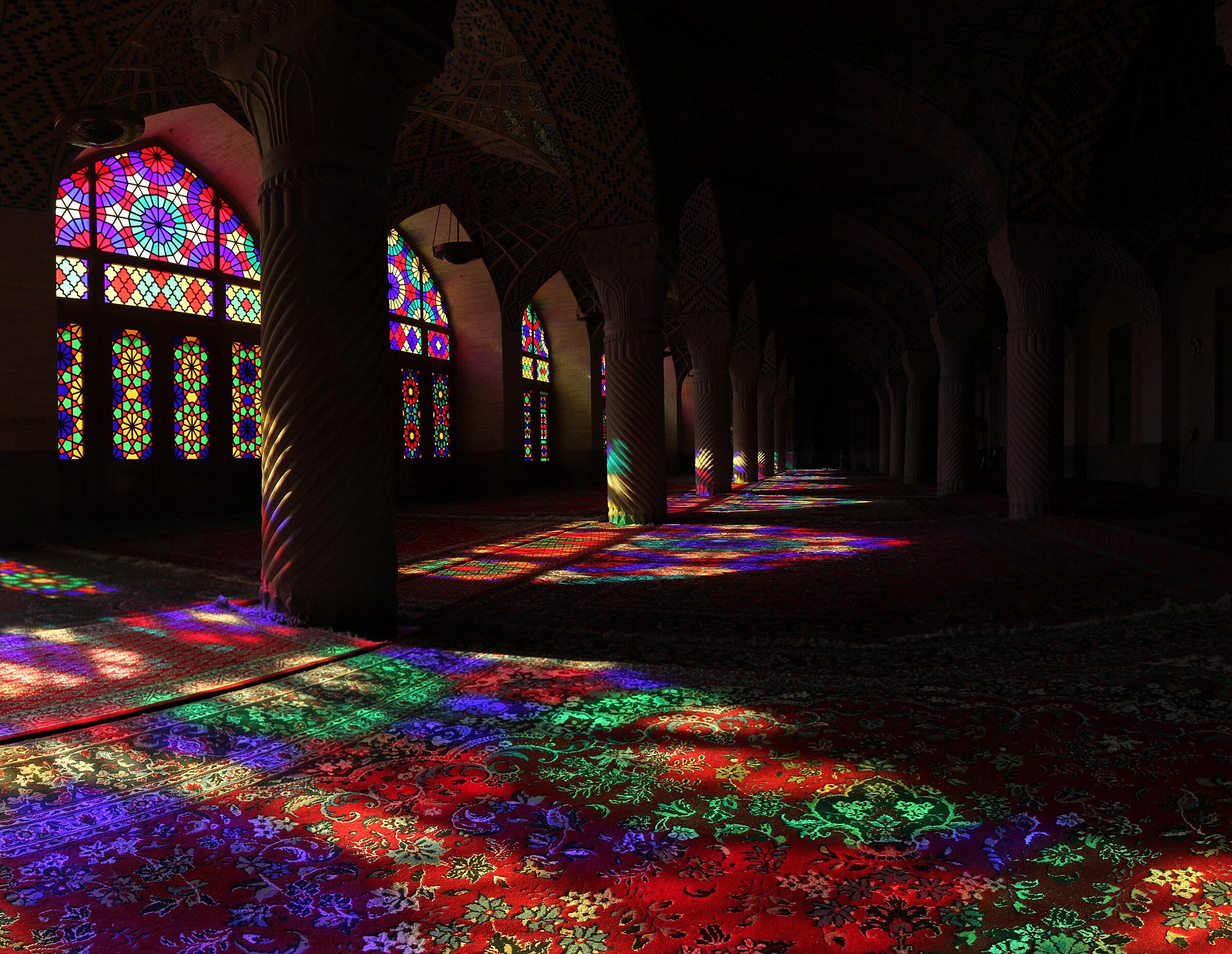
Later Muslim scholars read the Qur'an's plural darknesses and single light as a teaching in itself: the paths of error are many, but the truth is one. God is called an-Nūr, The Light, in the famous Light Verse (24:35). In 2:257 He is al-Walī, the protecting friend of those who believe, who 'brings them out of the darknesses into the light'. Those who choose other protectors are led the other way.
Muhammad ﷺ (peace be upon him) used to pray a prayer of light, wrapping himself in it from every side. 'O God, place light in my heart, light in my sight, light in my hearing, light on my right and light on my left, light above me and light below me, light in front of me and light behind me, and make light for me' (Bukhari 6316, Muslim 763). On a dark night in a lit-up city, it is a prayer that reads differently: not for more lamps, but for the light that shows the way.
Same and different
All three traditions begin with one God who made both light and darkness, and refuse the old idea of two rival powers. Each uses light for God's presence and guidance and darkness for what separates people from it. Christianity identifies the light with Christ, the Word made flesh. Judaism hears it in the Torah and in God's daily renewal of creation. Islam names God an-Nūr and teaches that guidance is one while the darknesses are many.
A moment to reflect
- Is there a kind of darkness you are afraid of, and a kind you find peaceful?
- Why might error be many and truth be one? Do you agree?
- What does it mean that our own lights now hide the stars?
- What gives you light when things feel dark?
Watch
Blue Planet II descends into the ocean's midnight zone, where only living things make light.
How your eyes adjust to the dark, explained with a playful experiment.
National Geographic shows what light pollution has done to our night skies.
A short film on losing the dark, and how to get it back.
Do it together
In a safe room at night, turn off all lights and sit together quietly for twenty minutes. Every five minutes, say what you can now see. Talk about how waiting changed what was visible.
Join the Globe at Night or CPRE Star Count citizen science projects: count the stars in a constellation from your street, and compare with a friend somewhere darker.
Gather in a darkened room with one lit candle. Pass the flame from candle to candle while readers share Isaiah 45:7, John 1:5 and Qur'an 2:257. End by naming one way each person can bring light to their neighbourhood.
In December, many towns and Jewish communities hold public Hanukkah candle-lightings, adding one more light each night for eight nights. Go along to one, or ask a Jewish friend to show you how the lights are added and why they are placed where people can see them.
Through Advent, many churches and homes light one more candle each Sunday on an Advent wreath, until four are burning just before Christmas. Make one together and notice how each week the dark room gets a little brighter.
Go deeper
- Qur'an 6:1 with translations · scripture
- Isaiah 45 (JPS 1917) on Sefaria · scripture
- John 1 (WEB) on Bible Gateway · scripture
- NASA: Visible light · article
- Falchi et al. 2016, the world atlas of artificial night sky brightness · paper
In pictures


Try this · KS2 · 10 min · Science
Darkness in layers
You need: a tall clear glass of water, a torch, a teaspoon of milk, a dark room
- In a dark room, shine the torch down through the glass onto a white sheet of paper.
- Add a few drops of milk and stir. Shine again.
- Keep adding drops. Watch how the light fades and the colour changes.
- Imagine light going down through hundreds of metres of sea.
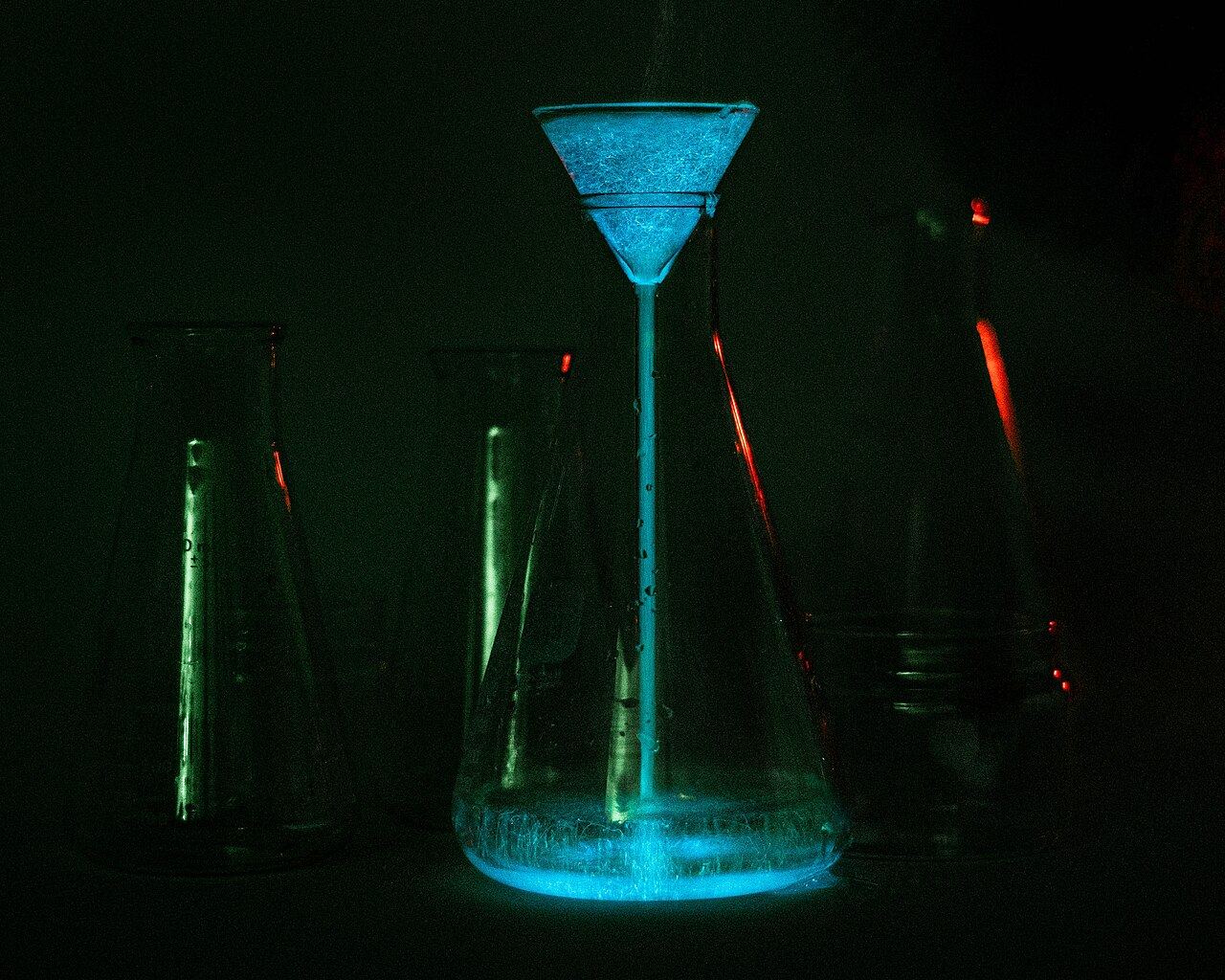
Darkness comes in layers, one on top of another, and light is one: the page's picture, in a glass.
Sources (6)
- The human eye detects wavelengths from about 380 to 700 nm, a small part of the electromagnetic spectrum: NASA Science, Visible light
- Humans can detect a single photon with probability above chance; rods respond to single photons: Tinsley et al., Nature Communications, 2016
- Light may be detected to 1,000 m in the ocean but rarely any significant light below 200 m: NOAA Ocean Service, How far does light travel in the ocean?
- 80%+ of the world and 99%+ of US and European populations under light-polluted skies; Milky Way hidden from a third of humanity: Falchi et al., Science Advances, 2016
- Sky brightness rising 7-10% per year, 2011-2022: Kyba et al., Science, 2023
- ẓulumāt occurs 23 times, always plural; nūr always singular: Quranic Arabic Corpus count