The first death in the story of humanity is not from old age or illness. It is a murder, one brother killing another in a field. And then, in the Qur'an's telling, comes a moment that is almost unbearable in its plainness. The killer stands over the body and has no idea what to do with it.
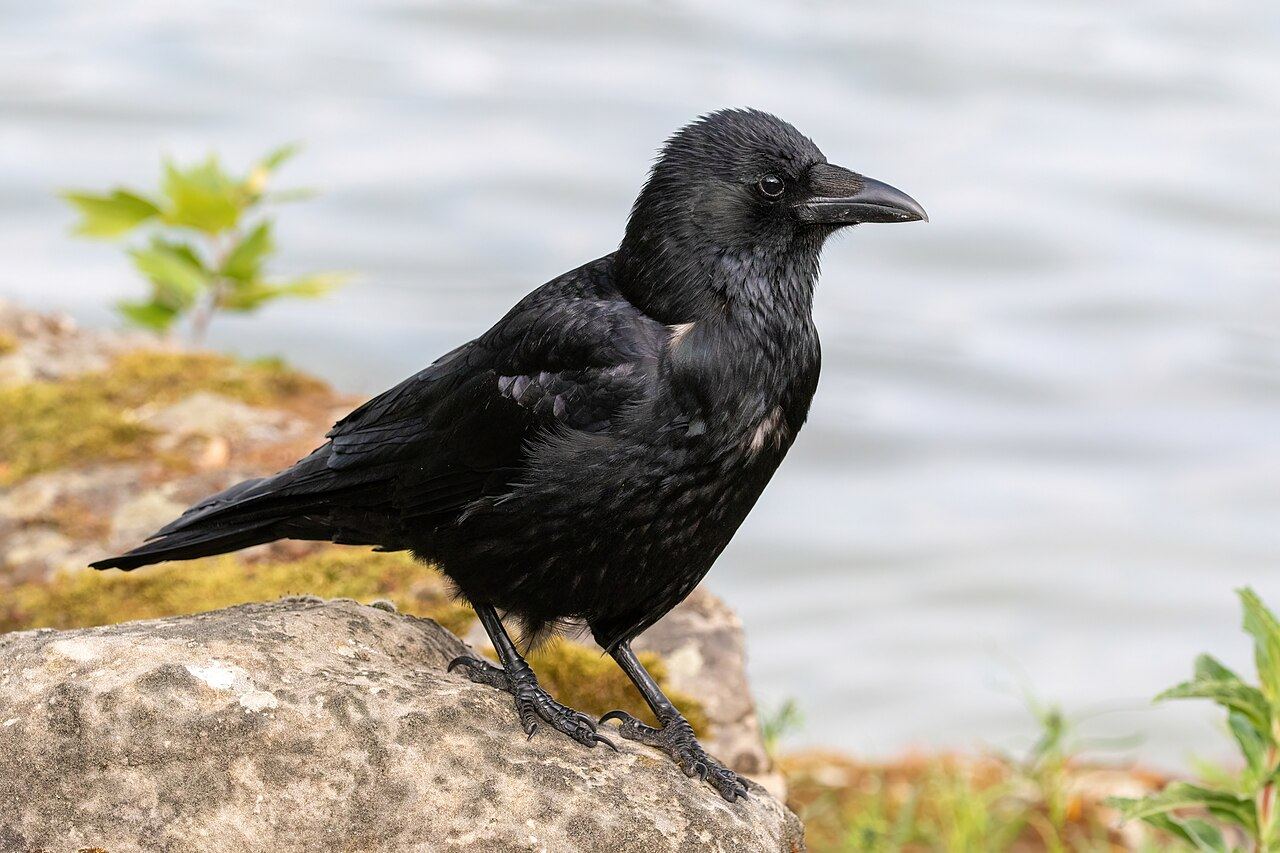
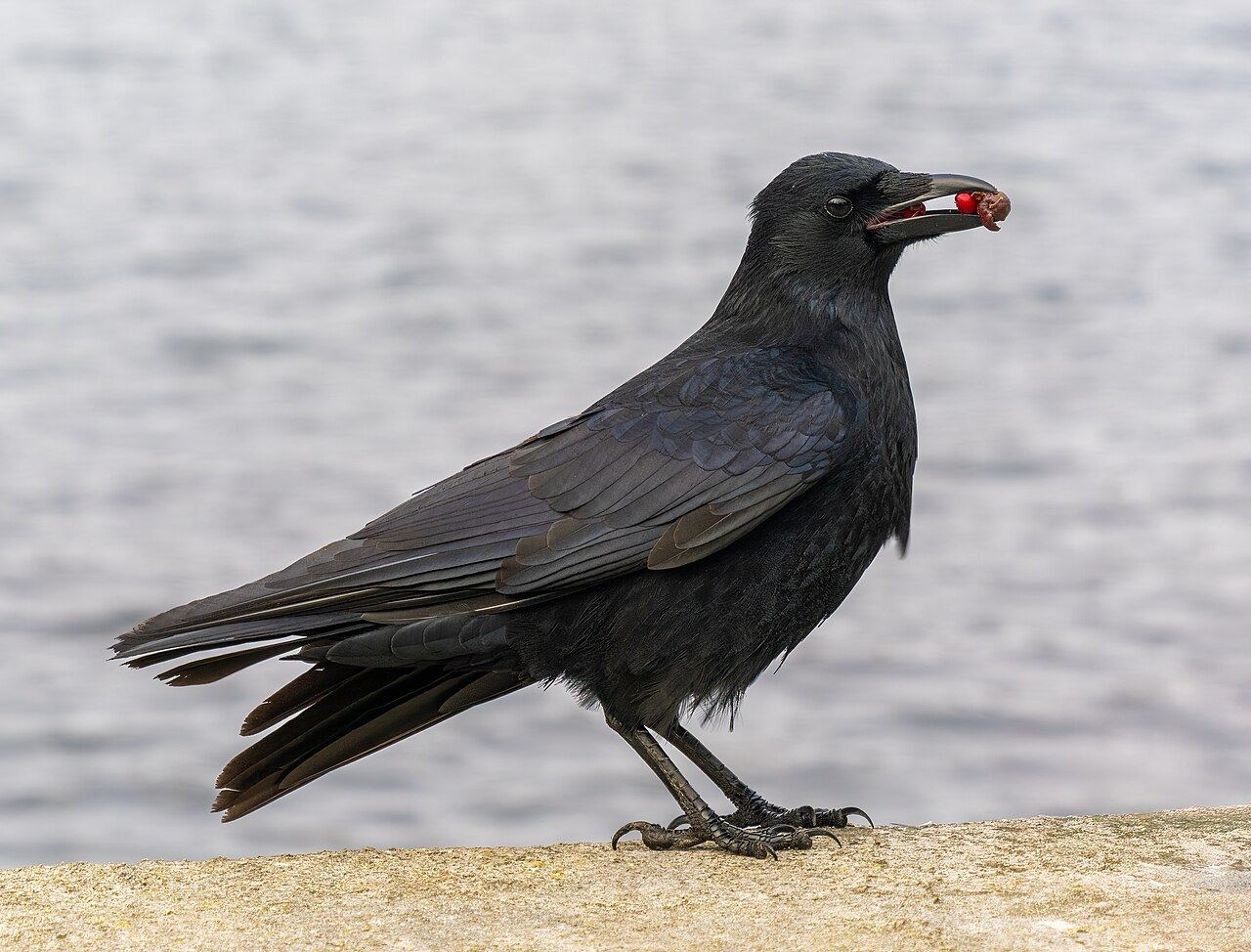
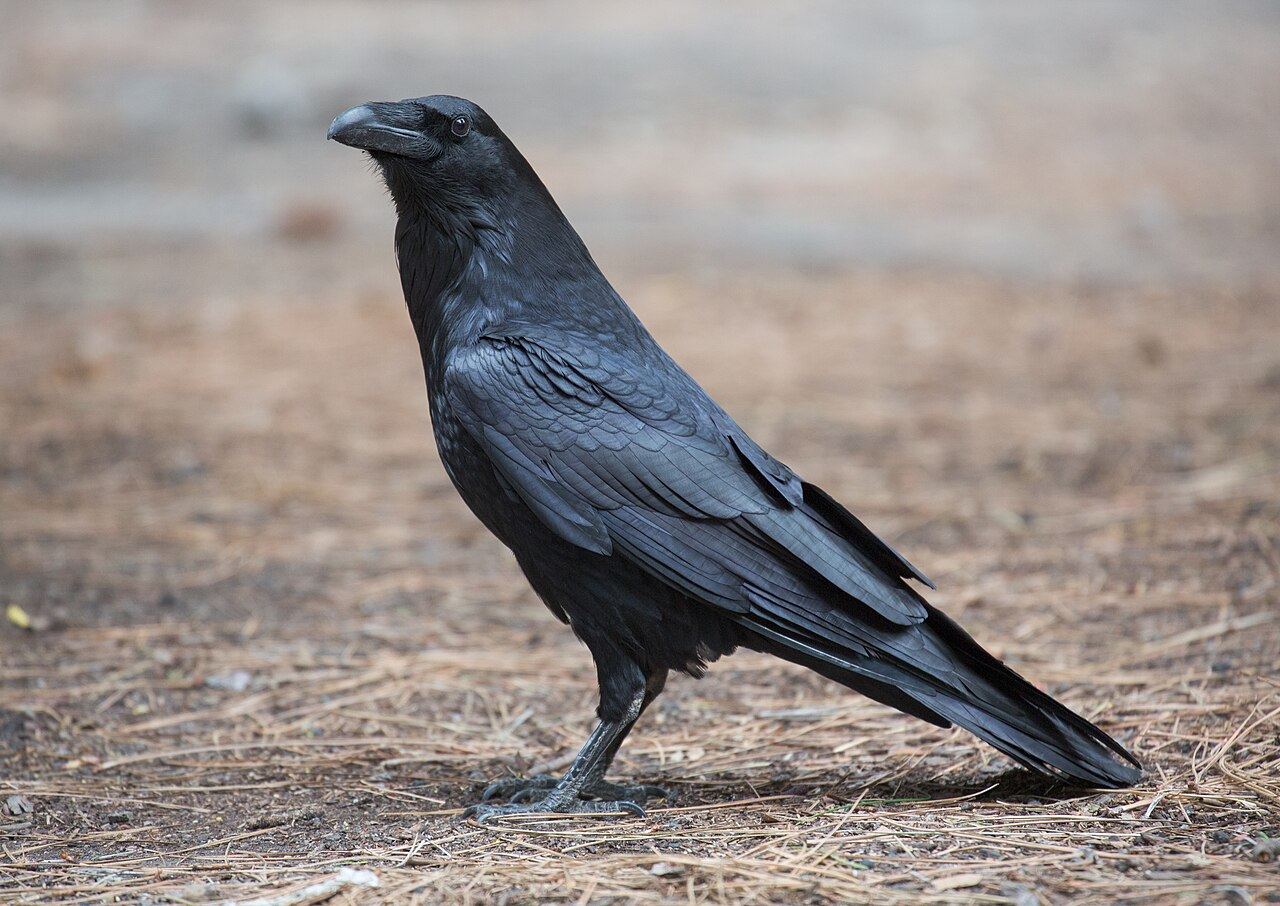
A crow lands nearby and begins scratching at the earth. The man watches, and something breaks in him. 'Woe to me,' he says. 'Am I not even able to be like this crow?' Of all the teachers in scripture, one of the first is a black bird digging in the dirt.
“Then Allah sent a raven scratching up the ground, to show him how to hide his brother's naked corpse. He said: Woe unto me! Am I not able to be as this raven and so hide my brother's naked corpse? And he became repentant.”
Qur'an 5:31 · Pickthall (1930)
This is the story of the two sons of Adam (peace be upon him), told in Surah al-Mā'ida (The Table Spread), 5:27-32. The Qur'an does not name them, but Muslim, Jewish and Christian readers know them as Cain and Abel. The crow appears only here, the only time the word ghurāb, “crow”, occurs in the Qur'an. The very next verse draws the lesson for all of humanity.
What science shows
Crows, ravens, rooks, jackdaws, magpies and jays belong to the corvid family, and they are among the cleverest animals on Earth. A 2016 study in the journal PNAS counted the nerve cells in bird brains. It found that corvids, the crow family, pack their forebrains with neurons far more densely than mammals do. A raven's walnut-sized brain holds about as many forebrain neurons as some monkeys' brains.
They use those brains. In 1996 the biologist Gavin Hunt reported in Nature that New Caledonian crows make two kinds of tool from leaves and twigs, including hooked tools. They carry them around to winkle insects out of holes. In Seattle, researchers led by John Marzluff wore rubber masks while trapping and ringing wild crows. Years later, crows that had never been caught were still scolding anyone who wore the 'dangerous' mask. They had learned it from other crows (Marzluff and colleagues, Animal Behaviour, 2010).
Then there is how crows treat their dead. In 2015 Kaeli Swift and John Marzluff laid out dead crows in Seattle neighbourhoods and watched. Living crows did not ignore them. They gathered, called loudly, and in many cases mobbed the scene. When a person was seen standing near the dead crow, the birds afterwards treated that person and that spot as dangerous, scolding them and avoiding food there. Crows, the researchers concluded, use their dead to learn about danger.
Do crows bury their dead? Scientists have no good evidence that they do. But many corvids are expert diggers for another reason: they hide food. Jays, rooks and crows push nuts, seeds and scraps into the soil or under leaves and remember where they put them, sometimes thousands of items in an autumn. A crow scratching at the ground and covering something over is one of the most ordinary sights in any park.
So the scene in the verse is something any of us could watch tomorrow. What is striking is the way the story uses it. The bird does what it does by nature, and a human being, who has just done something no animal does to its brother, is shamed by the comparison.
What each faith says
Judaism
“And He said: 'What hast thou done? the voice of thy brother's blood crieth unto Me from the ground.'”
Genesis 4:10 · JPS 1917
In the Torah the story of Cain and Abel is told in Genesis 4. It is God, not the brother, who speaks first after the killing: 'Where is Abel thy brother?' Cain's answer, 'Am I my brother's keeper?', has become a proverb.
The crow appears in Jewish tradition too, in an early medieval book of stories and teaching, Pirkei de-Rabbi Eliezer, “The Chapters of Rabbi Eliezer” (chapter 21). There Adam and Eve sit weeping over Abel's body and do not know what to do, until they see a raven whose companion has died. It digs in the earth and buries it, and Adam says, 'Like this raven will I act.' The Mishnah (Sanhedrin 4:5) draws a lesson from the singular 'blood' of Abel. Whoever destroys a single life, it says, is as if they had destroyed a whole world. And whoever saves a single life is as if they had saved a whole world. Burying the dead with care is a great mitzvah, a commanded good deed. Jewish communities have a chevra kadisha, a “holy society” of volunteers who prepare each body for burial with dignity.
Christianity
“For this is the message which you heard from the beginning, that we should love one another; unlike Cain, who was of the evil one, and killed his brother.”
1 John 3:11-12 · WEB
Christians read the same Genesis story and find in it the first picture of what goes wrong between people: envy that grows into hatred and then into violence. The First Letter of John uses Cain as the opposite of love. And Jesus, in the Sermon on the Mount, traces murder back to its root in anger. Whoever is angry with his brother without cause, he says, is in danger of judgement (Matthew 5:21-22).
The Letter to the Hebrews adds a striking line about Abel: 'through it he, being dead, still speaks' (Hebrews 11:4). Abel's faith and his innocent blood are remembered as a voice that does not fall silent. And ravens appear elsewhere in the Gospels as a sign of God's care: 'Consider the ravens… God feeds them' (Luke 12:24). Burial is part of Christian love too: the last of the seven corporal works of mercy, as Catholic teaching lists them, is to bury the dead.
Islam
“For that cause We decreed for the Children of Israel that whosoever killeth a human being for other than manslaughter or corruption in the earth, it shall be as if he had killed all mankind, and whoso saveth the life of one, it shall be as if he had saved the life of all mankind.”
Qur'an 5:32 · Pickthall (1930)
In the Qur'an's telling, one brother's offering is accepted and the other's is not, and the jealous brother threatens murder. The other replies that even if he is attacked he will not raise his hand to kill, because he fears God (5:28). The crow comes after the deed, and the killer's remorse comes with it. Classical commentators such as al-Ṭabarī in the ninth century and Ibn Kathīr in the fourteenth note that this was the first burial among human beings, learned from a bird.
Then comes 5:32, one of the most quoted verses in the Qur'an. It says plainly that it was decreed for the Children of Israel. Whoever kills a soul, unless for murder or for corruption in the land, it is as if they had killed all of humanity. And whoever saves one, it is as if they had saved all of humanity. The Qur'an presents this as a decree for the Children of Israel, and the Mishnah (Sanhedrin 4:5) teaches the same. Muhammad ﷺ (peace be upon him) added a sobering note. No soul is killed unjustly without a share of its guilt falling on the first son of Adam, because he was the first to set the pattern of killing (Bukhari 3335).
Same and different
All three traditions tell the story of two brothers, a rejected offering, envy and the first killing, and each draws from it the worth of a single human life. Judaism and Islam even share the crow or raven, and the teaching that one life is like a whole world appears in both the Mishnah and the Qur'an. They differ in the details. In Jewish tradition Adam learns from the raven; in the Qur'an the killer does. Christianity gives Abel's innocent blood a further meaning, set beside the blood of Jesus 'that speaks better than that of Abel' (Hebrews 12:24).
A moment to reflect
- Who, or what, has taught you something when you least expected it?
- What does it feel like to realise an animal is behaving better than you are?
- Is 'saving one life is like saving the whole world' an exaggeration, or a truth?
- Where do envy and anger start in ordinary life, long before anything terrible happens?
Watch
KQED's Deep Look films the crow 'funeral' experiments up close.
The researcher behind the dead-crow study explains what she found.
A short animated tour of corvid intelligence, from tools to memory.
BBC footage of a crow solving a multi-stage puzzle.
Do it together
Spend twenty minutes in a park or school field watching crows, rooks or magpies. Note every time one digs, hides or covers something. Compare notes afterwards: what were they doing, and how did they seem to remember?
Read Mishnah Sanhedrin 4:5 and Qur'an 5:32 side by side. In mixed pairs, share a story of someone whose one act of kindness or courage changed a whole life.
Using Genesis 4, Qur'an 5:27-31 and Matthew 5:21-22, map the steps from jealousy to harm on a strip of paper. Then add, at each step, one thing a friend could say or do to stop it.
Go deeper
- Qur'an 5:27-32 with translations · scripture
- Genesis 4 (JPS 1917) on Sefaria · scripture
- Mishnah Sanhedrin 4:5 on Sefaria · scripture
- 1 John 3 (WEB) on Bible Gateway · scripture
- Swift & Marzluff 2015, Wild American crows gather around their dead · paper
In pictures
Try this · KS2 · 15 min · Science
The crow and the pitcher
You need: a tall narrow glass or jar, water, a small cork or piece of foam, a handful of pebbles or marbles
- Half-fill the glass with water and float the cork on top.
- Pretend the cork is food the crow can't reach with its beak.
- Drop in pebbles one at a time. Count how many it takes to raise the cork to the top.
- Do big or small pebbles work better? Why?
Safety: Marbles are a choking risk for very young children.
Scientists have watched rooks and crows solve this very puzzle; the first burial in scripture is taught by one.
Sources (6)
- Corvids and parrots have primate-like numbers of forebrain neurons, packed more densely than in mammals: Olkowicz et al., PNAS, 2016
- New Caledonian crows make and use hook tools: Hunt, Nature, 1996
- Wild crows learned and passed on recognition of a threatening person's face for years: Marzluff et al., Animal Behaviour, 2010
- Crows gather and mob around dead crows and learn to avoid people and places linked to them: Swift & Marzluff, Animal Behaviour, 2015
- Brain activity in crows viewing dead conspecifics; interpreted as learning about danger, not burial: Swift et al., Behavioural Brain Research, 2020
- Ghurāb occurs once in the Qur'an; Pirkei de-Rabbi Eliezer 21 raven story: Our own word study, 2026