Closer look · 3 min · Film: Dune
The words Dune borrowed
Mahdi, Lisan al-Ghayb, Usul, jihad: what Dune's borrowed words mean to the people who use them.
The idea in one minute
This page explains words from the Dune films that come from Arabic, such as Mahdi, Lisan al-Ghayb, Muad'Dib, Usul and jihad. You will learn what each word really means to the people who use it, and how the film's made-up hero is not the same as the beliefs behind the words.
Frank Herbert built the desert world of Dune out of real words. Most of them are Arabic, and most come from Islam. Here are six, with what they mean to the people who use them every day, and, where it helps, a neighbouring word from the Jewish and Christian scriptures.

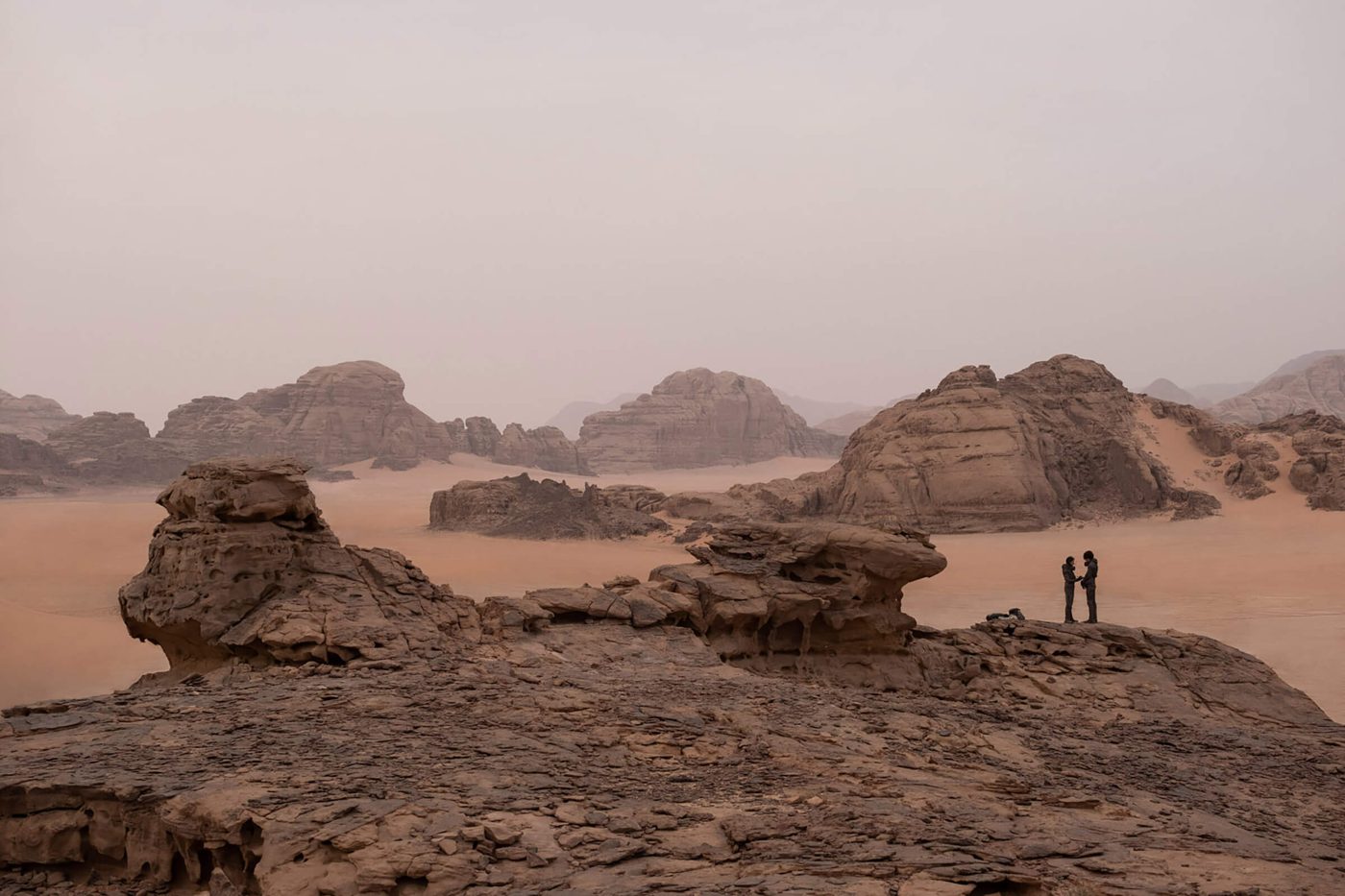
Mahdi
“The guided one.” In Islam, a figure many Muslims expect near the end of time, who will bring justice. In Dune, Paul is a manufactured messiah built from propaganda: not the Mahdi of Islam. Hebrew has its own word for the hoped-for king, Mashiach, “anointed one”, from which English gets “Messiah”.
Lisān al-Ghayb
“The tongue of the Unseen.” Al-ghayb is what only God knows; the Qur'an says “with Him are the keys of the unseen” (6:59). The New Testament speaks of the unseen too: “Now faith is assurance of things hoped for, proof of things not seen” (Hebrews 11:1, WEB).
Muad'Dib
From muʾaddib, “one who teaches”, “one who trains in good manners”. Adab means courtesy and culture: the teacher shapes character, not just knowledge.
Usul
“Principles, foundations”, as in uṣūl al-fiqh, the principles of Islamic law. In Dune it is Paul’s private name among the Fremen, “the base of the pillar”.
Jihad
In Dune, a galaxy-wide holy war. In Arabic, jihād means striving: ethical effort, and in some cases legitimate defence. Sufi teachers speak of the greatest jihad as the struggle with one's own self, jihād al-nafs. The Hebrew Bible praises the same victory: “He that is slow to anger is better than the mighty; And he that ruleth his spirit than he that taketh a city” (Proverbs 16:32, JPS 1917).
Shai-Hulud
Often explained as Arabic shayʾ khulūd, “thing of eternity”. Lovely, but not confirmed. We say so.
Sources: Juan Cole, Informed Comment, 10 March 2024; Haris Durrani, “The Muslimness of Dune”, Tor.com, 18 October 2021. On the live site each word will be spoken by a Muslim speaker.
The Names in this closer look

Where to watch · Trailer
Dune: Part Two (2024) · Widely available to stream or buy · F-ILM
© Warner Bros. / Legendary
Content note. Dune: Part Two: The sequel: a young man accepts a messiah role. Battle violence, brief intimacy. See Before you watch.
Trailers are the studios' own, played from YouTube. We show them and any stills for criticism and review; all rights stay with their owners.
Next closer look
A different film, a different question.
Watch more: The words Dune borrowed
7 films and talks, chosen for this page. They play here.
The Mahdi in Islam (Dune)
Let's Talk Religion · 1 min
Let's Talk Religion: what Mahdi means in Islam, and in Dune.
Lisan al-Gaib - The REAL Meaning?
Let's Talk Religion · 1 min
Let's Talk Religion: the real meaning of Lisan al-Ghaib.
Zensunni - The Origins of the Fremen in Dune
Let's Talk Religion · 1 min
Let's Talk Religion: where the word "Zensunni" and the Fremen come from.
Dune, Islam & Religion
Let's Talk Religion · 28 min
Let's Talk Religion: Dune, Islam and religion.
The Islamic Roots of Dune (the movie and book)
Bart D. Ehrman · 2 min
Bart Ehrman: the Islamic roots of Dune.
Dune can help us analyze prophecy
ReligionForBreakfast · 3 min
Waiting for The Mahdi or A Miracle | Lecture by Dr. Omar Suleiman
Yaqeen Institute · 29 min
Yaqeen: Dr Omar Suleiman on what waiting for the Mahdi really means.
- More films and talks on F-ILMWatch free