The idea in one minute
This page looks at the film Moana and the real canoe, Hokulea, that sailed from Hawaii to Tahiti in 1976 without a compass. Its navigator steered by the stars, the waves and the birds. You will learn how the real voyage inspired the film, and what it means to be guided, alongside the Name al-Hadi.
The question: When you cannot see where you are going, what do you trust to guide you, and who taught you to read it?
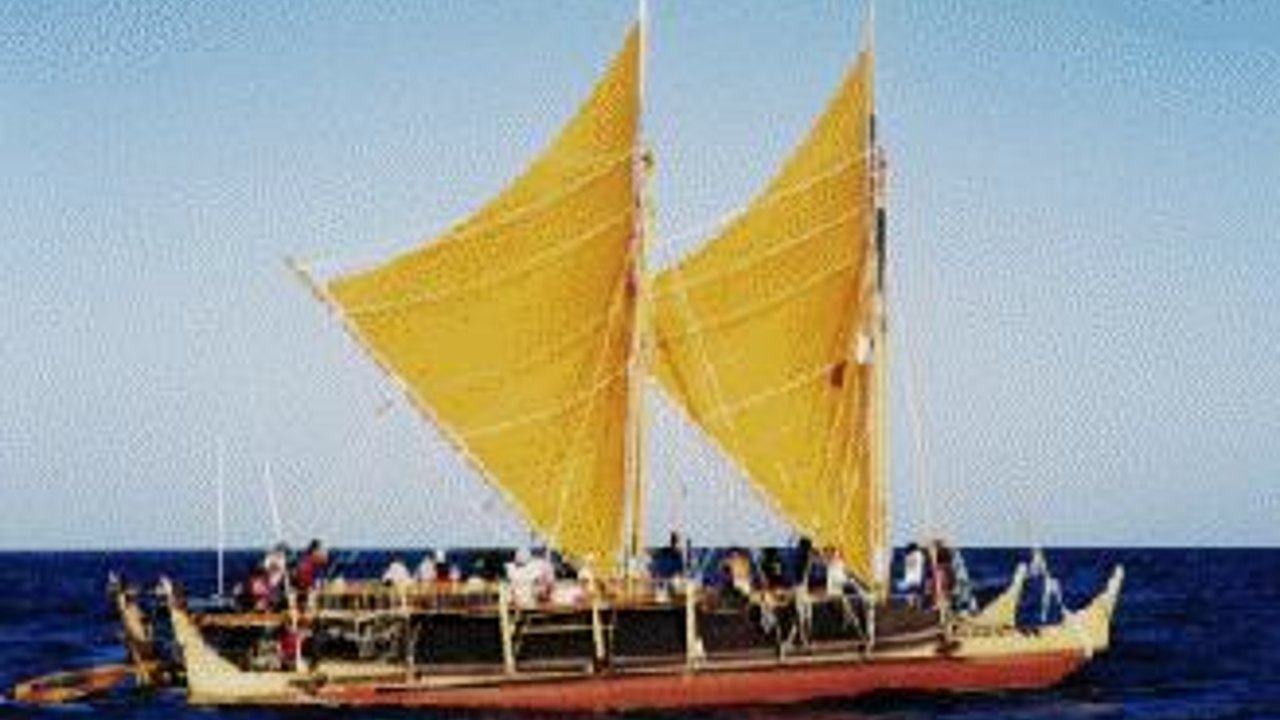
In May 1976 a double-hulled canoe called Hōkūleʻa left Maui for Tahiti. There was no compass on board, no charts and no instruments. The navigator came from a tiny Micronesian island called Satawal. He steered by the rising and setting points of stars, the shape of the swells under the hull, the colour of the sea and the flight of birds. About a month later the canoe reached Tahiti, and the Pacific had proved something it had half forgotten.
Forty years after that voyage, Disney released Moana, about a girl who learns to read the same signs. Behind the songs is a real question that people have asked for as long as they have gone to sea: when you cannot see land, what guides you home?
In the makers' own words
“It wasn't until after our trip that the character of Moana, this teenager who dreams of becoming a navigator and a voyager, grew out of that”
Ron Clements, co-director of Moana, 25 October 2016 · NBC News, 'Dance, Storytelling, and the Art of Wayfinding: Behind the Scenes of Disney's Moana'
“Moana is indomitable, passionate and a dreamer with a unique connection to the ocean itself”
John Musker, co-director, 2014 · NBC News, 'Meet Moana: Disney Announces Its First Pacific Islander Princess'
A story that changed on the way
Moana was first meant to be a film about the demigod Māui. Then, in 2012, the directors Ron Clements and John Musker went on research trips to Fiji, Samoa and Tahiti. They learned that the ancestors of Polynesians had crossed thousands of miles of open ocean on purpose, long before European ships came, and that for a long period the voyaging seems to have stopped. Clements says the girl at the centre of the film, 'this teenager who dreams of becoming a navigator and a voyager', grew out of that trip.
Disney also set up a group of Pacific Islanders, the Oceanic Story Trust, to advise on the story as it went through nine versions. The Trust pushed back on some ideas: an early bald Māui was given long hair, and a scene of Moana throwing coconuts in a tantrum was cut. The animators consulted the Polynesian Voyaging Society on canoe details so that the boats would look and sail like the real thing.
The real canoe
The Polynesian Voyaging Society launched Hōkūleʻa in Honolulu on 8 March 1975. The name means 'star of gladness'. It is the Hawaiian name for Arcturus, a bright star that passes almost directly overhead at Hawaiʻi's latitude, so a navigator who sees it straight above knows the islands are near.
In 1975 no living Hawaiian knew the old methods for crossing deep ocean. The Society asked Mau Piailug, a master navigator of the Weriyeng school from Satawal, to share what he knew. He had learned 'stars, swells, and birds' from his grandfather as a small boy. In 1976 he guided Hōkūleʻa from Hawaiʻi to Tahiti without instruments. Later he trained Nainoa Thompson, who in 1980 became the first Native Hawaiian in modern times to navigate a canoe thousands of miles in the old way. When Mau died in 2010, the revival he had started had spread across the Pacific.
How wayfinding works
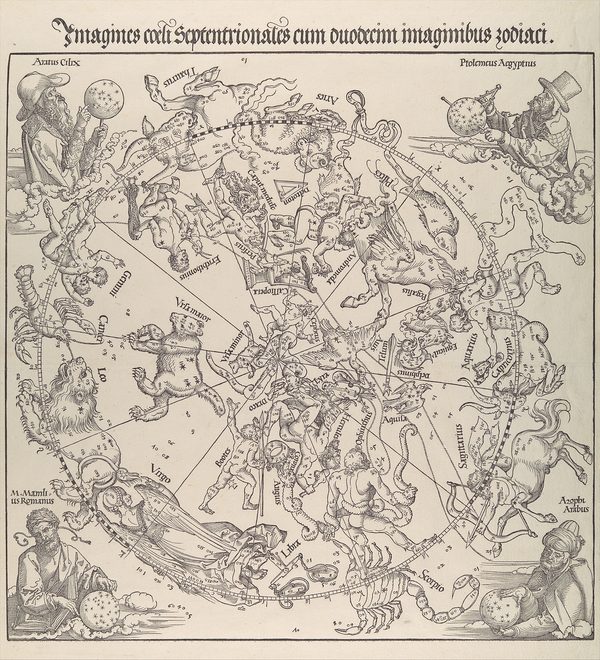
A wayfinder holds a 'star compass' in their head: a circle of points on the horizon where particular stars rise and set. As one star climbs too high to use, another rises in the same place. Through the night the navigator steers by a chain of stars, like a relay.
By day there are the swells, long waves made by distant weather, which keep their direction for days. A trained navigator can feel two or three different swells crossing under the hull and keep the canoe at the same angle to them. Close to land there are birds: some seabirds fish at sea by day and fly back to land at dusk, so their evening flight points to an island beyond the horizon. Cloud colour and the shape of waves bending round an island give more clues.
None of this is guesswork. It is a science learned over years, kept in memory and passed from teacher to student. Between 2014 and 2017 Hōkūleʻa sailed around the world on a voyage called Mālama Honua, 'to care for the Earth', covering about 47,000 nautical miles and visiting 85 ports in 26 countries.
Guided, not just clever
Here is where Moana opens a door. In the film, the ocean itself chooses Moana, and the story is full of Polynesian gods and spirits, told from inside that tradition. We do not borrow them or fold them into anyone else's faith. But the film and the canoe both point to something all three Abrahamic faiths talk about: the world is laid out so that it can be read, and the stars are there partly so that people can find their way.
The Qur'an names God al-Hādī, the Guide, and it describes guidance on several levels. There is the guidance written into creation, so that each thing knows its way: 'He said: Our Lord is He Who gave unto everything its nature, then guided it aright.' (20:50, Pickthall). There are the stars, given 'And He it is Who hath set for you the stars that ye may guide your course by them amid the darkness of the land and the sea. We have detailed Our revelations for a people who have knowledge.' (6:97, Pickthall). And there is the deepest guidance, to the straight path, which Muslims ask for in every prayer. A navigator learns to read the first two. The third, the faiths say, is a gift you ask for.
The Names this touches
The contrast
The film imagines a girl who learns to read the stars and the swells; the Names describe the One who set the stars in place, gave the swells their shape and the birds their road home, and guides the heart that asks.
Al-Hādī: The Guide, who gave each thing its form and then guided it (20:50).
Ar-Rashīd: The Guide to the right course, who leads without leading astray.
What each faith says
Judaism
“If I take the wings of the morning, and dwell in the uttermost parts of the sea; even there would Thy hand lead me, and Thy right hand would hold me.”
Psalm 139:9–10 · JPS 1917
The Hebrew Bible pictures God as a guide who goes ahead of His people. In the wilderness Israel was led by a pillar of cloud by day and fire by night. The Psalms turn that into a personal prayer: 'Show me Thy ways, O LORD; teach me Thy paths' (Psalm 25:4). Psalm 139 goes to sea: even if I fly to the farthest edge of the ocean, God's hand is there to lead.
Jewish tradition also treats the stars as a sign of order. Rabbinic teachers used astronomy to fix the calendar, and Psalm 147:4 says God 'counteth the number of the stars; He giveth them all their names'. Guidance in Judaism is closely tied to Torah, the word for 'teaching' or 'instruction', which shows the way to live.
There is even a Jewish prayer for setting out. Tefilat HaDerech, the Traveller’s Prayer, is said at the start of a journey by road, sea or air. It asks: “May it be Thy will… to lead us in peace, to direct our steps in peace, and to bring us to our destination in life, joy and peace” (Berakhot 29b, our rendering).
Christianity
“He restores my soul. He guides me in the paths of righteousness for his name's sake.”
Psalm 23:3 · WEB
Christians read the same Psalms and add the picture of the shepherd. 'He guides me in the paths of righteousness for his name's sake' (Psalm 23:3). In the Gospels a star guides the magi, the wise men from the east, to Bethlehem, and Jesus calls himself the light by which people find their way: 'He who follows me will not walk in the darkness' (John 8:12).
For Christians, guidance is also the work of the Holy Spirit, who leads believers 'into all truth' (John 16:13). Many Christian sailors' hymns, such as 'Eternal Father, Strong to Save', sung in Royal Navy services, pray for those at sea.
Islam
“And He it is Who hath set for you the stars that ye may guide your course by them amid the darkness of the land and the sea. We have detailed Our revelations for a people who have knowledge.”
Qur'an 6:97 · Pickthall (1930)
In Islam, guidance (hudā) is one of the great themes of the Qur'an, which calls itself 'a guidance'. The opening chapter, recited in every prayer, asks: 'Show us the straight path.' (1:6, Pickthall). The Qur'an also points to navigation directly: God made the stars so that people might be guided 'And He it is Who hath set for you the stars that ye may guide your course by them amid the darkness of the land and the sea. We have detailed Our revelations for a people who have knowledge.' (6:97, Pickthall), and 'And landmarks (too), and by the star they find a way.' (16:16, Pickthall).
A hadith qudsi, words of God conveyed by the Prophet Muhammad ﷺ (peace be upon him), puts it plainly: 'O My servants, all of you are astray except those I have guided, so seek guidance from Me and I will guide you' (Muslim 2577). Muslim teachers say al-Hādī guides every creature by instinct, every mind by reason, and every heart that asks.
Same and different
All three faiths see the ordered sky as a gift and a sign, and all speak of a God who guides those who ask. They differ on how that guidance reaches people. Muslims receive it through the Qur'an and the example of the Prophet, Christians through Christ and the Holy Spirit, Jews through Torah and the covenant. Moana's own world is Polynesian, with its own gods and stories, and it should be met in its own terms.
Go deeper
- Polynesian Voyaging Society: Hōkūleʻa · organisation
- The 1976 voyage to Tahiti (PVS archive) · archive
- Mau Piailug (encyclopaedia entry) · article
- Qur'an 6:97 with translations · scripture
- Psalm 139 (JPS 1917) · scripture
- John 8 (Bible Gateway, WEB) · scripture
- Berakhot 29b, the Traveller’s Prayer (Sefaria) · scripture
Sources (7)
- Clements quote; Oceanic Story Trust: NBC News, 25 October 2016
- Research trips 2012; nine versions; Trust changes; PVS consulted: Wikipedia, Moana (2016 film)
- Launch 8 March 1975; name means 'star of gladness' (Arcturus); 1976 voyage without instruments; Mālama Honua 2014–17, 47,000 nautical miles, 85 ports, 26 countries: Wikipedia, Hōkūleʻa
- Mau Piailug: Satawal, Weriyeng school, 'stars, swells, and birds', died 12 July 2010; Nainoa Thompson 1980: Wikipedia, Mau Piailug; Hōkūleʻa
- 1976 voyage navigated without instruments, navigator Mau Piailug: Polynesian Voyaging Society archive
- Moana certificate PG: BBFC
- Hadith qudsi on guidance: Sahih Muslim 2577