Look at a word on this page, then at the furthest thing you can see. In a fraction of a second, a ring of muscle inside your eye changed the shape of a living lens to bring each into focus. You did not decide to do it. It just happened.
Your eyes are working right now with about 126 million light-sensitive cells, sending signals to the brain through a cable of over a million nerve fibres. They work in starlight and in sunlight a billion times brighter. And yet the picture you see is not really in your eyes at all. It is built in your brain.
“Did We not assign unto him two eyes And a tongue and two lips, And guide him to the parting of the mountain ways?”
Qur'an 90:8-10 · Pickthall (1930)
Surah al-Balad, 'The City', reminds human beings of gifts they take for granted. There are eyes to see, a tongue and lips to speak, and the moral sense to see 'two highways', the paths of good and evil. The next verses describe the 'steep road': freeing a slave, feeding the hungry orphan and the poor. Sight is given, the surah suggests, so that we will see people in need.
What science shows
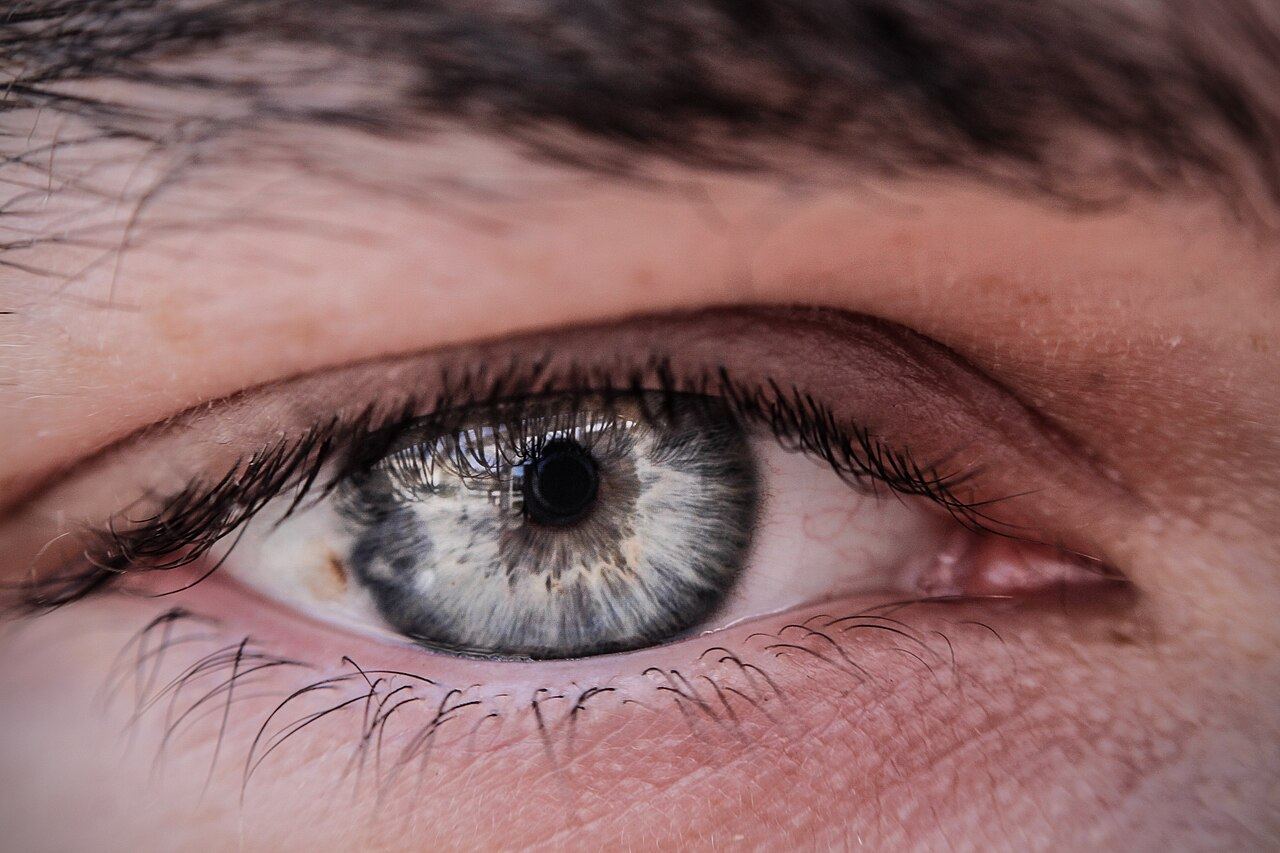
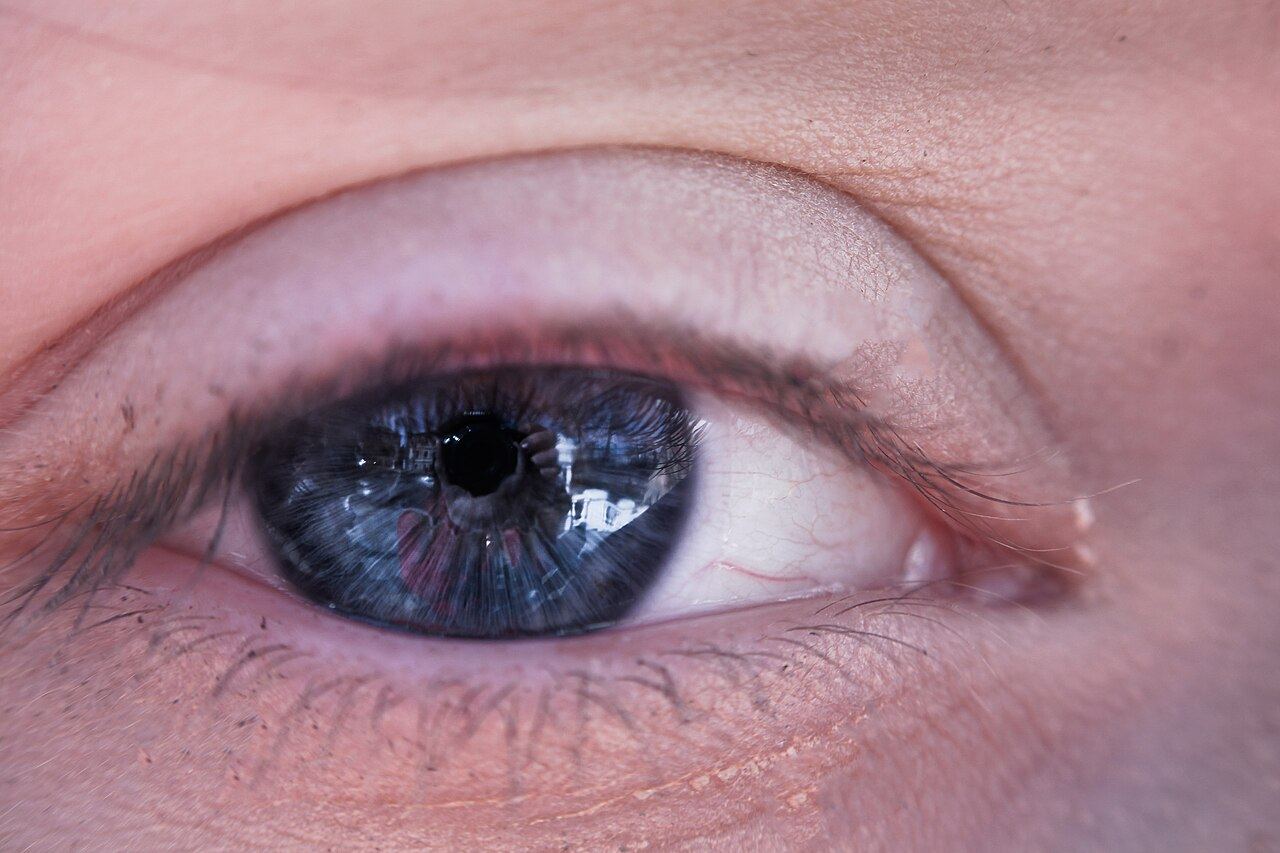
The eye works like a camera, but better in many ways. Light passes through the clear cornea, which does most of the focusing, then through the pupil, which widens and narrows like a camera's aperture. The lens fine-tunes the focus by changing shape. An upside-down image lands on the retina at the back of the eye; the brain turns it the right way up. Johannes Kepler worked out this account of the retinal image in 1604.
The retina contains about 120 million rods, which work in dim light and see in shades of grey, and about 6 million cones, which see colour in brighter light. There are three kinds of cone, tuned roughly to red, green and blue light. By comparing their signals, people with typical colour vision can tell apart perhaps a million shades.
The eye is extraordinarily sensitive. In a 2016 experiment, volunteers in a dark room reported a single photon, the smallest possible packet of light, a little more often than chance would predict. A fully dark-adapted eye can see a candle flame many kilometres away on a clear, dark night.
It is also odd in places. Each eye has a blind spot where the optic nerve leaves the retina; your brain fills in the gap so smoothly that you never notice. Your eyes make quick jumps, called saccades, about three times a second, and the brain hides the blur. What we 'see' is the brain's best interpretation, built from rapid snapshots.
A thousand years ago in Cairo, Ibn al-Haytham showed by experiment that we see because light enters the eye from objects. That overturned the ancient Greek idea that the eye sends out rays. He also studied how the mind interprets what the eye receives, including illusions such as the Moon looking larger near the horizon.
How did eyes come about? Charles Darwin admitted in On the Origin of Species (1859) that the idea of the eye forming by natural selection 'seems, I freely confess, absurd in the highest possible degree'. Then he argued that a series of small useful steps, from light-sensitive patches to cups to lenses, could do it. In 1994 Dan-Eric Nilsson and Susanne Pelger modelled such a series and estimated it could take under 400,000 generations. Many believers accept this account and still see the eye as a gift; others find design more convincing. All agree it is a marvel.
What each faith says
Judaism
“The hearing ear, and the seeing eye, the LORD hath made even both of them.”
Proverbs 20:12 · JPS 1917
Proverbs says: 'The hearing ear, and the seeing eye, the LORD hath made even both of them' (20:12). Every morning, observant Jews thank God for pokeach ivrim, 'who opens the eyes of the blind'. It is one of the dawn blessings listed in the Talmud (Berakhot 60b), said on first opening the eyes.
Jewish ethics also speaks of ayin tovah, the 'good eye', a generous way of looking at others, and ayin hara, the 'evil eye', an envious or grudging one. Pirkei Avot (2:9) names a good eye as the best quality a person can have. To see well, in this teaching, is a moral skill as well as a physical one.
Christianity
“The lamp of the body is the eye. If therefore your eye is sound, your whole body will be full of light.”
Matthew 6:22 · WEB
Jesus said 'The lamp of the body is the eye' (Matthew 6:22): what we fix our eyes on shapes our whole life. The Gospels describe many healings of the blind, and Christians read these both literally and as pictures of spiritual sight: 'I was blind, now I see' (John 9:25).
Kepler, who explained how the eye forms an image, was a devout Lutheran who described his work as thinking about God's creation. Christian charities such as CBM, founded as the Christian Blind Mission, support cataract surgery in poorer countries, seeing it as following Jesus' example. And the former slave-ship captain John Newton, later an Anglican vicar, borrowed the healed man's words for his hymn Amazing Grace: 'was blind, but now I see'.
Islam
“Have they not travelled in the land, and have they hearts wherewith to feel and ears wherewith to hear? For indeed it is not the eyes that grow blind, but it is the hearts, which are within the bosoms, that grow blind.”
Qur'an 22:46 · Pickthall (1930)
The Qur'an often pairs sight with gratitude: 'And Allah brought you forth from the wombs of your mothers knowing nothing, and gave you hearing and sight and hearts that haply ye might give thanks.' (16:78, Pickthall). God is al-Basir, the All-Seeing, who sees everything without needing eyes as we do. The Qur'an also warns that 'Have they not travelled in the land, and have they hearts wherewith to feel and ears wherewith to hear? For indeed it is not the eyes that grow blind, but it is the hearts, which are within the bosoms, that grow blind.' (22:46, Pickthall).
A hadith qudsi is a saying in which the Prophet passes on God's own words. One says that God may test a servant by taking away the sight of his two 'beloved ones', his eyes. If the person is patient, God will give him Paradise in their place (Bukhari 5653). Ibn al-Haytham's Book of Optics, written in Cairo, was translated into Latin and shaped European science for centuries.
Same and different
All three faiths thank God for sight. Each uses 'seeing' as a picture of understanding and goodness, and blindness as a picture of a closed heart. They also share concern for the blind and for the right way to look at others. Judaism is the one that writes thanks for sight into the first minutes of every day. The healing of the blind is especially central to Christianity, where it is part of the story of Jesus. Islam also honours Jesus as a prophet who healed the blind by God's permission (Qur'an 5:110).
A moment to reflect
- Your brain fills in your blind spot without telling you. What else might we 'fill in' without noticing?
- Is it possible to look without really seeing? When has that happened to you?
- What would you most miss seeing if you lost your sight?
- Surah al-Balad links having eyes to noticing the hungry and the poor. Who do we fail to see?
Watch
The US National Eye Institute's clear two-minute guide to how the eye works.
TED-Ed on how the human eye came to be, step by step.
Crash Course Anatomy and Physiology on vision, for older students.
TED-Ed on how we see colour, and why not everyone sees it the same way.
Do it together
Draw a cross and a dot 8 cm apart on a card. Close your left eye, stare at the cross with your right, and move the card slowly towards your face. At one point the dot vanishes. Talk about what else we might not notice.
Invite someone from a local sight-loss charity (such as the RNIB or a guide-dog group) to speak. Try a short guided walk in pairs, one blindfolded, and talk about trust.
Use a magnifying glass to throw an upside-down image of a window onto paper. Compare with the eye's lens and retina, and with Ibn al-Haytham's dark-room experiments.
For one week, before getting out of bed, say a word of thanks for being able to see, as Jews do each morning with pokeach ivrim. Then notice one thing each day that you usually look past.
Read the story of the man born blind in John 9, then sing or listen to John Newton's Amazing Grace. Share the story of a time when you 'saw' something, or someone, differently for the first time.
Go deeper
- How the eyes work (National Eye Institute) · article
- Direct detection of a single photon by humans (2016) · paper
- Nilsson and Pelger, A pessimistic estimate of the time required for an eye to evolve (1994) · paper
- Surah al-Balad 90 (Quran.com) · scripture
- Proverbs 20 (Sefaria) · scripture
- John 9 (WEB) on Bible Gateway · scripture
In pictures
Try this · KS2 · 5 min · Science
Find your blind spot
You need: a card or paper, a pen
- Draw a cross on the left and a dot about 8 cm to its right.
- Close your left eye. Stare at the cross with your right eye.
- Move the card slowly towards your face.
- At one point the dot vanishes! Your brain fills in the gap without telling you.
A living camera that focuses itself and cleans itself, and a brain that quietly fills the gaps.
Sources (9)
- Cornea, lens and retina; how the eye focuses: National Eye Institute, How the eyes work
- About 120 million rods and 6 million cones: NCBI Bookshelf, Neuroscience (Purves et al.), Anatomical distribution of rods and cones
- Kepler explained the retinal image (1604): Britannica, Johannes Kepler
- Humans can discriminate perhaps a million colours: Neitz and Neitz, Annual Review of Vision Science / commonly cited estimate (Judd and Wyszecki)
- Single-photon detection slightly above chance: Tinsley et al., Nature Communications 7, 12172 (2016)
- Saccades about three per second: NCBI Bookshelf, Neuroscience, Types of eye movements
- Ibn al-Haytham's intromission theory and Moon illusion: Britannica, Ibn al-Haytham
- Darwin's 'absurd in the highest possible degree' passage (Origin, ch. 6): Darwin Online, On the Origin of Species (1859)
- Eye evolution modelled at under 400,000 generations: Nilsson and Pelger, Proc. R. Soc. B 256, 53 (1994)