The 1.4-kilogram organ inside your skull has the texture of soft tofu. It makes up about 2 per cent of your body weight but uses about 20 per cent of your energy. Right now, it is turning black marks on a screen into meaning, keeping your heart beating, holding memories of your childhood and wondering what is for tea.
Neuroscientists have learned an enormous amount about how the brain works. Yet one question remains wide open: why does all this electrical and chemical activity come with experience, with the redness of red and the feeling of being you? Philosophers call it the hard problem.
“And Allah brought you forth from the wombs of your mothers knowing nothing, and gave you hearing and sight and hearts that haply ye might give thanks.”
Qur'an 16:78 · Pickthall (1930)
This verse is part of a long list of God's gifts in Surah an-Nahl ('The Bee'). The word translated 'hearts' (af'idah) refers to the inner faculty of understanding and feeling, not the physical organ. In Qur'anic language, the heart is where a person understands and believes. The verse moves from knowing nothing to the tools of knowing, and ends with gratitude.
What science shows
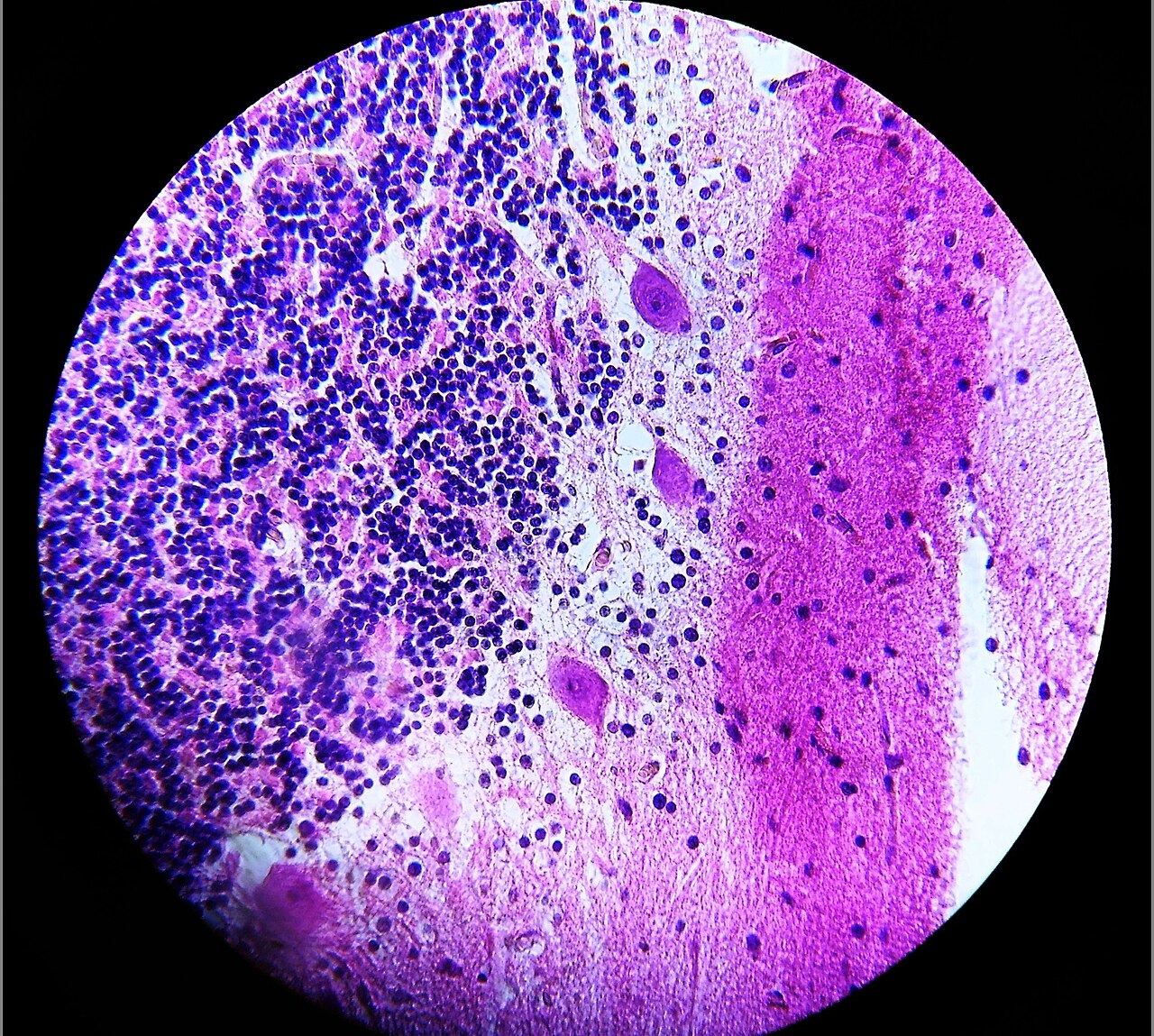
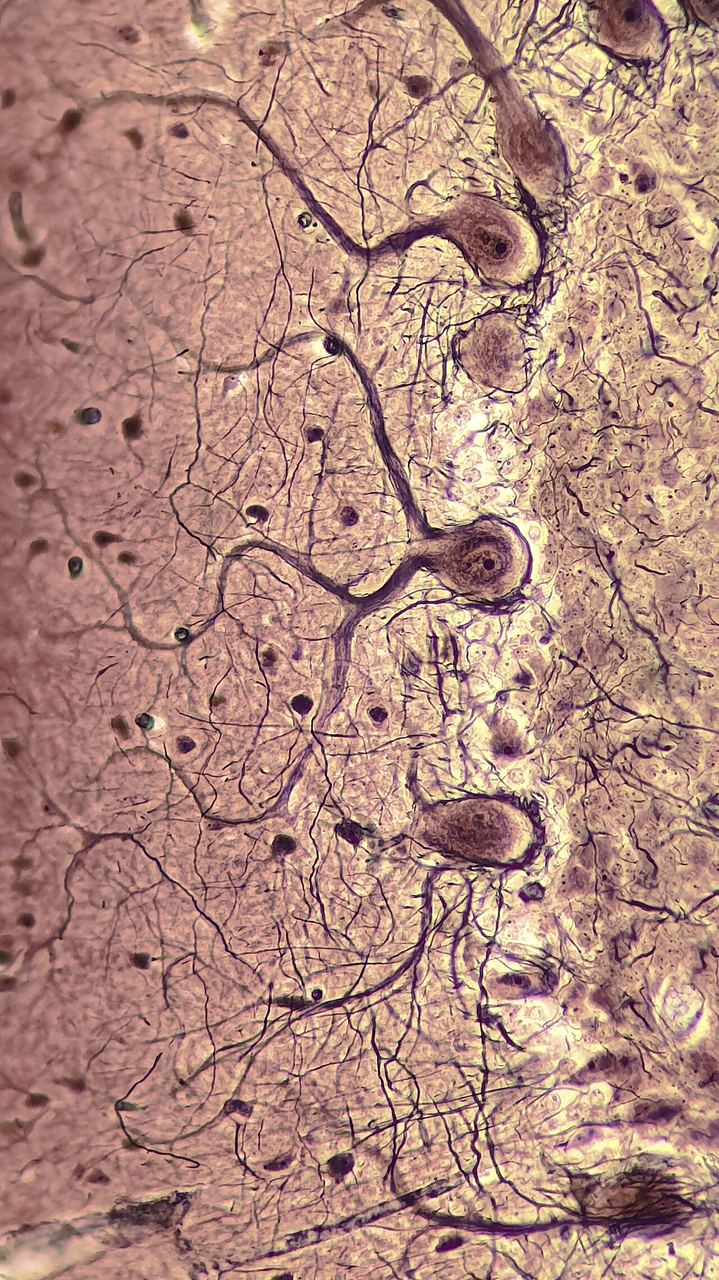
For a long time textbooks said the brain had about 100 billion neurons. In 2009 the Brazilian neuroscientist Suzana Herculano-Houzel and colleagues counted them more directly, by dissolving brains into a 'soup' of cell nuclei. They found about 86 billion, along with a similar number of support cells called glia. Each neuron can connect to thousands of others, giving perhaps 100 trillion connections, or synapses.
Neurons talk with electricity and chemistry. A signal travels along a nerve fibre as a wave of electrical charge, at speeds from about 1 to over 100 metres per second. Then it jumps the tiny gap to the next cell using chemical messengers called neurotransmitters. A thought, a memory or a movement is a pattern of millions of these signals.
The brain changes itself. This is called neuroplasticity. In a famous 2000 study at University College London, Eleanor Maguire and colleagues studied London taxi drivers, who memorise thousands of streets for 'the Knowledge'. The drivers had a larger rear part of the hippocampus, a brain area linked to navigation, than other people. Learning, practising and even praying regularly reshape the connections in your head.
Scientists can now see which brain areas become active during speaking, recognising faces or feeling pain. Brain scans have shown changes during meditation and prayer, though researchers warn against simple conclusions: seeing activity is not the same as explaining experience.
That is the hard problem. In 1995 the philosopher David Chalmers distinguished the 'easy' problems (explaining functions such as attention, memory and reporting) from the hard problem: why there is subjective experience at all. Some scientists think the hard problem will dissolve as neuroscience advances; others think it points to something basic about reality that physics does not yet describe.
In 2025 a large, carefully planned 'adversarial collaboration' published in Nature tested two leading theories of consciousness against each other. Each side committed in advance to what would count against it. The results were mixed: neither theory's key predictions were fully confirmed. The mind remains, in the words of many researchers, the last great frontier.
What each faith says
Judaism
“Who hath put wisdom in the inward parts? Or who hath given understanding to the mind?”
Job 38:36 · JPS 1917
In the Book of Job, God asks: 'Who hath put wisdom in the inward parts? Or who hath given understanding to the mind?' (Job 38:36). In the daily Amidah prayer, the first request Jews make is for understanding: 'You graciously give knowledge to humanity and teach people understanding. Grant us knowledge, understanding and insight' (our rendering).
Jewish thought holds that the human mind is part of what it means to be made in God's image. Maimonides, who was also a physician, taught that the highest human calling is to use the intellect to know God. He also wrote detailed medical works on health of body and mind. Jewish teaching also holds that every human being is precious whatever their abilities, including those with dementia or learning disabilities.
Christianity
“Don’t be conformed to this world, but be transformed by the renewing of your mind, so that you may prove what is the good, well-pleasing, and perfect will of God.”
Romans 12:2 · WEB
Paul writes: 'Be transformed by the renewing of your mind' (Romans 12:2). Christians have long believed that prayer, scripture and habits of love can change a person from the inside, and some see neuroplasticity as a physical side of that teaching. The English physician Thomas Willis, a devout Anglican, coined the word 'neurology' and published a landmark book on the brain in 1664. And for some fifteen centuries Benedictine monks and nuns have practised lectio divina, slow 'divine reading' of scripture, as a daily way of renewing the mind.
Christians hold a range of views on how mind and brain relate. Some believe in a soul distinct from the body; others, such as many Christian neuroscientists, speak of the whole person as a body-and-soul unity that God will raise. All teach that each person's worth comes from being loved by God, not from how well their brain works.
Islam
“They are asking thee concerning the Spirit. Say: The Spirit is by command of my Lord, and of knowledge ye have been vouchsafed but little.”
Qur'an 17:85 · Pickthall (1930)
The Qur'an repeatedly calls on people to use their minds: 'Will you not reason?' (afala ta'qilun) appears again and again. It also marks a limit: 'They are asking thee concerning the Spirit. Say: The Spirit is by command of my Lord, and of knowledge ye have been vouchsafed but little.' (17:85, Pickthall).
The Prophet Muhammad ﷺ (peace be upon him) said: 'In the body there is a piece of flesh; if it is sound, the whole body is sound, and if it is corrupt, the whole body is corrupt. Truly, it is the heart' (Bukhari 52). Muslim scholars have discussed how the spiritual heart, the qalb, relates to the physical brain and heart. Most say the qalb is a spiritual reality connected to, but not the same as, any organ. Ibn Sina (Avicenna) wrote influential works on the mind, including a famous thought experiment about a 'floating man' aware of himself without his senses.
Same and different
All three faiths honour the mind as a gift from God and call on people to use it, and each teaches that a human being is more than a body. They share a sense that the deepest part of us remains partly hidden. They describe it with different words and ideas. Judaism speaks of nefesh, 'life', and neshamah, 'breath' or 'soul'. Christianity speaks of soul and spirit. Islam speaks of ruh, 'spirit', nafs, 'self', and qalb, 'heart'. Islam gives that heart pride of place: if it is sound, the Prophet said, the whole body is sound.
A moment to reflect
- Your brain is reshaping itself as you learn. What would you like to train it to do better?
- Do you think science will ever explain why experience feels like something?
- If the 'heart' in scripture means the place where we understand and believe, what does it mean to have a sound heart?
- How should a community treat people whose brains work differently?
Watch
Bruce Hood's Royal Institution Christmas Lecture on what is in your head, made for young audiences.
Eleanor Maguire at the Royal Institution on memory, including her London taxi driver research.
Anil Seth on the neuroscience of consciousness, for older students and adults.
TED-Ed explains how nerves carry signals, in five minutes.
Do it together
One person drops a ruler; the other catches it as fast as they can. The distance it falls shows how long the signal took from eyes to brain to hand. Try it before and after a few minutes of practice.
Learn a short list (or a short scripture passage) by placing each item in a room of your home in your imagination. This is the taxi drivers' method, and it is also how many people memorise the Qur'an, Psalms or prayers.
Run a dementia-friendly tea, hymn-singing or nasheed session, with familiar songs and prayers. Organisations such as Alzheimer's Society offer free Dementia Friends sessions for community groups.
Many Jewish children learn the Shema, 'Hear, O Israel', by heart before they can read, and say it every night. Choose a short passage from your own tradition, or a poem, and learn it together over a week, one line a day.
Try the Benedictine practice of lectio divina together: read a short passage slowly three times, in silence between, and notice which word or phrase stays with you. Then talk about what happens in your mind when you slow down.
Go deeper
- Brain basics (US National Institute of Neurological Disorders and Stroke) · article
- Azevedo et al., Equal numbers of neuronal and non-neuronal cells (2009) · paper
- Consciousness (Stanford Encyclopedia of Philosophy) · article
- Surah al-Isra 17:85 (Quran.com) · scripture
- Romans 12 (Bible Gateway, WEB) · scripture
- Job 38 (JPS 1917) on Sefaria · scripture
In pictures
Try this · KS2 · 10 min · Science
Catch the ruler
You need: a 30 cm ruler, a partner
- Your partner holds the ruler at the top. Put your finger and thumb open at the 0 mark.
- Without warning they drop it. Catch it as fast as you can.
- Read the number where you caught it. Try five times.
- Does practice make you faster? Your brain is learning.
Eighty-six billion nerve cells, and why any of it feels like anything is still a mystery.
Sources (8)
- Brain about 2% of body weight, about 20% of energy use: Raichle and Gusnard, PNAS 99, 10237 (2002)
- About 86 billion neurons and similar numbers of non-neuronal cells: Azevedo et al., Journal of Comparative Neurology 513, 532 (2009)
- Nerve conduction speeds from about 1 to over 100 m/s: NCBI Bookshelf, Neuroscience (Purves et al.)
- London taxi drivers have larger posterior hippocampi: Maguire et al., PNAS 97, 4398 (2000)
- Chalmers distinguishes easy problems from the hard problem (1995): Chalmers, Journal of Consciousness Studies 2(3) (1995)
- 2025 adversarial test of IIT and GNWT inconclusive: Cogitate Consortium, Nature (2025)
- Thomas Willis coined 'neurology', Cerebri Anatome (1664): Britannica, Thomas Willis
- Ibn Sina's floating man thought experiment: Stanford Encyclopedia of Philosophy, Ibn Sina's psychology