A large oak tree is mostly made of air. That sounds wrong, but it is true. The wood, leaves and roots are built mainly from carbon taken out of the air as carbon dioxide, joined to water, using the energy of sunlight. The soil supplies only a small amount of mineral.
In return, plants give out oxygen. Every breath you take depends on photosynthesis, and so does every meal: bread, rice, fruit, and the grass that fed the cow. When people say we live on sunlight, they are describing biology, not poetry.
“He it is Who sendeth down water from the sky, and therewith We bring forth buds of every kind; We bring forth the green blade from which We bring forth the thick-clustered grain; and from the date-palm, from the pollen thereof, spring pendant bunches; and (We bring forth) gardens of grapes, and the olive and the pomegranate, alike and unlike. Look upon the fruit thereof, when they bear fruit, and upon its ripening. Lo! herein verily are portents for a people who believe.”
Qur'an 6:99 · Pickthall (1930)
This verse from Surah al-An'am is one of the Qur'an's great nature passages. It moves from rain to green shoots (khadir) to fruit, and then gives a command: look. Muslims have read it as an invitation to watch the slow process of growth with attention, as an act of worship.
What science shows
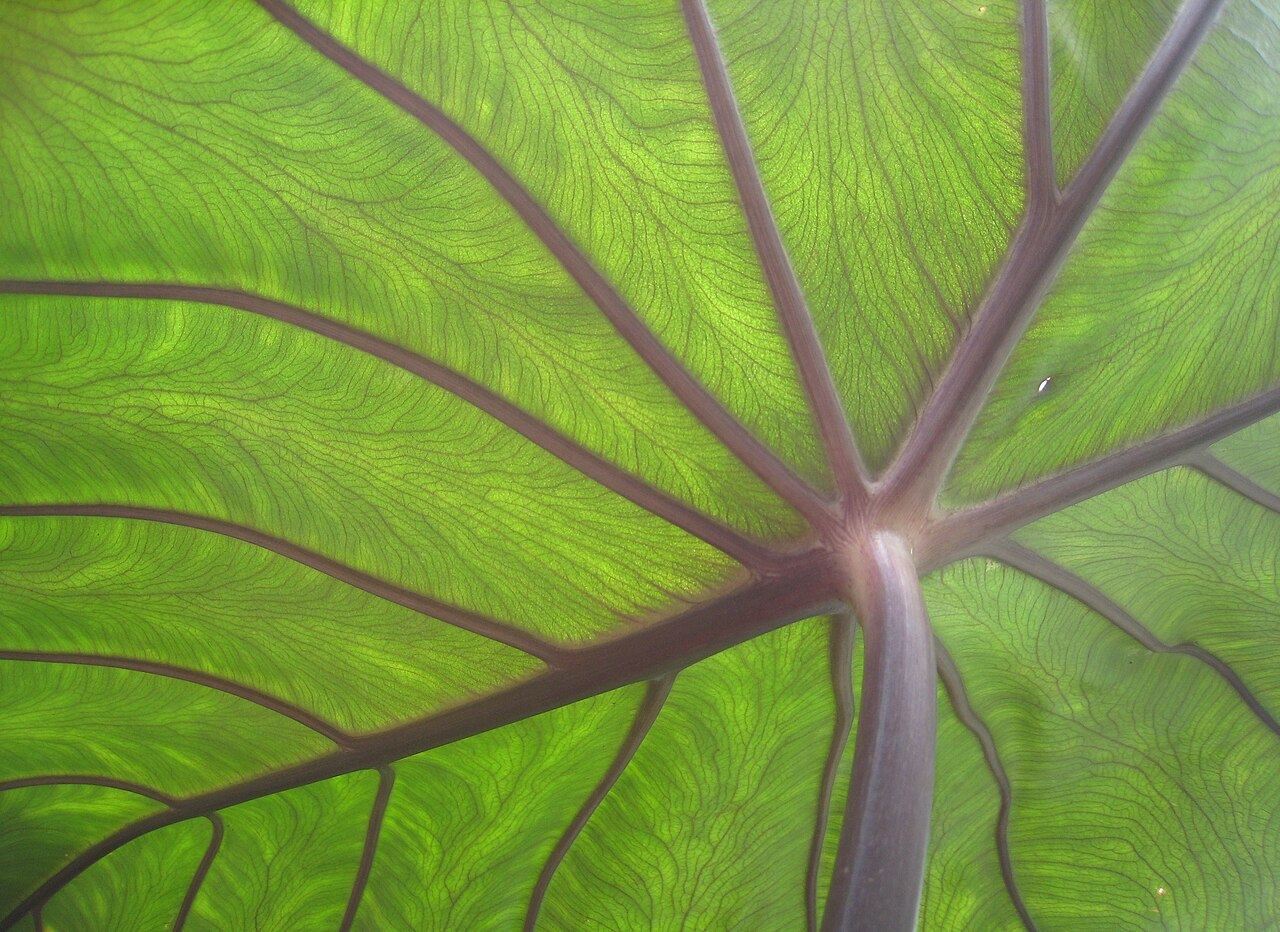
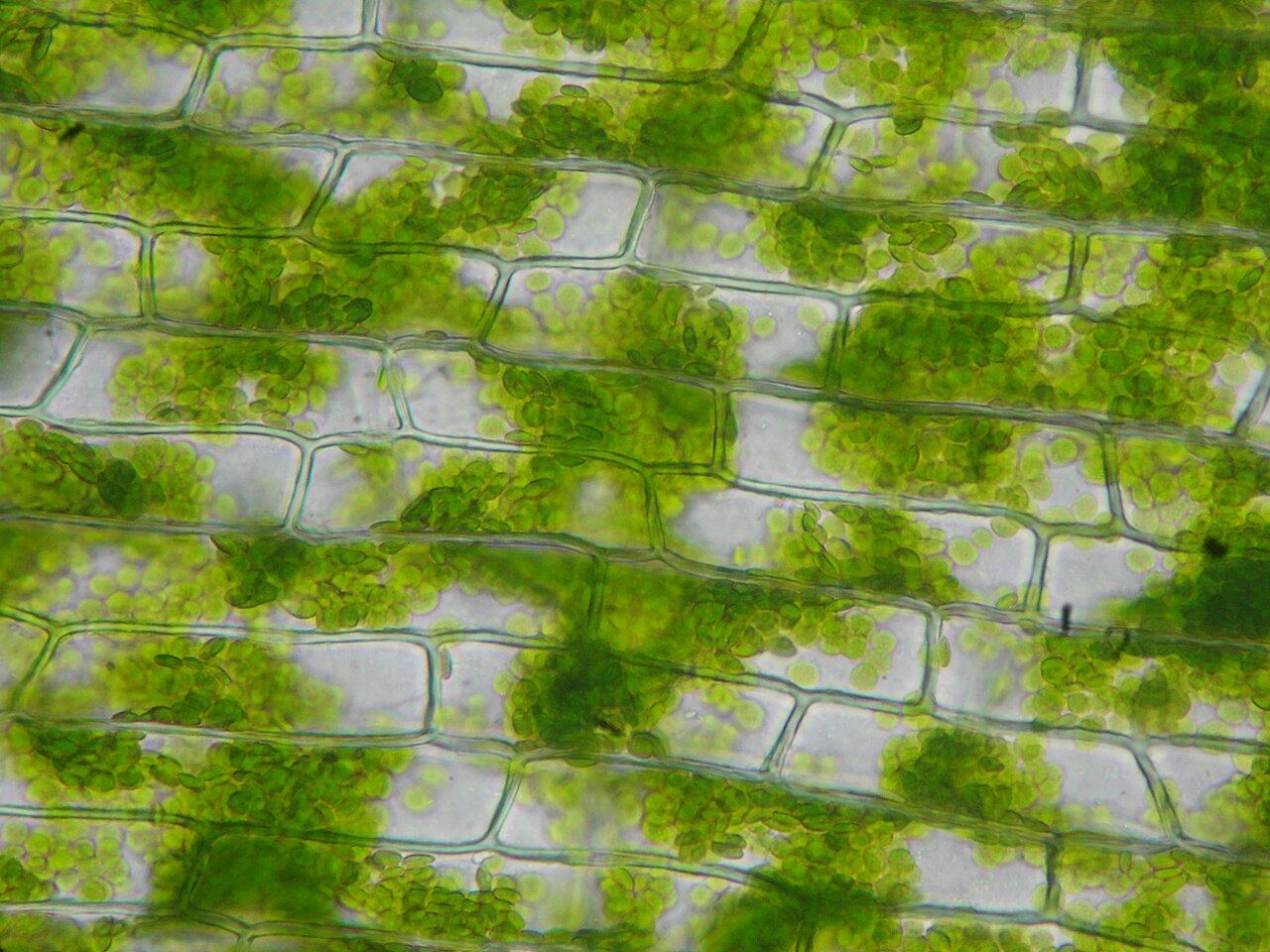
In simple terms, photosynthesis is: carbon dioxide plus water, with light energy, makes glucose and oxygen. In symbols, 6CO2 + 6H2O gives C6H12O6 + 6O2. It happens mostly in chloroplasts, tiny green structures in leaf cells. The green pigment chlorophyll absorbs red and blue light and reflects green, which is why plants look green.
It works in two stages. In the light-dependent reactions, light splits water molecules, releasing oxygen as a waste product and capturing energy in carrier molecules. In the second stage, the Calvin cycle, that energy is used to fix carbon dioxide into sugar. Melvin Calvin mapped the cycle using radioactive carbon and won the 1961 Nobel Prize. The key enzyme, Rubisco, is probably the most abundant protein on Earth.
The discovery took centuries. In 1771 Joseph Priestley, an English Dissenting minister and chemist, found that a sprig of mint could 'restore' air in which a candle had burned out. In 1779 the Dutch physician Jan Ingenhousz showed that plants only do this in light, and only with their green parts. Bit by bit, scientists pieced together a process involving dozens of steps and proteins.
Photosynthesis changed the planet. Cyanobacteria, tiny single-celled organisms in the ancient oceans, began making oxygen more than 2.4 billion years ago. Around that time oxygen started building up in the atmosphere, in what geologists call the Great Oxidation Event. It eventually made complex life and the ozone layer possible. The oxygen in every breath you take was released by photosynthesis.
It is not only trees. Microscopic phytoplankton in the oceans produce roughly half of the oxygen made on Earth each year. One kind, Prochlorococcus, is so small and so numerous that it may be the most abundant photosynthetic organism on the planet; it was only discovered in 1986.
Photosynthesis is also astonishingly efficient at its first step. When light is absorbed, its energy is passed to a reaction centre with very little loss. Some researchers have argued that quantum effects help guide that energy; others think classical physics is enough to explain it. The debate continues, but either way, a leaf handles light with a skill engineers are still trying to copy in artificial solar fuels.
What each faith says
Judaism
“Who causeth the grass to spring up for the cattle, And herb for the service of man; To bring forth bread out of the earth”
Psalm 104:14 · JPS 1917
On the third day of creation God says, 'Let the earth put forth grass, herb yielding seed, and fruit-tree bearing fruit after its kind' (Genesis 1:11). Psalm 104 praises God who 'causeth the grass to spring up for the cattle, and herb for the service of man; to bring forth bread out of the earth'. Jewish blessings mark every kind of food by its source. There is 'who creates the fruit of the tree', 'who creates the fruit of the ground', 'who brings forth bread from the earth'.
Each spring, when fruit trees blossom in the month of Nisan, Jews may say a once-a-year blessing, Birkat HaIlanot, “the blessing of the trees”. 'Blessed are You... who has left nothing lacking in His world, and created in it good creatures and good trees for people to enjoy' (Berakhot 43b, our rendering). The festival of Tu BiShvat is a 'new year for trees'.
Christianity
“Why are you anxious about clothing? Consider the lilies of the field, how they grow. They don’t toil, neither do they spin, yet I tell you that even Solomon in all his glory was not dressed like one of these.”
Matthew 6:28-29 · WEB
Jesus told his followers to 'consider the lilies of the field, how they grow' (Matthew 6:28), using plants to teach trust in God's care. He compared God's kingdom to a mustard seed and spoke of himself as a vine. Harvest festivals, thanking God for crops, are among the best-loved services in British churches.
Priestley, whose mint experiment began the story of photosynthesis, was a Unitarian minister as well as a scientist. Gregor Mendel's work on peas came out of a monastery garden. In Laudato Si' (2015) Pope Francis wrote that 'soil, water, mountains: everything is, as it were, a caress of God', calling Christians to care for the green world.
Islam
“Seest thou not how Allah sendeth down water from the sky and then the earth becometh green upon the morrow? Lo! Allah is Subtile, Aware.”
Qur'an 22:63 · Pickthall (1930)
The Qur'an speaks again and again of rain bringing dead earth to life, and of green growth. 'Seest thou not how Allah sendeth down water from the sky and then the earth becometh green upon the morrow? Lo! Allah is Subtile, Aware.' (22:63, Pickthall). Green is the colour of the garments of Paradise in the Qur'an (18:31, 76:21), and it has become closely associated with Islam.
The Prophet Muhammad ﷺ (peace be upon him) spoke of a Muslim who plants a tree or sows a crop. If a bird, a person or an animal eats from it, he said, it counts as charity. The reward goes to the one who planted it (Bukhari 2320, Muslim 1553). Islamic law has long protected trees: early rules for armies forbade cutting down fruit trees. Many mosques in the UK now run tree-planting and community garden projects.
Same and different
All three faiths thank God for food and plants, see a green and fruitful earth as a gift, and protect fruit trees in their laws. They mark it differently. Jews have blessings over each kind of food and the blessing on blossoming trees. Christians have harvest festivals and grace before meals. Muslims give thanks before and after eating, and Islam is the one that promises a reward for every creature fed by what you plant. Each uses plants to teach about God's care, in its own scriptures.
A moment to reflect
- A tree is built mostly from air and light. Does that change how you see a tree?
- Which plant or tree has meant something to you, and why?
- Who first grew the food you ate today? How many people and how much sunlight did it take?
- What would it mean to 'look at its fruit as it ripens' with real attention, as Qur'an 6:99 asks?
Watch
TED-Ed's simple, clear story of photosynthesis and food.
Crash Course Biology goes through both stages of photosynthesis.
PBS Eons on the ancient time when the first oxygen almost wiped out life.
Kurzgesagt on why trees are so strange and so important.
Do it together
Put a fresh leaf in a glass of water in bright sunlight and wait an hour. Tiny bubbles of oxygen appear on the leaf, the same thing Priestley and Ingenhousz saw.
Start or join a community garden with a local school, church, mosque or synagogue. Plant seeds together, and say or read a blessing from each tradition at sowing and at harvest.
Learn how Jews, Christians and Muslims give thanks before eating. Try each one at a shared meal and talk about where the food came from.
Go deeper
- What happens during photosynthesis? (BBC Bitesize, GCSE) · article
- Phytoplankton and oxygen (NOAA Ocean Service) · article
- The rise of oxygen in Earth's early ocean and atmosphere (Nature, 2014) · paper
- Surah al-An'am 6:99 (Quran.com) · scripture
- Matthew 6 (Bible Gateway, WEB) · scripture
- Talmud Berakhot 43b on Sefaria: the blessing on blossoming trees · scripture
In pictures
Try this · KS2 · 1 hour · Science
Leaves making oxygen
You need: a fresh green leaf (pondweed is best), a clear bowl of water, a sunny windowsill, a magnifying glass
- Put the leaf in the bowl of water and weigh it down with a pebble.
- Leave it in bright sunlight for an hour.
- Look closely at the leaf's surface with the magnifying glass.
- Tiny bubbles appear: oxygen the leaf has made from water and sunlight.
Every leaf is a solar-powered kitchen, and almost every meal you have eaten began in one.
Sources (8)
- Photosynthesis equation and chlorophyll absorbing red and blue light: Britannica, photosynthesis
- Calvin cycle mapped by Melvin Calvin; Nobel 1961: Nobel Prize in Chemistry 1961
- Rubisco likely the most abundant protein on Earth: Bar-On and Milo, PNAS 116, 4738 (2019)
- Priestley's mint experiment (1771); Ingenhousz shows light is needed (1779): Britannica, photosynthesis: history
- Great Oxidation Event about 2.4 billion years ago, from cyanobacteria: Lyons, Reinhard and Planavsky, Nature 506, 307 (2014)
- Ocean phytoplankton produce about half of Earth's oxygen: NOAA Ocean Service
- Prochlorococcus discovered 1986, among the most abundant photosynthetic organisms: Chisholm et al., Nature 334, 340 (1988)
- Debate over quantum coherence in photosynthetic energy transfer: Engel et al., Nature 446, 782 (2007); Cao et al., Science Advances 6 (2020)