Right now you are moving at about 107,000 kilometres an hour. That is the speed of the Earth round the Sun. You do not feel it, and you do not spill your tea. Give or take, you will come back to this exact point in the Earth's orbit on this date next year.
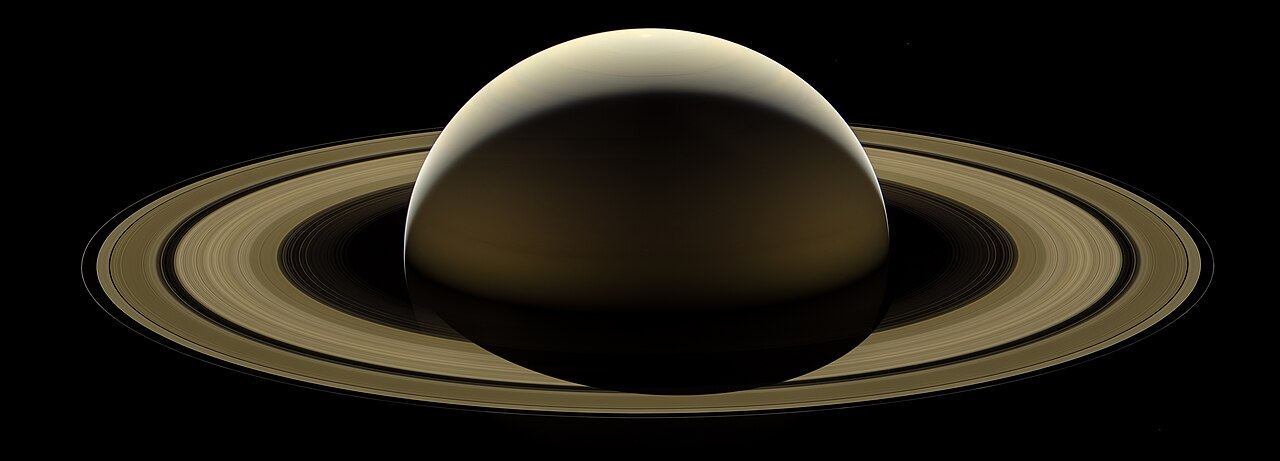
The thing that keeps it all in order is gravity. It is so weak that a fridge magnet beats the pull of the whole planet. Yet it shapes every star and galaxy there is. Isaac Newton described it, Albert Einstein reimagined it, and physicists still cannot fit it together with the rest of physics.
“And the sun runneth on unto a resting-place for him. That is the measuring of the Mighty, the Wise. And for the moon We have appointed mansions till she return like an old shrivelled palm-leaf. It is not for the sun to overtake the moon, nor doth the night outstrip the day. They float each in an orbit.”
Qur'an 36:38-40 · Pickthall (1930)
These verses come in Surah Ya Sin, often recited by Muslims for the sick and the dying. The passage lists signs: dead earth brought to life, night peeled away from day, the sun and moon each keeping to its course. The word for 'floating' (yasbahun) is the same word used for swimming. It describes order and reliability, the sky as a sign of God's care, not a lesson in orbital mechanics.
What science shows
In 1687 Isaac Newton published the Principia. He showed that one law explains both a falling apple and the orbiting Moon. Every piece of matter pulls on every other, with a force that gets four times weaker each time the distance doubles. With it he explained the tides, the paths of comets and the elliptical orbits Johannes Kepler had found earlier in the century.
An orbit is a kind of endless falling. The International Space Station falls towards the Earth all the time. But it is moving sideways so fast, about 28,000 kilometres an hour, that the ground curves away beneath it. It goes round once every 90 minutes or so, which means the crew sees around 16 sunrises a day. Astronauts float not because gravity is missing (it is about 90 per cent as strong up there) but because they are falling with the station.
Gravity is extremely weak. Between two protons, the electric force is about a trillion trillion trillion (10 to the power 36) times stronger than gravity. Gravity wins on big scales only because it always attracts and adds up, while electric charges usually cancel out. Without that weakness, stars would burn out fast; without its steady addition, they would never form at all.
In 1915 Einstein's general theory of relativity described gravity differently: mass and energy curve space and time, and objects follow the straightest possible paths through that curved spacetime. It predicts that clocks run faster higher up. The satellites of GPS have to correct for this, about 38 microseconds a day overall; without the correction, your phone's map would drift by kilometres within a day.
Einstein's theory also predicted ripples in spacetime. On 14 September 2015 the LIGO detectors in the United States picked one up for the first time, from two black holes colliding about 1.3 billion years ago. The ripple stretched and squeezed the 4-kilometre detector arms by less than a thousandth of the width of a proton.
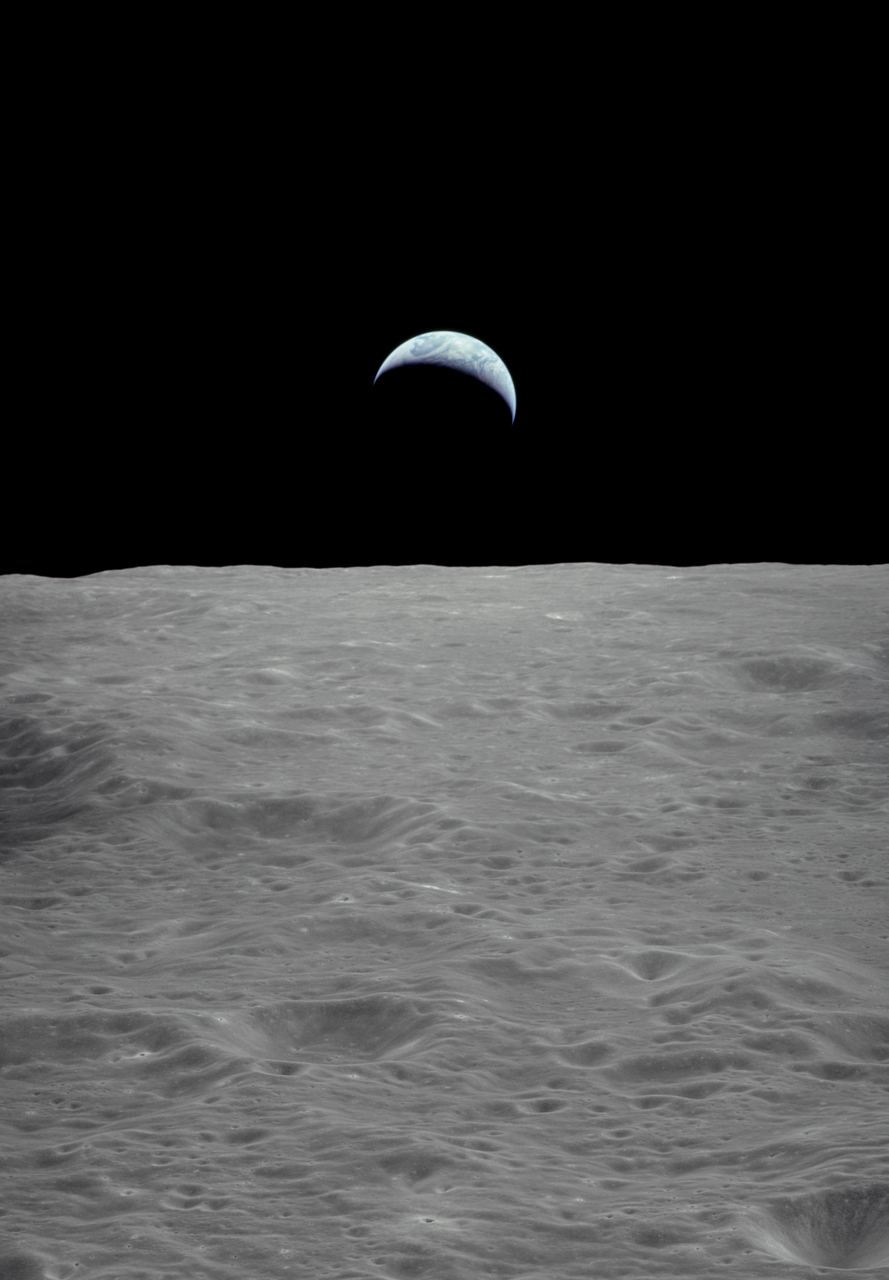
Gravity is also the great slow sculptor. Lunar laser ranging, using mirrors left by the Apollo astronauts, shows the Moon is moving away from Earth by about 3.8 centimetres a year. Tides gently pass energy between them. And gravity remains a puzzle. It refuses to fit with quantum theory, and the motions of galaxies suggest either unseen 'dark matter' or that our theory of gravity is incomplete.
What each faith says
Judaism
“Canst thou bind the chains of the Pleiades, Or loose the bands of Orion? Canst thou lead forth the Mazzaroth in their season? Or canst thou guide the Bear with her sons? Knowest thou the ordinances of the heavens? Canst thou establish the dominion thereof in the earth?”
Job 38:31-33 · JPS 1917
The Book of Job contains God's great speech from the whirlwind. It asks Job a series of questions about the order of the heavens: can you bind the Pleiades, loosen Orion, guide the stars in their seasons? Job is invited to marvel at an order he did not make and cannot command. Elsewhere Job says that God 'hangeth the earth over nothing' (Job 26:7).
Jewish tradition celebrates the reliability of the heavens in ritual. Once every 28 years, the Birkat HaChamah, the blessing of the sun, marks the sun's return in a traditional calendar cycle. It was last said in 2009 and will next be said in 2037. The monthly blessing of the new moon, Kiddush Levanah, praises the One who gave the heavenly bodies 'a law and a time, that they should not change their task' (our rendering). The prophet Jeremiah compares the fixed order of sun, moon and stars to God's faithfulness to Israel (Jeremiah 31:35-36).
Christianity
“He is before all things, and in him all things are held together.”
Colossians 1:17 · WEB
Newton was a deeply religious, if unorthodox, Christian who wrote more about theology than physics. The General Scholium was added to the Principia in 1713. In it Newton wrote that 'this most beautiful system of the sun, planets and comets could only proceed from the counsel and dominion of an intelligent and powerful Being' (Motte's 1729 translation). Many later Christian scientists agreed; others argued that gravity's laws need no extra explanation.
The New Testament speaks of Christ as the one in whom 'all things are held together' (Colossians 1:17) and who upholds all things by his word (Hebrews 1:3). Christians do not read this as a theory of gravity. They read it as saying that the whole order of nature, including its laws, depends moment by moment on God. Thomas Chisholm's hymn Great Is Thy Faithfulness (1923), much loved in Methodist and evangelical churches, hears the sun, moon and stars in their courses joining in witness to God's faithfulness.
Islam
“Lo! Allah graspeth the heavens and the earth that they deviate not, and if they were to deviate there is not one that could grasp them after Him. Lo! He is ever Clement, Forgiving.”
Qur'an 35:41 · Pickthall (1930)
The Qur'an speaks of God holding the sky. 'Lo! Allah graspeth the heavens and the earth that they deviate not, and if they were to deviate there is not one that could grasp them after Him. Lo! He is ever Clement, Forgiving.' (35:41, Pickthall). It also says God raised the heavens 'Allah it is Who raised up the heavens without visible supports, then mounted the Throne, and compelled the sun and the moon to be of service, each runneth unto an appointed term; He ordereth the course; He detaileth the revelations, that haply ye may be certain of the meeting with your Lord.' (13:2, Pickthall). Classical commentators such as al-Tabari read these as signs of God's power and care, which every listener could see, whatever their science.
Muslim astronomers spent centuries tracking orbits precisely. At the observatory in Maragha, founded in 1259, Nasir al-Din al-Tusi devised a mathematical device now called the Tusi couple. Historians have found it reappearing in Copernicus's work three centuries later. For believers, the fixed paths of sun and moon are a picture of a universe that obeys its Lord.
Same and different
Jews, Christians and Muslims all read the steady order of the heavens as a sign of a faithful Creator, and each produced astronomers who measured it carefully. None of the scriptures offers a physics of gravity. Believers in every one of these faiths differ on whether gravity's laws point to God or simply describe how nature works. Judaism is the one with a blessing for the sun's long cycle, said once in 28 years. Islam is the one that speaks of God 'holding' the heavens lest they cease to be. Christians speak of the world being held together 'in Christ'.
A moment to reflect
- What in your life moves so steadily that you have stopped noticing it?
- Is a law of nature an explanation, or a description that still needs explaining?
- Newton saw design in the solar system; others see only physics. What would it take to change your mind either way?
- What are the 'orbits' in your own life, the steady patterns that keep you going?
Watch
Veritasium on Einstein's view of gravity as curved spacetime, clearly animated.
A short TED-Ed lesson on how to think about gravity, good for teenagers.
Under four minutes on why the solar system is flat.
Why three bodies pulling on each other become unpredictable: gravity's hidden chaos.
Do it together
Swing a small bucket with a little water in it in a vertical circle, outdoors. The water stays in because it is 'falling' round the circle, just like the Space Station. Talk about what it means to be held.
Use NASA's free 'Spot the Station' service to find when the ISS passes over your town. Watch it cross the sky in about five minutes, and work out how many times it has circled the Earth since you were born.
Watch the Moon every clear evening for a month and sketch its shape. Jewish, Christian and Muslim calendars all depend on it (Rosh Chodesh, Easter, Ramadan); share how each community uses it.
Go deeper
- What is gravity? (NASA Space Place) · article
- LIGO: gravitational waves detected · paper
- Spot the Station (NASA) · article
- Newton's General Scholium (The Newton Project) · article
- Surah Ya Sin 36:37-40 (Quran.com) · scripture
- Job 38 (Sefaria) · scripture
- Colossians 1 (WEB) on Bible Gateway · scripture
In pictures
Try this · KS2 · 10 min · Science
The great drop test
You need: a ball, two identical sheets of paper, a chair to stand by (not on)
- Drop the ball and a flat sheet of paper together. Which lands first?
- Scrunch one sheet into a tight ball. Drop it with the ball.
- What changed? (Air was slowing the flat sheet.)
- Galileo is said to have tested this idea; astronauts on the Moon, with no air, showed a hammer and a feather landing together.
The weakest force in nature keeps your feet on the ground and the Moon in its path.
Sources (9)
- Earth orbits the Sun at about 29.8 km/s (about 107,000 km/h): NASA Earth Fact Sheet
- Newton's Principia (1687) and the inverse-square law: Britannica, Principia
- ISS speed about 28,000 km/h, about 16 orbits a day: NASA, Space Station facts and figures
- Gravity on the ISS is about 90 per cent of that on the surface: NASA, What is microgravity?
- GPS relativistic clock correction of about 38 microseconds a day: Ashby, Living Reviews in Relativity 6, 1 (2003)
- First detection of gravitational waves, 14 September 2015, from black holes 1.3 billion light years away: LIGO Caltech
- Moon recedes about 3.8 cm a year (lunar laser ranging): NASA Goddard, Measuring the Moon's distance (Apollo laser ranging)
- Gravity is extremely weak compared with electromagnetism: CERN, The Standard Model
- Tusi couple and its later appearance in Copernicus: Britannica, Nasir al-Din al-Tusi