One 60-minute lesson. Pupils learn to tell the difference between scientific questions, open questions and questions of meaning; meet scientists of faith and of none from history and today; and evaluate the claims that science and religion are always in conflict, or that scripture contains science. A good lesson for building disciplinary knowledge: how do we know?
Curriculum links
- Locally agreed syllabuses commonly include religion and science, ways of knowing, and the relationship between belief and evidence at KS3. Check your own syllabus.
- KS3 themes: ways of knowing (science, reason, revelation, experience); origins of the universe and of life; diversity of views within religions and non-religious worldviews.
- Links to Science: the Big Bang, evolution and the nature of scientific evidence.
- Prepares for GCSE Religious Studies themes on religion, philosophy and science (origins and value of the universe).
Objectives
- Sort questions into scientific, open and philosophical or religious, and explain the difference.
- Know at least three scientists of faith and one of none, from at least two religions, and what they believed about science and God.
- Explain a range of views on the relationship between science and religion (conflict, independence, dialogue).
- Evaluate the claim that “science has disproved God” and the claim that “scripture foretold modern science”, showing why both go beyond the evidence.
Starter
Ten minutes. Display 10 questions on cards: “How old is the universe?”, “Why is there a universe?”, “How did life begin?”, “What is life for?”, “What makes the sky blue?”, “Is it wrong to lie?”, “Was there a first moment?”, “Do animals feel pain?”, “Is there a God?”, “What is consciousness?”. In pairs, pupils sort them into Settled by science, Open (science is working on it) and Philosophy or religion. Discuss disagreements.
Main activities
- Meet the scientists (20 minutes). Jigsaw activity: each group gets one biography card and becomes the class expert. Cards: Ibn al-Haytham (about 965–1040, Muslim, pioneer of optics and experimental method); Maimonides (1138–1204, Jewish, philosopher and physician); Michael Faraday (1791–1867, Christian, electricity and magnetism); Georges Lemaître (1894–1966, Catholic priest, proposed the expanding universe); Abdus Salam (1926–1996, Muslim, Nobel Prize in Physics 1979); Jim Al-Khalili (born 1962, humanist, physicist and broadcaster). Each card gives the person’s science and one sentence on what they believed. Groups teach each other.
- Three models (10 minutes). Introduce three ways people see the relationship: conflict (science and religion compete; one must win), independence (they answer different questions: how versus why) and dialogue (they overlap and can learn from each other). Pupils place each scientist on a line between the models, with a reason.
- Myth or fact? (10 minutes). Show four statements: “Most scientists are atheists” (a 2009 Pew survey found 33% of US scientists in the AAAS believed in God); “The Big Bang was proposed by a priest” (true: Lemaître, 1927); “Galileo was tortured by the Church” (myth: he was tried and placed under house arrest in 1633, but not tortured); “The Qur’an or the Bible foretold modern physics” (the site’s rule: wonder, not proof; scripture invites reflection rather than giving science). Pupils vote, then discuss the evidence.
Plenary
Ten minutes. Pupils write a paragraph answering: “Does science rule out God?” They must include one point a believer would make, one a sceptic would make, and their own view with a reason. Share two or three examples.
Differentiation
Support: use six questions instead of ten for the starter, with picture prompts; give simplified biography cards with three facts each. Stretch: read Eugene Wigner’s line that the fit of mathematics to nature is “a wonderful gift which we neither understand nor deserve” and Einstein’s that the world’s comprehensibility is “a miracle”, and discuss whether these support belief, wonder or neither. Or research the Kitzmiller v. Dover court case (2005) on teaching intelligent design.
Assessment
Look for pupils who can (a) distinguish scientific from philosophical questions; (b) accurately describe at least three scientists and their beliefs; (c) explain at least two models of the relationship; (d) evaluate both “science disproves God” and “scripture contains science” with reference to evidence. Strong answers recognise diversity within each religion, for example believers who accept evolution and believers who do not.
Three faiths: fact box
Maimonides taught that studying nature leads to love and awe of God (Mishneh Torah, Foundations of the Torah 2:2). Rabbi Jonathan Sacks said science takes things apart to see how they work, and religion puts them together to see what they mean.
Many Christians speak of “two books”, scripture and nature, by one Author. Faraday, Mendel and Lemaître were Christians. Most UK churches accept the Big Bang and evolution as the way creation unfolded.
The Qur’an repeatedly asks people to reflect on the signs in nature (for example 3:190). Scholars such as Ibn al-Haytham and al-Biruni pioneered experiment and measurement. Many Muslim scientists today accept mainstream science; views on human evolution vary.
Take care
Avoid both “science proves God” and “science disproves God”. Don’t present scripture as a science textbook or claim a verse foretold a discovery. Respect pupils who hold creationist views and pupils who are atheists: the aim is understanding the range of views and the evidence, not winning.
Watch
A short film on Ibn al-Haytham and the science of light.
Georges Lemaître, the priest who proposed the Big Bang, in ten minutes.
Francis Collins on why many scientists find belief hard, and why he believes (KS3).
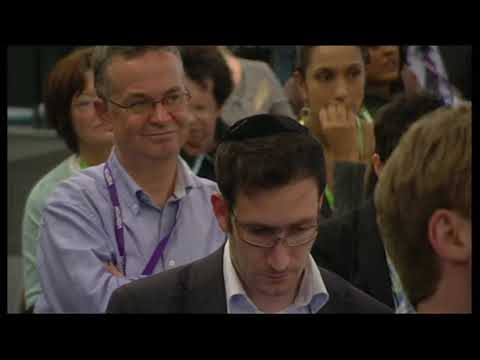 REThink - debate with Rabbi Sacks and Richard Dawkins · The Rabbi Sacks LegacyPlays on “Does science rule out God?” →
For teachers: Rabbi Sacks and Richard Dawkins model respectful disagreement.
Resources
- Ofsted research review: religious education (2021)
- NATRE: National Association of Teachers of RE
- Does science rule out God? (page on this site)
- The Faraday Institute: free resources for schools
- Religion and Science (Stanford Encyclopedia of Philosophy, teacher background)
- Scientists and Belief (Pew Research Center, 2009)