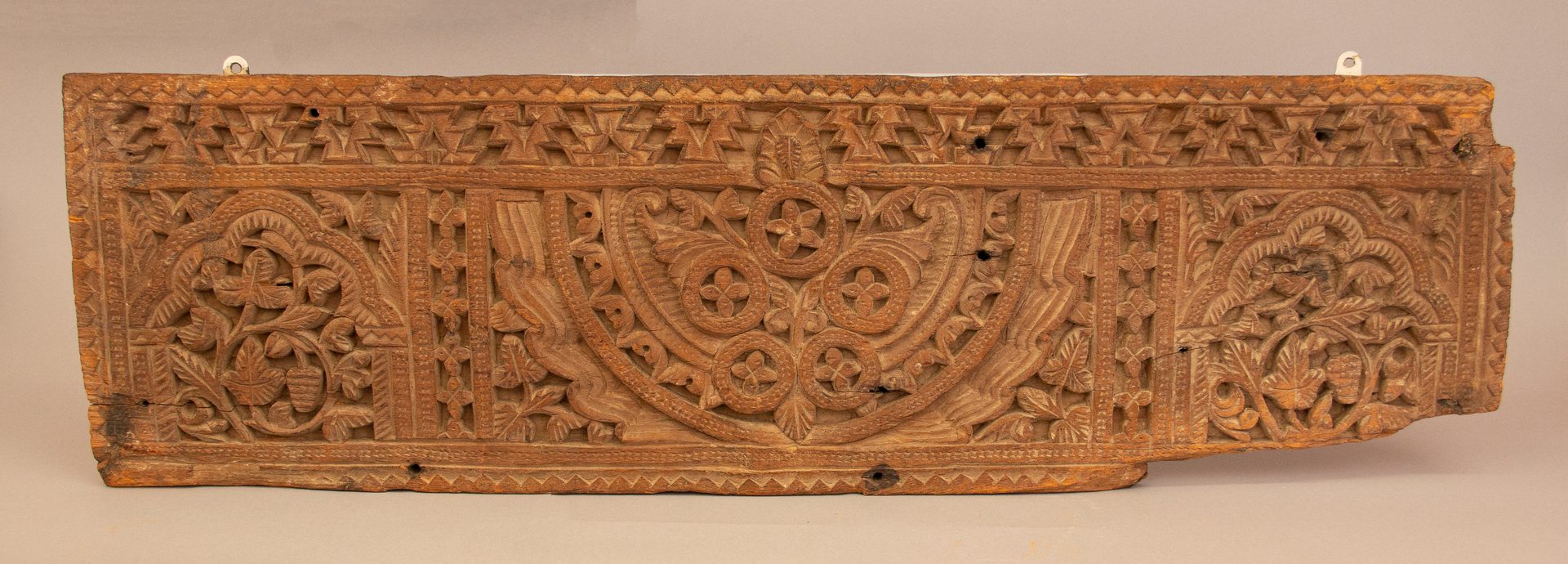
One 50–60 minute lesson. Pupils explore why Muslims and Jews do not make pictures of God, how Christian practice varies, and how believers express ideas about God through pattern, calligraphy, light and architecture instead. A hands-on lesson with a geometric pattern activity.
Curriculum links
- Locally agreed syllabuses commonly include how people express beliefs through art, symbols and places of worship, and how religious teachings shape practice. Check your own syllabus.
- KS2 themes: symbols and religious expression; places of worship; beliefs about God.
- KS3 themes: religion and the arts; the concept of God as beyond description; diversity within religions (for example, Christian views on images).
- Cross-curricular links: Art and design (pattern, symmetry, calligraphy) and Mathematics (geometry, rotational symmetry).
Objectives
- Know that Muslims and Jews do not make images of God, and give a reason from scripture for each.
- Know that Christians differ: Orthodox and Catholic Christians use icons of Christ and the saints; many Protestant churches use few or none; most Christians do not picture God the Father.
- Explain how Islamic art uses geometric pattern and calligraphy to point beyond what can be drawn.
- Create a geometric pattern and explain what it might express about God to a believer.
Starter
Ten minutes. Ask pupils to close their eyes and imagine the biggest thing they can. Now something bigger. Now something with no edge at all. Can they draw it? Then show three images without captions: the inside of a mosque dome with geometric tiles, the empty Ark in a synagogue with the Ten Commandments above it, and a Christian church with a plain cross. Ask: what is missing that you might have expected?
Main activities
- What the scriptures say (10 minutes). Display three texts: Exodus 20:4 (“Thou shalt not make unto thee a graven image, nor any manner of likeness”, JPS 1917), Qur’an 42:11 (“Naught is as His likeness”) and John 4:24 (“God is spirit”, World English Bible). In pairs, pupils write one sentence explaining what each text suggests about picturing God.
- Different Christian views (5 minutes). Explain simply: Christians believe Jesus is God made visible, so Orthodox and Catholic churches have icons and statues of Christ and the saints; many Protestant churches prefer plain walls, words and a cross. Most Christians do not paint God the Father. Ask pupils why a belief about Jesus might lead to a different practice.
- Pattern without end (20 minutes). Using compasses, rulers and squared or dotted paper, pupils construct a simple six-fold or eight-fold Islamic geometric pattern from a circle (follow Eric Broug’s method in the TED-Ed film). Then they colour it. Explain that many Muslims see in such patterns a picture of order, unity and infinity: the pattern could carry on for ever, with one centre.
- Gallery walk (5 minutes). Pupils leave their pattern on the table with a sticky note: “To a believer, this pattern might say…”.
Plenary
Five minutes. Ask: “Is a pattern a picture of God?” Draw out the answer believers give: no; it is a way of pointing to what cannot be pictured. End with the idea shared by all three faiths that God is greater than anything we can make.
Differentiation
Support: provide a pre-printed construction grid so pupils colour and extend the pattern rather than build it from scratch. Use picture cards for the three texts. Stretch: research the Birmingham Qur’an manuscript or the calligraphy of the word Bismillah; or compare Jewish micrography (art made of tiny Hebrew letters) with Islamic calligraphy. KS3 pupils can write a short argument for and against the statement “Religious art should never show people.”
Assessment
Look for pupils who can (a) give a scriptural reason why Jews and Muslims do not picture God; (b) describe accurately the range of Christian practice; (c) explain what a geometric pattern might express to a believer; (d) avoid the misconceptions that Muslims are “against art” or that Christians all use images in the same way.
Three faiths: fact box
The second commandment forbids making “any manner of likeness” to worship (Exodus 20:4). Synagogues have no image of God; the focus is the Ark holding the Torah scrolls. Some Jews write G-d to avoid erasing God’s name.
Christians believe Jesus is “the image of the invisible God” (Colossians 1:15). Orthodox Christians honour icons; Catholics use statues and paintings; many Protestant churches have few images. Most Christians do not picture God the Father.
Muslims believe “naught is as His likeness” (Qur’an 42:11), so God is never pictured, and nor are any of the prophets. Mosques use geometric pattern, plant designs (arabesque) and calligraphy of Qur’an verses instead.
Take care
Never ask pupils to draw God or any prophet, including in Christian contexts within a mixed class: draw places, symbols and patterns instead. Avoid saying Christians are wrong to use icons, or that Muslims dislike art. Show calligraphy of Qur’an verses with respect: keep it off the floor and do not use it as scrap.
Watch
Eric Broug explains how Islamic geometric patterns are built from a circle: use for the main activity.
Birmingham Museums on Islamic calligraphy, with the British artist Soraya Syed.
Smarthistory looks at a tiled prayer niche (mihrab): pattern and words instead of images.