Put a three-year-old in front of a closed box of biscuits. Ask: does your mum know what is inside? Yes, says the child. Does God know? Yes. A year later, the same child says Mum cannot know without looking, but God still can. Oxford researchers ran versions of this test with children in several countries. Small children, it seems, start out assuming that minds can know everything, and slowly learn that human minds cannot.
Is that a clue that we are made to recognise a Creator? Or is it a quirk of how young brains grow? People of faith have argued for centuries that knowing God is natural, written into us before any teacher arrives. Scientists have only recently begun to test what is natural in human thinking. Here the two conversations sit side by side, and the verdict is yours.
“So set thy purpose (O Muhammad) for religion as a man by nature upright - the nature (framed) of Allah, in which He hath created man. There is no altering (the laws of) Allah's creation. That is the right religion, but most men know not -.”
Qur'an 30:30 · Pickthall (1930)
The Arabic word for 'the natural way' is fiṭra, from a root meaning to split open or bring into being for the first time. Muslim scholars read the verse as saying that every human being is made with an inbuilt readiness to recognise the Creator. A saying of the Prophet Muhammad ﷺ (peace be upon him) begins: 'Every child is born upon the fiṭra' (Bukhari 1385), and goes on to describe how upbringing then shapes the path a child takes.
What researchers have found
The field is called the cognitive science of religion. It does not ask whether God exists. It asks a narrower question: which ideas come easily to human minds, and which have to be taught? Its best-known project was run from the University of Oxford between 2007 and 2010. The Cognition, Religion and Theology Project involved 57 researchers and more than 40 studies in 20 countries, at a cost of £1.9 million. Its conclusion, announced in 2011, was that humans are 'predisposed' to believe in gods and in some kind of afterlife, and that 'both theology and atheism are reasoned responses' to that basic impulse.
The project's leader, the psychologist Justin Barrett, set out the idea in his book Born Believers (2012). Children, he argues, arrive ready to see the world as designed and to imagine minds that are not human: minds that know more, last longer and see further. They do not need to be taught this; they need to be taught out of it, or into a particular version of it. The project's co-director, the philosopher Roger Trigg, stressed that the research was 'not setting out to prove the existence of God or otherwise'.
A second strand comes from Deborah Kelemen of Boston University. In the 1990s she found that young children prefer purpose-based answers: rocks are pointy 'so animals can scratch on them'. In a 2004 paper titled 'Are children "intuitive theists"?' she argued that children's minds are drawn to explanations in terms of purpose and design. The surprise came later. In a 2013 study, Kelemen and colleagues asked physical scientists from top American universities to judge statements such as 'Trees produce oxygen so that animals can breathe'. Given time to think, they rejected them. Rushed, they accepted far more. The pull towards purpose, it seems, never fully goes away; training only learns to override it.
There is a sceptical reading of all this, and it deserves a fair hearing. Researchers such as Pascal Boyer (Religion Explained, 2001) argue that belief in gods is a by-product of mental tools that evolved for other jobs. One example is what Barrett himself called a 'hyperactive agency detection device': it is safer for a hunter to mistake rustling grass for a lion than a lion for rustling grass, so our brains over-detect agents. On this view the instinct for God is a side effect, like seeing faces in clouds.
Here is the honest bit. The science describes what people find natural. It cannot by itself say whether what we find natural is true. We also find it natural to trust our eyes and to believe other minds exist, and we do not usually treat that as a reason for doubt. Barrett, who is a Christian, argues that a naturally tuned mind is what you would expect if a Creator wished to be known. Boyer, who is not, argues that it is what you would expect if no one were there at all. Both are reading the same data. Many researchers in the field now say the findings are compatible with either view.
One more finding is worth knowing. Natural does not mean universal. The UK has millions of people who describe themselves as having no religion, and studies show that culture, teaching and experience shape whether an early intuition grows into faith, fades, or turns into something else. Psychologists call this the difference between 'intuitive' and 'reflective' belief. Each scripture puts it in its own way: the instinct is a seed, not a finished tree.
What each faith says
Judaism
“Now I understand the difference between Elōhim and Adonāi, and I see how far the God of Abraham is different from that of Aristotle. Man yearns for Adonāi as a matter of love, taste, and conviction; whilst attachment to Elōhim is the result of speculation.”
Judah Halevi, Kuzari 4:16 · Hirschfeld 1905 (public domain)
The Hebrew Bible rarely argues for God's existence; it assumes that people already sense Him and asks what they will do about it. The Psalms speak of a thirst: 'My soul thirsteth for God, for the living God.' The book of Proverbs calls the human spirit 'the lamp of the LORD', searching a person from the inside. Every morning, observant Jews say a blessing from the Talmud (Berakhot 60b): 'My God, the soul You placed within me is pure.'
In twelfth-century Spain, the poet and philosopher Judah Halevi wrote the Kuzari, a dialogue in which a king searches for the true faith. Halevi contrasts the God reached by argument, the 'God of Aristotle', with the God known by love and experience, the 'God of Abraham'. Centuries later, Rabbi Abraham Isaac Kook, the first Ashkenazi Chief Rabbi of the land of Israel, taught that the soul is always reaching towards God, even when a person is unaware of it. Prayer, for him, was the moment that hidden reaching becomes conscious.
Christianity
“For the invisible things of him since the creation of the world are clearly seen, being perceived through the things that are made, even his everlasting power and divinity.”
Romans 1:20 · WEB
The apostle Paul, writing to the Christians in Rome, says that God's 'everlasting power and divinity' can be 'clearly seen' through the things He has made. Later in the same letter he says that people who have never received the Law still show 'the work of the law written in their hearts'. For many Christians these two passages are the foundation of 'natural theology': the belief that something of God can be known by every human being, before and outside any church.
The sixteenth-century reformer John Calvin gave the idea a name: the sensus divinitatis, the 'sense of divinity'. 'That there exists in the human minds and indeed by natural instinct, some sense of Deity,' he wrote, 'we hold to be beyond dispute.' In our own time the philosopher Alvin Plantinga has argued that belief in God can be 'properly basic', like trusting memory, rather than the end of a chain of argument. Catholic teaching likewise holds that God 'can be known with certainty from the created world by the natural light of human reason'.
Christian practice trains the instinct gently. In the Benedictine tradition of lectio divina, ‘holy reading’, a short passage is read slowly several times, with silence between, until a word or phrase stands out. Many Anglican and Catholic retreat houses teach it today.
Islam
“And (remember) when thy Lord brought forth from the Children of Adam, from their reins, their seed, and made them testify of themselves, (saying): Am I not your Lord? They said: Yea, verily. We testify. (That was) lest ye should say at the Day of Resurrection: Lo! of this we were unaware.”
Qur'an 7:172 · Pickthall (1930)
Alongside the verse on fiṭra, the Qur'an tells a scene from before human history. God gathers all the descendants of Adam and asks, 'Am I not your Lord?' They answer, 'Yes, we bear witness' (7:172). Muslim scholars have long discussed what this covenant means. Many read it as the root of the fiṭra: a memory deeper than memory, which life can cover over but not erase. That is why the Qur'an often calls itself a dhikr, a 'reminder', rather than news.
The hadith on fiṭra compares a newborn child to a newborn animal, born whole and unmarked. The medieval scholar Ibn Taymiyya argued that this inborn recognition of the Creator is stronger than any argument, and that proofs are mainly for those whose instinct has been clouded. Others, such as the theologians of the Ash'ari school, placed more weight on reasoning. Both agree that the human heart is, in the Qur'an's words, made to find rest 'Who have believed and whose hearts have rest in the remembrance of Allah. Verily in the remembrance of Allah do hearts find rest!' (13:28, Pickthall).
Without religion
“… in the absence of an afterlife and any discernible purpose to the universe, human beings can act to give their own lives meaning by seeking happiness in this life and helping others to do the same.”
Humanists UK, ‘What is humanism?’ · original English
Non-religious people do not usually deny the instinct; many recognise it in themselves. What they question is where it points. The Oxford project's own summary said that both theology and atheism are reasoned responses to the same basic impulse. Many humanists describe the pull of a sunset or a newborn's hand as awe that needs no author. They point out that we have other natural instincts, such as seeing faces in clouds, that we learn to correct.
Others take a gentler middle path. Many Britons call themselves ‘spiritual but not religious’, or simply ‘not religious’, and still feel gratitude and wonder. The sociologist Linda Woodhead has written about this growing middle ground. Lois Lee argues that it should be studied on its own terms, not as faith that failed to grow. For humanists the question is not whether we feel the pull, but what we do with it.
Same and different
All three traditions say that knowledge of a Creator is not only taught but in some way given: a thirst in the Psalms, a law on the heart in Paul, a fiṭra and a covenant in the Qur'an. They differ on what comes next. Judaism points to the covenant with Abraham's family and the commandments as the way the instinct is answered; Christianity holds that the instinct is fulfilled in knowing God through Jesus, whom Christians believe to be God made known in human life; Islam teaches that the fiṭra is answered by the oneness of God (tawḥīd) and the guidance sent through the prophets. None of them claims the science settles the question, and none needs it to. Non-religious people read the same research as a fact about human minds, and many of them feel the same pull of wonder without naming a Maker.
A moment to reflect
- Can you remember a moment, as a child or since, when you felt that the world was 'meant'? What did you make of it?
- If an instinct can be explained by how the brain works, does that make it less trustworthy, more trustworthy, or neither?
- Has the same evidence ever led you and a friend to opposite conclusions? What did you do?
- Is an instinct something you follow, something you question, or something you train?
Watch
A short, plain answer from a university theologian on what fiṭra means in Islam.
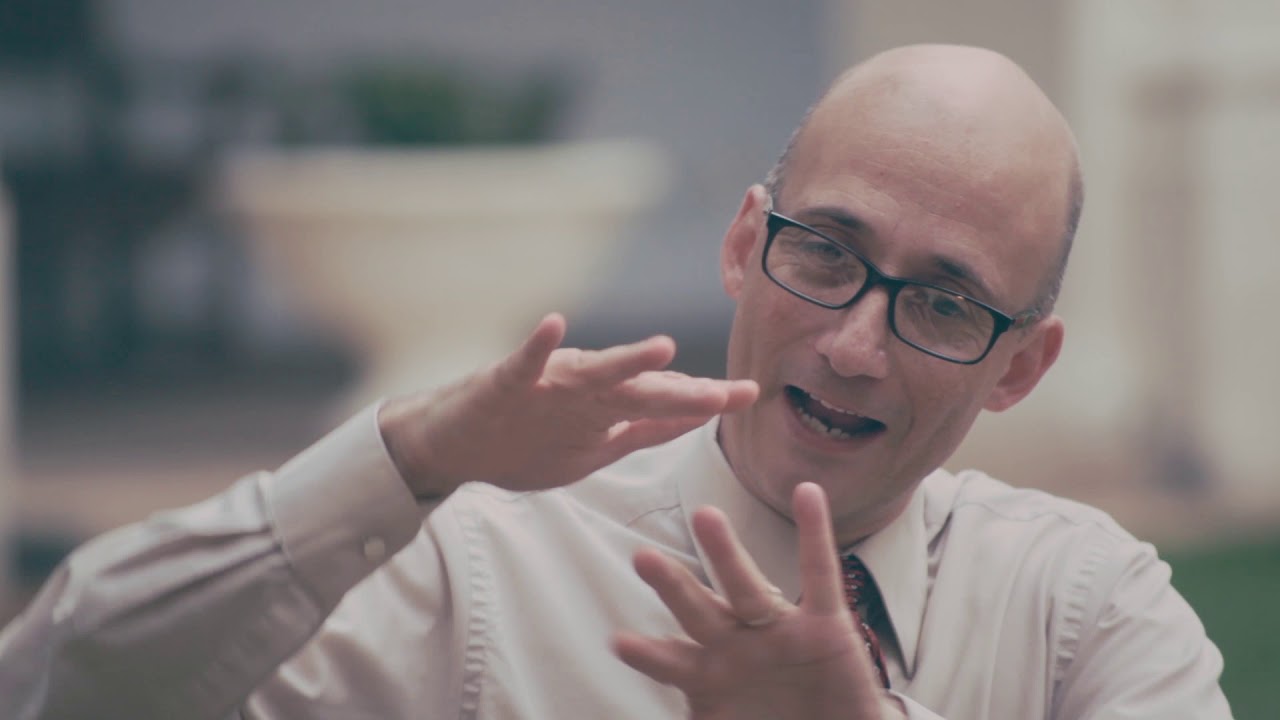 EXPLORATIONS - Do Children Naturally Believe in God? - Justin Barrett · Ian Ramsey CentrePlays on “Does belief come naturally?” →
Justin Barrett, from Oxford's Ian Ramsey Centre, on whether children naturally believe in God.
A Christian ethicist weighs what the cognitive science of religion does and does not show.
A religious-studies scholar looks at the brain research, including the sceptical readings.
Professor Daniel Lasker introduces Judah Halevi's Kuzari and its 'God of Abraham'.
Do it together
Try a gentle version of the Oxford test with a closed box and a small child: who knows what is inside? Then talk, as adults, about why the answers change with age. No right answers; just notice.
Write ten statements on cards, such as 'Rain falls so plants can grow' and 'Rain falls because water vapour cools'. Sort them quickly, then slowly. Discuss why the quick sort and the slow sort differ.
Read aloud the Jewish morning blessing on the pure soul, Romans 1:20 and Qur'an 30:30. Ask each tradition present to say what the words mean in daily life, and listen without debating.
Try the Benedictine practice of lectio divina with a short text: a psalm, a line of the Qur'an, a poem. Read it slowly three times, with a minute's silence between, and let each person say only the one word that stayed with them.
Jewish children say the Modeh Ani on waking, thanking God for returning their soul. For a week, start breakfast with one sentence of thanks in your own words or tradition, and notice whether it changes the day.
Go deeper
- Humans 'predisposed' to believe in gods and the afterlife (Oxford project summary) · article
- Even scientists look for purpose in nature (Boston University) · article
- Kuzari 4:16 on Sefaria · scripture
- Calvin, Institutes I.3: the knowledge of God naturally implanted · article
- Qur'an 30:30 on Quran.com · scripture
- Does belief come naturally? (on this site) · article
- Understanding Humanism: resources for schools (Humanists UK) · article
Sources (8)
- Oxford project: 57 researchers, 40+ studies, 20 countries, £1.9m; humans 'predisposed'; theology and atheism both 'reasoned responses'; not setting out to prove God: ScienceDaily, summarising University of Oxford release, 2011
- Children aged three think Mum and God know the box contents; by four they see Mum cannot: Burdett and Barrett, reported in the same Oxford summary, 2011
- Kelemen, 'Are children "intuitive theists"?', Psychological Science 15(5), 2004: Kelemen, 2004
- Scientists under time pressure accept more purpose-based explanations: Kelemen, Rottman and Seston, J. Exp. Psych.: General, 2013; Boston University summary
- Hyperactive agency detection: Barrett, 'Exploring the natural foundations of religion', Trends in Cognitive Sciences 4(1), 2000
- Calvin's 'sense of Deity' by natural instinct: Calvin, Institutes I.3.1, Beveridge translation (1845)
- God can be known from the created world by the natural light of reason: Catechism of the Catholic Church, 36
- Every child is born upon the fiṭra: Sahih al-Bukhari 1385