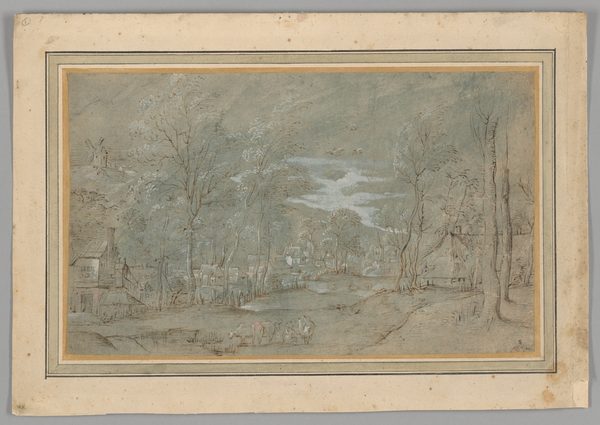
The Qur'an tells of a moment when Abraham, the friend of God, asked to see something with his own eyes. “My Lord, show me how You give life to the dead.” God asked him, “Do you not believe?” Abraham said, “Abraham said: Yea, but (I ask) in order that my heart may be at ease.” (2:260, Pickthall). The Prophet Muhammad later said, “We are more entitled to doubt than Abraham” (Bukhari 3372). Muslim scholars read that as humility, not as a confession of unbelief.
So if you doubt, or have never believed at all, you are in old company. Millions of people in Britain today do not believe in God. They are our neighbours, teachers, doctors and family. This page sets out the reasons people actually give, what the research shows, and what each tradition says about doubt. We cover who leaves and who stays on a separate page; this one is about why.
“When Abraham said, “My Lord, show me how You give life to the dead,” He said, “Do you not believe?” He said, “Abraham said: Yea, but (I ask) in order that my heart may be at ease.”
Qur'an 2:260 · Pickthall (1930)
God then tells Abraham to take four birds, place parts of them on different hills and call them; they come flying back. Commentators stress that God does not rebuke the question. In the Gospel of John, Jesus lets Thomas touch his wounds: “Don't be unbelieving, but believing” (John 20:27, WEB).
What the research shows
In 2024 the Pew Research Center asked Americans with no religion why they are non-religious. About two-thirds said they question a lot of religious teachings or do not believe in God. 47 per cent said they dislike religious organisations, and 30 per cent pointed to bad experiences with religious people. Most did not reject everything spiritual: only 29 per cent said there is no higher power or spiritual force of any kind. Britain is more secular than America, but British studies find similar reasons.
Several reasons come up again and again. The first is suffering: if God is good and powerful, why so much pain? The second is science: the feeling that nature explains itself and God has no work left to do. The third is the behaviour of believers. Researchers call actions that show a person really means what they say “credibility-enhancing displays”. In a 2018 study of 5,153 atheists, Joseph Langston and colleagues found that people whose religious parents lived their faith consistently tended to become atheists later, if at all. Those whose parents did not tended to stop believing earlier. Hypocrisy teaches unbelief faster than any argument. The fourth is hiddenness: if God wants to be known, why is He not obvious? The fifth is upbringing: most people's beliefs follow their family's, believers and non-believers alike.
One popular claim needs care. In 2012 a study in the journal Science reported that getting people to think analytically made them less religious. In 2017 a larger, careful replication by Clinton Sanchez and colleagues found no such effect. Clever people are found on every side of this question.
The believer's case is that each reason has an answer. Suffering is met by free will and hope beyond death, and science explains how the world works, not why there is a world at all. Hypocrites prove people fail, not that God is absent, and hiddenness leaves room for love to be freely chosen. The non-believer's case is that these answers feel like patches, and that it is more honest to believe only what the evidence demands. Both positions are held by thoughtful, good people.
Watch
Watch
 Why Do People Leave Their Childhood Religions? · ReligionForBreakfastPlays on “Does belief come naturally?” →
What each faith says
Judaism
“How long, O LORD, shall I cry, And Thou wilt not hear? I cry out unto Thee of violence, And Thou wilt not save.”
Habakkuk 1:2 · JPS 1917
Jewish scripture is full of people arguing with God. The prophet Habakkuk opens his book: “How long, O LORD, shall I cry, And Thou wilt not hear?” (Habakkuk 1:2). Job demands an answer and gets one. The Talmud tells of rabbis who out-argued a voice from heaven, saying the Torah “is not in heaven” but given to people to interpret, and God laughs, “My children have defeated Me” (Bava Metzia 59b).
Judaism tends to put practice before belief. A Jew who doubts is still a Jew, still welcome at the Passover table, where children are told to ask questions. Many Jews describe themselves as unsure about God and deeply committed to Jewish life.
Christianity
“There lives more faith in honest doubt, Believe me, than in half the creeds.”
Alfred, Lord Tennyson, In Memoriam A.H.H., XCVI (1850) · original English, public domain
Thomas would not believe until he had touched the wounds, and Jesus did not turn him away. Jesus added: “Blessed are those who have not seen and have believed” (John 20:29). Christian writers have long treated honest doubt as part of faith. Blaise Pascal wrote that there is enough light for those who want to see, and enough darkness for those who do not.
After the death of his closest friend, Alfred, Lord Tennyson wrote In Memoriam (1850), a long poem of grief and doubt that Queen Victoria kept by her bed. Its most quoted lines, below, are often read as permission to question.
Islam
“Will they then not meditate on the Qur'an, or are there locks on the hearts?”
Qur'an 47:24 · Pickthall (1930)
The Qur'an asks people again and again to think: “Will you not use your reason?”, “Will you not reflect?” Some of the Prophet's companions once told him they had thoughts about God too terrible to say out loud. He replied that their distress at those thoughts was itself “clear faith” (Muslim 132).
The great scholar al-Ghazali went through his own crisis of doubt around 1095. At the height of his fame in Baghdad, he could no longer trust what he had been taught. He lost the ability to speak and left his post. Years later he described it in his autobiography, Deliverance from Error, and said certainty came to him not from argument alone but as a light God cast into the heart. The Qur'an also says “There is no compulsion in religion. The right direction is henceforth distinct from error. And he who rejecteth false deities and believeth in Allah hath grasped a firm handhold which will never break. Allah is Hearer, Knower.” (2:256, Pickthall).
Without religion
“A wise man, therefore, proportions his belief to the evidence.”
David Hume, An Enquiry Concerning Human Understanding, Section X (1748) · original English
Many non-religious people say they do not reject God so much as find no good reason to believe in one. For them, honesty means not claiming more than they know. Others are confident there is no God, and many simply never think about it. Stephen Bullivant's research calls many of them “nonverts”: people who drifted rather than argued their way out. Humanists stress that a good life does not need religion. Kindness, honesty and meaning are open to everyone.
Sikhi
“By thinking, He cannot be reached, even by thinking a hundred thousand times.”
Guru Granth Sahib, ang 1 (Japji, pauri 1) · our rendering
Guru Nanak spent years in debate: with yogis in the mountains, with pandits and with qazis. The Sidh Gosht in the Guru Granth Sahib records one of these exchanges. The opening of the Japji says plainly that God cannot be reached by thinking alone. Sikhs speak of faith as something lived through honest work, sharing and remembering God, rather than proved.
Hindu traditions
Hindu tradition has always made room for questioning, including schools of thought that did not accept a creator God, such as Samkhya, and the materialist Charvakas, who rejected the gods altogether. One of the oldest hymns in the world, the Nasadiya Sukta of the Rig Veda (10.129), ends by wondering whether even the one who watches over creation knows how it began. “Perhaps he knows, or perhaps he does not.”
Beyond the Abrahamic faiths
In the Kalama Sutta, the Buddha tells villagers who are confused by rival teachers not to accept anything just because of tradition, scripture, logic or a teacher's reputation. They should test it, and when they know for themselves that something leads to harm, give it up; when it leads to good, take it up. Buddhism is not built on belief in a creator, so for many Buddhists the question of God is simply set aside.
Same and different
Traditions differ on what doubt means. For some it is a stage on the way to deeper faith, as with Abraham, Thomas and al-Ghazali. For some it is the right of a people who argue with God, as Habakkuk did and the rabbis did. In Buddhism the method itself is to test everything. For non-believers, doubt is simply where the evidence leads. Almost all of them agree that belief cannot be forced, and that people who live their faith badly drive others from it. If religious people want to be believed, the research suggests, they should live what they say.
A moment to reflect
- Abraham believed and still asked for his heart to be at rest. Is there a difference between believing and being sure?
- Which of the five reasons (suffering, science, hypocrisy, hiddenness, upbringing) do you find strongest? Why?
- Children of parents who lived their faith consistently tended to keep it longer. What does that say to religious parents, and to anyone who wants to be trusted?
- Hume said a wise person proportions belief to evidence. What counts as evidence for you?
Do it together
Put a jar on the table. Everyone writes one honest question about God or belief, with no names. Pull them out one at a time. Believers and non-believers answer in turn, with the rule that nobody tries to win.
Find Abraham (Qur'an 2:260), Thomas (John 20:24–29), Habakkuk (1:1–4) and the Rig Veda's hymn of creation (10.129). For each, write what they doubted, what they did with the doubt, and how the story ends.
Invite a humanist speaker and a faith speaker to answer the same three questions: Why do you believe, or not? What would change your mind? What do you admire in the other view?
Go deeper
- Religious ‘Nones’ in America: Who They Are and What They Believe (Pew, 2024) · research
- Qur'an 2:260 (Quran.com) · scripture
- Al-Ghazali, including Deliverance from Error (Stanford Encyclopedia of Philosophy) · article
- Why do people leave belief, and why do others stay? (this site) · find out more
- Humanists UK: what is humanism? (find out more) · find out more
In pictures
Sources (14)
- Abraham and the birds: Qur'an 2:260 (Quran.com), Pickthall (1930) where quoted
- ‘We are more entitled to doubt than Abraham’: Sahih al-Bukhari 3372
- Intrusive thoughts: ‘that is clear faith’: Sahih Muslim 132
- Pew 2024: reasons, 47%, 30%, 29% reject any higher power: Pew Research Center, Religious ‘Nones’ in America (24 January 2024)
- CREDs and age of atheism, 5,153 atheists: Langston, Speed and Coleman, Religion, Brain & Behavior (2018), via PsyPost
- Replication of Gervais and Norenzayan (2012) found no effect: Sanchez, Sundermeier, Gray and Calin-Jageman, PLOS ONE (2017)
- Habakkuk 1:2 text: Sefaria, JPS 1917
- ‘It is not in heaven’ / ‘My children have defeated Me’: Babylonian Talmud, Bava Metzia 59b (Sefaria)
- John 20:27–29 text: World English Bible (British Edition) via bible-api.com
- Pascal: enough light, enough obscurity: Pascal, Pensées, trans. W. F. Trotter (Project Gutenberg)
- Tennyson, In Memoriam XCVI: Project Gutenberg
- Hume: ‘proportions his belief to the evidence’: Project Gutenberg, An Enquiry Concerning Human Understanding
- Nasadiya Sukta, Rig Veda 10.129: Griffith translation (1896), sacred-texts
- Nonverts: Stephen Bullivant, Nonverts (Oxford University Press, 2022)