Philosophy That nature follows regular laws described by mathematics is the working basis of all science. Why it does, and why our minds can grasp them, is a question for philosophy.
A French mathematician, Urbain Le Verrier, sat at his desk in 1846 and found a planet with a pen. Using only Newton’s laws and the slightly odd path of Uranus, he worked out where an unseen world ought to be. He posted his result to Johann Galle at the Berlin Observatory. Galle pointed his telescope at the spot the night the letter arrived, and found Neptune within about a degree of it.
Nobody had told the universe to obey Newton’s equations. Yet it did, so precisely that a man with a pen found a world. Scientists of faith and of none have called this one of the strangest facts there is. Why should it be so?
“The sun and the moon are made punctual. The stars and the trees prostrate. And the sky He hath uplifted; and He hath set the measure.”
Qur'an 55:5–7 · Pickthall (1930)
These verses come from the chapter ar-Rahman (The Most Merciful), a poem of praise built around a repeated refrain. ‘Exact reckoning’ renders the Arabic husban, from the root for counting and calculation. The Hebrew Bible speaks of God appointing “the ordinances of heaven and earth” (Jeremiah 33:25, JPS 1917).
What science shows
Again and again, mathematics worked out on paper has turned out to describe the real world. In 1928 Paul Dirac wrote an equation for the electron that seemed to allow a mirror-image particle with the opposite charge. In 1932 Carl Anderson found it, the positron. In 1964 Peter Higgs and others proposed a new particle from the mathematics of symmetry; CERN found it in 2012. Einstein’s equations implied ripples in space itself in 1916; LIGO detected them in 2015.
The precision can be astonishing. The magnetic strength of a single electron has been measured at Northwestern University to better than one part in a trillion, and theory, calculated from the equations of quantum physics, agrees at a similar level, with small tensions that physicists are now probing.
In 1960 the physicist Eugene Wigner, a Nobel laureate, wrote a famous essay, ‘The Unreasonable Effectiveness of Mathematics in the Natural Sciences’. He called the fit between mathematics and physics “a wonderful gift which we neither understand nor deserve”. In 1936 Einstein wrote that “the eternal mystery of the world is its comprehensibility”.
Not everything is so tidy. Weather, ecosystems and economies resist neat equations, and some mathematics has no known use in physics. The physicist Max Tegmark goes the other way, arguing that the universe simply is a mathematical structure; most physicists regard that as speculative. Whether mathematics is discovered, like a continent, or invented, like a language, is still debated.
The arguments, fairly
A rational world from a rational Maker. If the world comes from a wise Creator, its order is what we would expect. Many founders of modern science, such as Johannes Kepler and Isaac Newton, studied nature precisely because they believed it was made by a rational God, and so could be understood.
The match between mind and world. John Polkinghorne, the Cambridge physicist who became a priest, argued that the deepest surprise is not only that the world is orderly but that our minds, shaped for survival on the savannah, can grasp quantum theory and cosmology. He saw this as a sign that the same Mind lies behind both.
Beauty as a guide. Physicists such as Dirac said that beautiful equations were more likely to be true. Believers ask why beauty should be a guide to truth, unless the world was made by One who is both.
We notice the hits. Sceptics point out that we remember the mathematics that works and forget where it fails. Much of nature, from turbulence to biology, is messy.
Evolution explains the fit. Brains that could track regular patterns, such as seasons, motion and number, survived better. Abstract mathematics may grow from those abilities, so it is less surprising that it fits.
Order needs no Orderer. The laws may simply be how things are, a brute fact. Jim Al-Khalili, a physicist and former president of Humanists UK, finds the wonder in the universe being rational and explicable, with no need for God.
Where it stands
Philosophy. No experiment can settle why the world is mathematical. What believers and sceptics share is striking: every scientist must trust that nature is orderly before doing any science at all.
That shared starting point, trust in a world that makes sense, may be some of the best common ground on this site.
What each faith says
Judaism
“Thus saith the LORD: If My covenant be not with day and night, if I have not appointed the ordinances of heaven and earth”
Jeremiah 33:25 · JPS 1917
The prophet Jeremiah compares God’s faithfulness to the fixed laws of nature: as surely as God has appointed “the ordinances of heaven and earth”, God will keep His covenant (Jeremiah 33:25). The Psalms say that “the heavens declare the glory of God” (Psalm 19:2). In Jewish thought, the reliability of nature is itself a sign of a faithful God.
Maimonides wrote in his law code, the Mishneh Torah, that the way to love and fear God is to contemplate His great and wonderful works, and see in them His wisdom without limit (Foundations of the Torah 2:2). Studying the order of nature is, on this view, not a rival to faith but a path into it.
Christianity
“He is before all things, and in him all things are held together.”
Colossians 1:17 · WEB
John’s Gospel calls Christ the Logos, the Word or Reason through whom all things were made (John 1:1–3), and the letter to the Colossians says that “in him all things are held together” (Colossians 1:17). The Book of Wisdom, part of the Bible for Catholic and Orthodox Christians, says God ordered all things by measure, number and weight (Wisdom 11:20). Medieval scholars quoted it often.
Many historians, such as John Hedley Brooke, warn against simple stories, but agree that belief in a lawgiving Creator encouraged early modern scientists to look for laws. Polkinghorne and others speak of a ‘critical realism’: science and theology both explore one real, intelligible world, with different tools.
Islam
“Lo! We have created every thing by measure.”
Qur'an 54:49 · Pickthall (1930)
The Qur’an describes a world of measure and balance. God “Lo! We have created every thing by measure.” (54:49, Pickthall), the sun and moon run “by exact reckoning” (55:5), and people are told not to upset the balance (55:8). The Qur’an repeatedly calls natural regularities ayat, signs, the same word used for its own verses. Nature and scripture are two books of signs.
Muslim scientists of the classical age, such as al-Biruni, who measured the Earth’s radius, and Ibn al-Haytham, who insisted that ideas be tested by experiment, worked in that spirit. Muslim scholars today, such as the astrophysicist Nidhal Guessoum, see the order of nature as a reason for wonder and for science, while warning against claiming the Qur’an foretold modern discoveries.
Without religion
“Roughly speaking, the word humanist has come to mean someone who trusts to the scientific method when it comes to understanding how the universe works”
Humanists UK, ‘What is humanism?’ · original English
For many non-religious scientists, the order of nature is the great wonder, and it needs no author. Jim Al-Khalili, a vice-president of Humanists UK, finds his awe in the universe being rational and explicable. Albert Einstein, who rejected the idea of a personal God, wrote in 1936 that the eternal mystery of the world is its comprehensibility. He called the feeling behind science a ‘cosmic religious feeling’, a phrase many non-religious people today would not use.
Others are cooler. Some philosophers suggest we notice the laws because a lawless universe could never have produced anyone to notice them. And many humanists echo Douglas Adams: is it not enough to see that a garden is beautiful, without believing there are fairies at the bottom of it too?
Same and different
Each of the three faiths teaches that the world is ordered because it is made by a wise and faithful God. Each has scholars who saw studying nature as a form of worship. They differ in how they speak of it: Christianity links order to Christ as the Logos; Judaism to God’s covenant faithfulness; Islam to the signs and measure of creation. Non-religious people share the trust in order, which is the foundation of science; they differ on whether it needs a source.
A moment to reflect
- Do you think mathematics is discovered or invented? What would each answer mean?
- Why should a mind shaped for everyday survival be able to understand black holes?
- Is the order of nature more surprising than its existence, or less?
- If every scientist must trust that the world makes sense, is that a kind of faith?
We end on a question
Why should the universe be the kind of place that a mind can understand, and what does it say about us that we can?
Watch
A short animated look at whether mathematics is discovered or invented.
Scientists at the World Science Festival on Wigner’s ‘unreasonable effectiveness’.
The mathematical physicist Edward Witten on why mathematics works so well.
John Polkinghorne, physicist and priest, on what physics can teach us about God.
Do it together
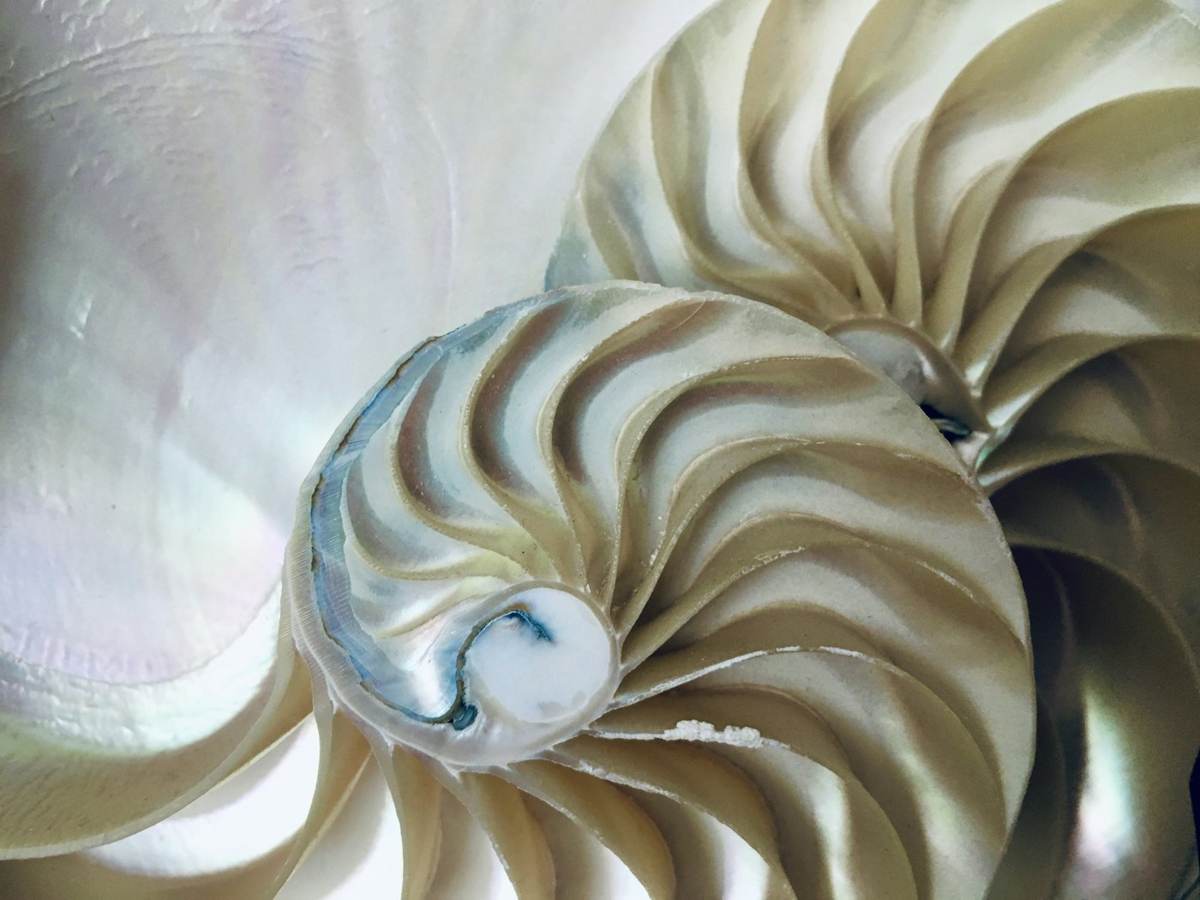
Collect pine cones, sunflower heads or shells and count the spirals in each direction. Look up the Fibonacci numbers and see how many match. Talk about why a plant might grow by a number pattern.
Use a free almanac to find tonight’s moonrise time, then go out together and see if it rises on time. Discuss how people of every faith have used the Moon’s regular phases to keep calendars.
Read Psalm 19, Qur’an 55:1–13 and Colossians 1:15–17. Then invite a maths or science teacher to explain one law of nature in five minutes. Discuss: what does each ‘book’ tell you?
Between Passover and Shavuot, Jews count forty-nine days aloud, one each evening, with a blessing. Try a counting habit of your own for a week, a day ticked off at the same time each night, and talk about how order and ritual shape time.
Go deeper
- Wigner, The Unreasonable Effectiveness of Mathematics (1960) · paper
- The Higgs boson (CERN) · article
- Neptune (NASA Science) · article
- Mishneh Torah, Foundations of the Torah 2:2 (Sefaria) · scripture
- Qur'an 55:1–13 (Quran.com) · scripture
- Colossians 1 (Bible Gateway, WEB) · scripture
- What is humanism? (Humanists UK) · article
Check yourself
Three quick questions. No score, nothing saved.
1. How was Neptune first found in 1846?
2. How close to the predicted spot was Neptune?
3. What does the page say believers and sceptics share?
Sources (8)
- Neptune located by Le Verrier and found by Galle, 1846: NASA Science, Neptune
- Positron implied by Dirac 1928, discovered by Anderson 1932: Nobel Prize, Carl D. Anderson facts
- Higgs boson proposed 1964, found at CERN 2012: CERN
- Gravitational waves implied 1916, detected 2015: Nobel Prize in Physics 2017, press release
- Electron magnetic moment measured to about 0.13 parts per trillion: Fan et al., Physical Review Letters 130, 071801 (2023)
- Wigner: 'a wonderful gift which we neither understand nor deserve': Wigner, CPAM 13:1–14, 1960
- Einstein: 'the eternal mystery of the world is its comprehensibility': Einstein, Physics and Reality (1936), Daedalus reprint
- Al-Khalili, humanist; former president of Humanists UK: Humanists UK, patron page