Muhammad ﷺ (peace be upon him) was born in Makkah around 570 CE. Orphaned young, he became a trusted merchant known as al-Amīn, “the trustworthy”. At about forty, while meditating in the cave of Hira, he received the first revelation of the Qur'an through the angel Gabriel. For 23 years he called people to worship the One God, faced persecution, migrated to Madinah in 622 (the Hijra), and died in 632. Muslims believe he is the final messenger in the line of Abraham, Moses (peace be upon him) and Jesus (peace be upon him). Jews and Christians do not regard him as a prophet.
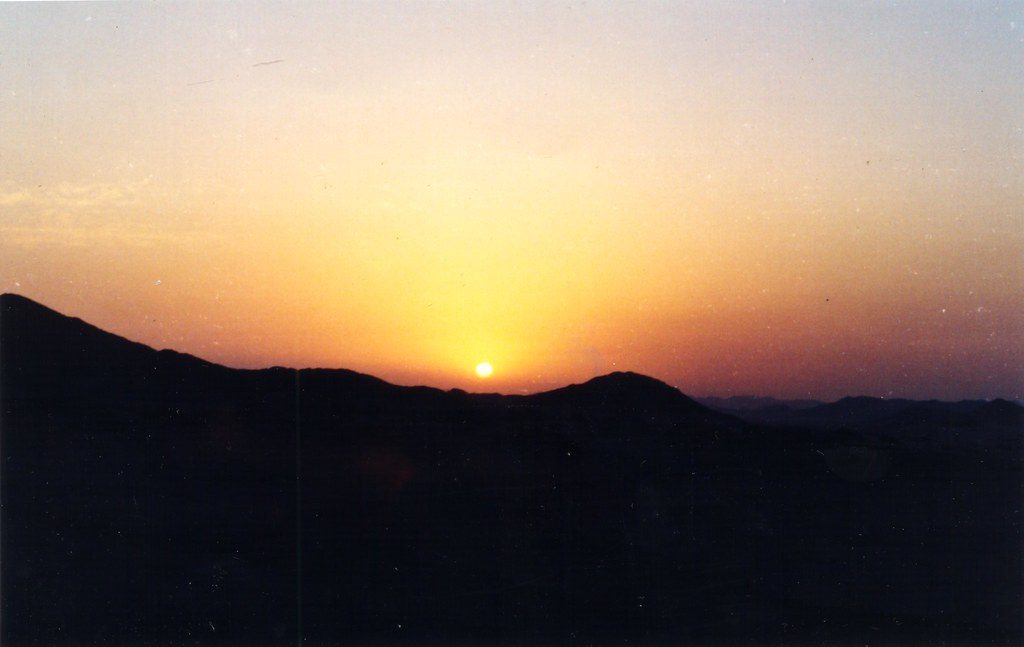
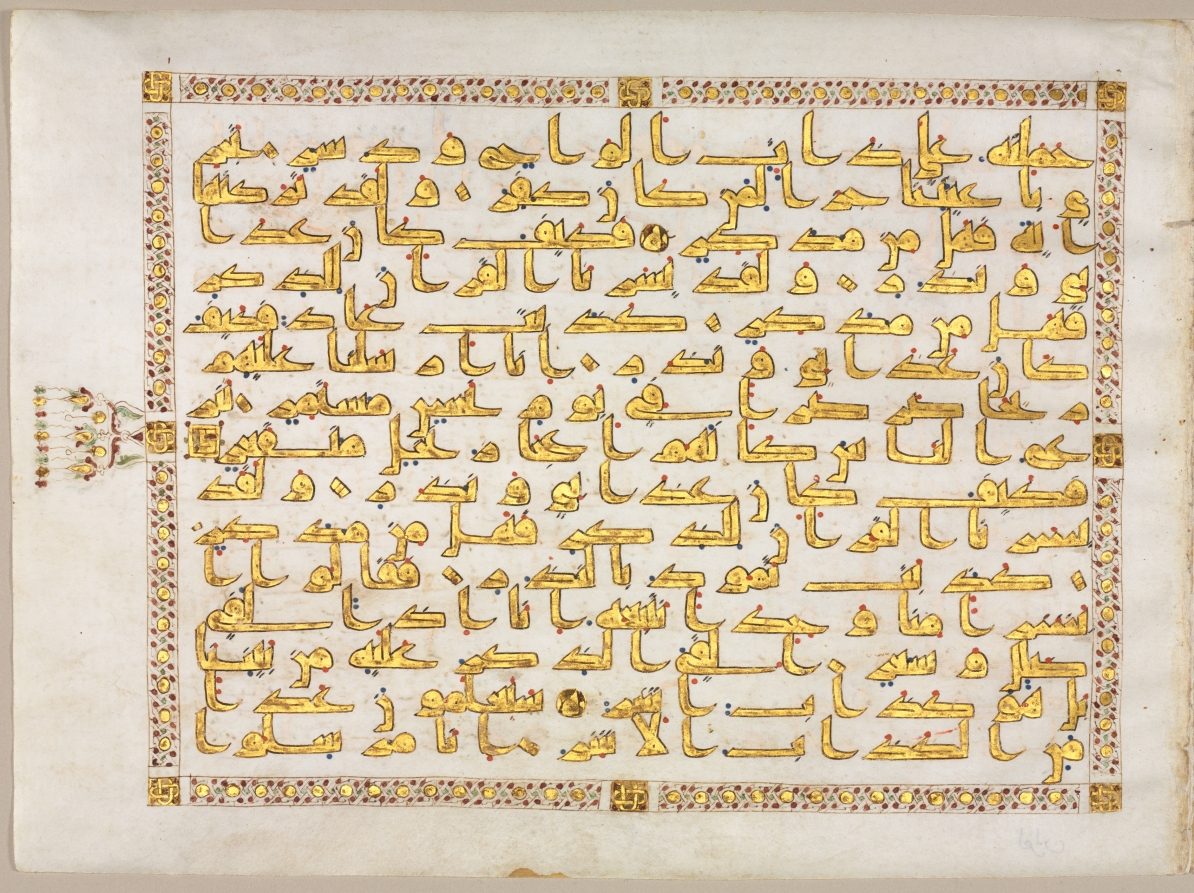
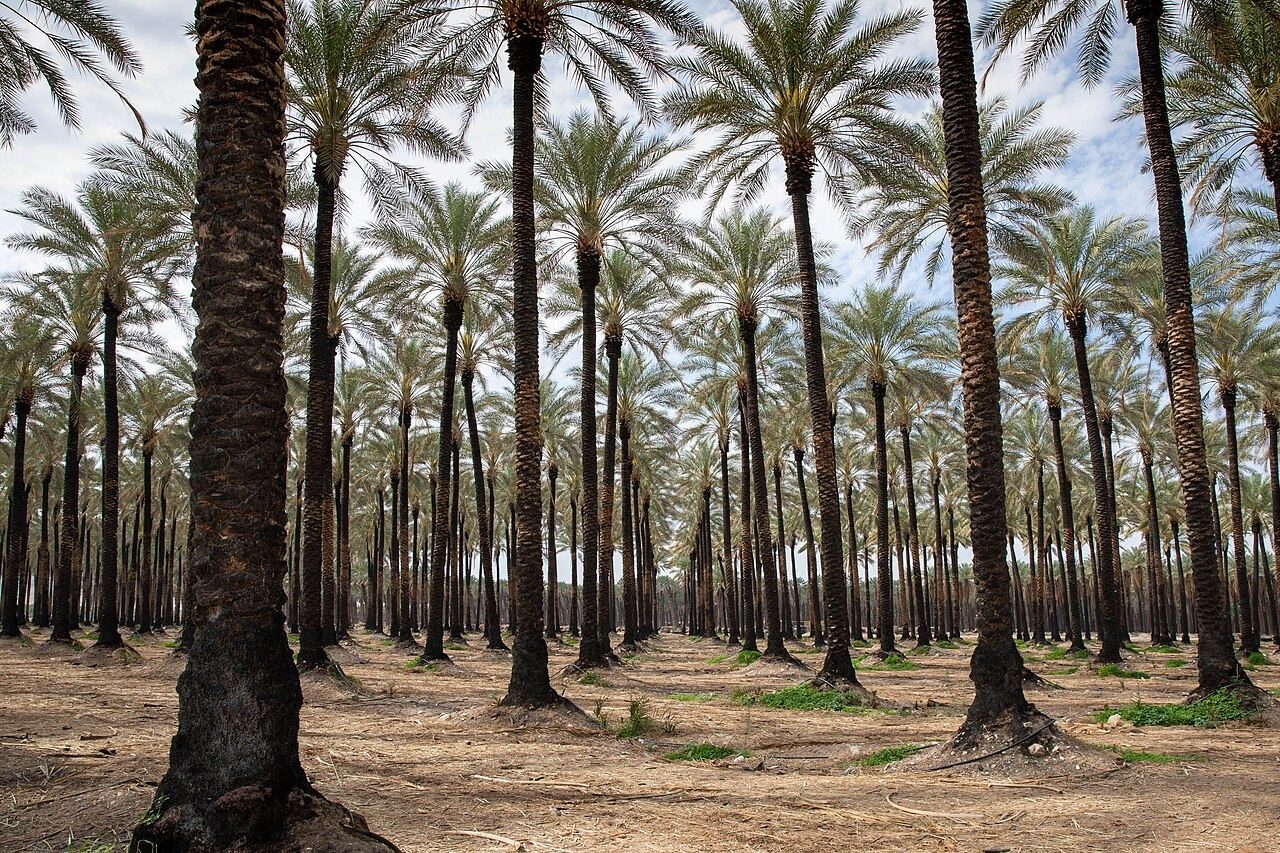
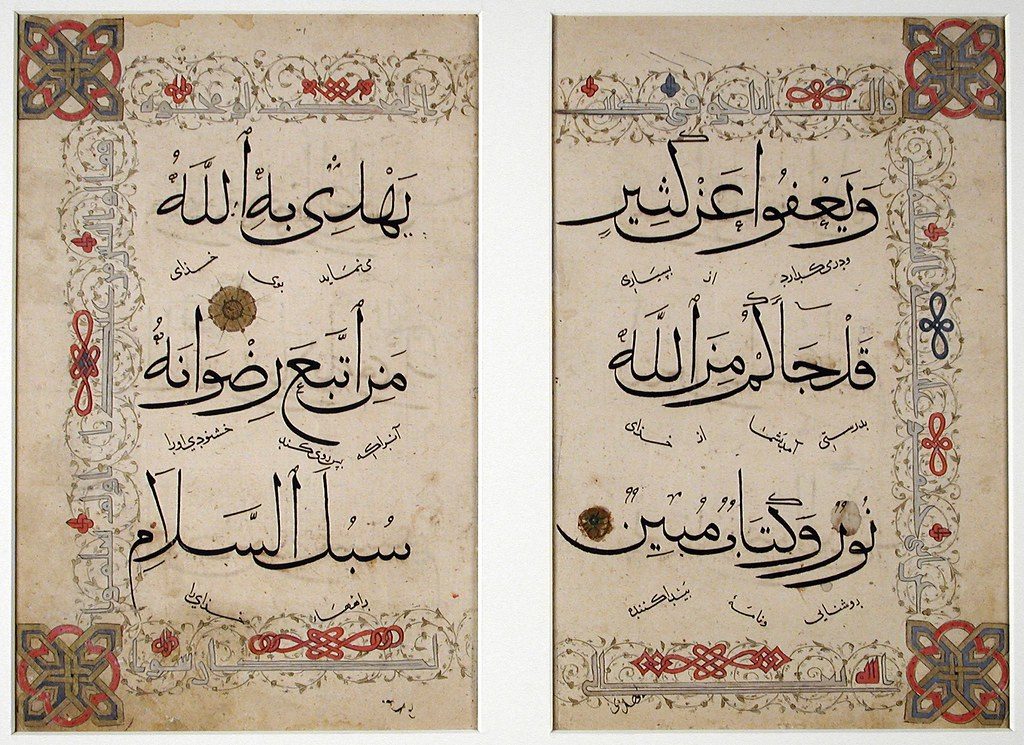
This page shows no people of any kind: only landscapes, plants, manuscripts and calligraphy. The Jewish and Christian columns state briefly how those traditions regard him.
Watch
To watch
Each told by its own community, in its own words, side by side. More on F-ILM.
A Muslim telling
His Appearance | Meeting Muhammad ﷺ Episode 1Yaqeen Institute · 11 minYaqeen, Meeting Muhammad ep 1: his appearance described in words from the hadith; no visuals of him.
Side by side
Three tellings
Quotations: Torah and Hebrew Bible, JPS 1917 · New Testament, World English Bible (British Edition) · Qur'an, Pickthall (1930). Translations and sources
TJewish view
In Jewish tradition's own words.
Judaism does not regard Muhammad as a prophet, holding that prophecy ended early in the Second Temple period.
Maimonides, who lived his life in the Islamic world, rejected Muhammad's prophethood but held that Muslims are true monotheists, not idolaters.
Christians do not regard Muhammad as a prophet in the biblical sense.
The Catholic Church's Nostra Aetate (1965) expresses esteem for Muslims, who worship the one God, honour Jesus as a prophet and Mary his mother, and await the Day of Judgement.
Glorified be He Who carried His servant by night from the Inviolable Place of Worship to the Far distant place of worship the neighbourhood whereof We have blessed, that We might show him of Our tokens! Lo! He, only He, is the Hearer, the Seer.
And when Jesus son of Mary said: O Children of Israel! Lo! I am the messenger of Allah unto you, confirming that which was (revealed) before me in the Torah, and bringing good tidings of a messenger who cometh after me, whose name is the Praised One. Yet when he hath come unto them with clear proofs, they say: This is mere magic.
Qur'an 93:1–11 · The Qur'an · Pickthall (1930)
1
وَٱلضُّحَىٰ
By the morning hours
2
وَٱلَّيْلِ إِذَا سَجَىٰ
And by the night when it is stillest,
3
مَا وَدَّعَكَ رَبُّكَ وَمَا قَلَىٰ
Thy Lord hath not forsaken thee nor doth He hate thee,
4
وَلَلْءَاخِرَةُ خَيْرٌۭ لَّكَ مِنَ ٱلْأُولَىٰ
And verily the latter portion will be better for thee than the former,
5
وَلَسَوْفَ يُعْطِيكَ رَبُّكَ فَتَرْضَىٰٓ
And verily thy Lord will give unto thee so that thou wilt be content.
6
أَلَمْ يَجِدْكَ يَتِيمًۭا فَـَٔاوَىٰ
Did He not find thee an orphan and protect (thee)?
7
وَوَجَدَكَ ضَآلًّۭا فَهَدَىٰ
Did He not find thee wandering and direct (thee)?
8
وَوَجَدَكَ عَآئِلًۭا فَأَغْنَىٰ
Did He not find thee destitute and enrich (thee)?
9
فَأَمَّا ٱلْيَتِيمَ فَلَا تَقْهَرْ
Therefor the orphan oppress not,
10
وَأَمَّا ٱلسَّآئِلَ فَلَا تَنْهَرْ
Therefor the beggar drive not away,
The passage continues; open it in the player or your own Bible or Qur'an.
Common ground
Where they agree
He was a 7th-century Arabian who called people to the God of Abraham (peace be upon him).
Muslims worship the one God whom Jews and Christians also worship.
The Qur'an honours Abraham, Moses (peace be upon him), Jesus (peace be upon him) and Mary (peace be upon her).
Said plainly, ranked never
Where they differ
Muslims believe he is the final prophet and that the Qur'an is God's word; Jews and Christians do not accept his prophethood.
Muslim writers have read Deuteronomy 18:18 and John 14:16 as pointing to him; Jews read the first of prophets within Israel, and Christians read the second of the Holy Spirit.
Qur'an 61:6 speaks of a messenger to come named Ahmad; each tradition reads these passages in its own way.
Era and place
The world of Muhammad
Where
Makkah, Ta'if, Madinah (Yathrib) and the Hijaz, in western Arabia.
When
570–632 CE.
What archaeology can and cannot say
Two leaves of an early Qur'an in Birmingham (Mingana 1572a) were radiocarbon-dated in 2015 to between 568 and 645 CE. Early Arabic rock inscriptions survive from the 7th century, and a Greek Christian text of about 634, the Doctrina Jacobi, refers to a prophet among the Arabs.
Gallery
The world of Muhammad
Like everything on this page, they show places, plants and objects, never people.
Jewish thinkers of the Islamic world, Saadia Gaon and Maimonides among them, wrote in Arabic and debated with Muslim scholars. Maimonides held that Christianity and Islam help prepare the world for the worship of the One God (Mishneh Torah, Laws of Kings 11:4, uncensored editions).
Christian view
Christian views of Muhammad ﷺ have ranged widely over the centuries. Some modern Christian thinkers, such as Kenneth Cragg, have explored how Christians might honour him while keeping their own faith.
Tafsir and hadith
Ibn Kathir, on 96:1–5, opens with Aisha's account of the first revelation. On 21:107 he explains “a mercy for the peoples” as mercy for all, believers and others.
Martin Lings, Muhammad ﷺ: His Life Based on the Earliest Sources (1983)
Tariq Ramadan, In the Footsteps of the Prophet (peace be upon him) (2007)
Reference works: Encyclopaedia Judaica (2nd ed.); The Oxford Dictionary of the Christian Church; Encyclopaedia of Islam (3rd ed.); Ibn Kathir, Qisas al-Anbiya.