Egypt, Middle Bronze AgeRead time 1 min TorahGospelQur'an
Joseph (peace be upon him) was Jacob (peace be upon him)'s favourite son, the dreamer. His jealous brothers threw him into a pit and he was sold into Egypt. There he resisted his master's wife, was jailed on a false charge, interpreted Pharaoh's dreams and rose to manage Egypt's grain through famine. When his brothers came to buy food, he tested them, then forgave them. Genesis and the Qur'an tell this story at length. The Qur'an calls it “the best of narratives”. Its heart is mercy.
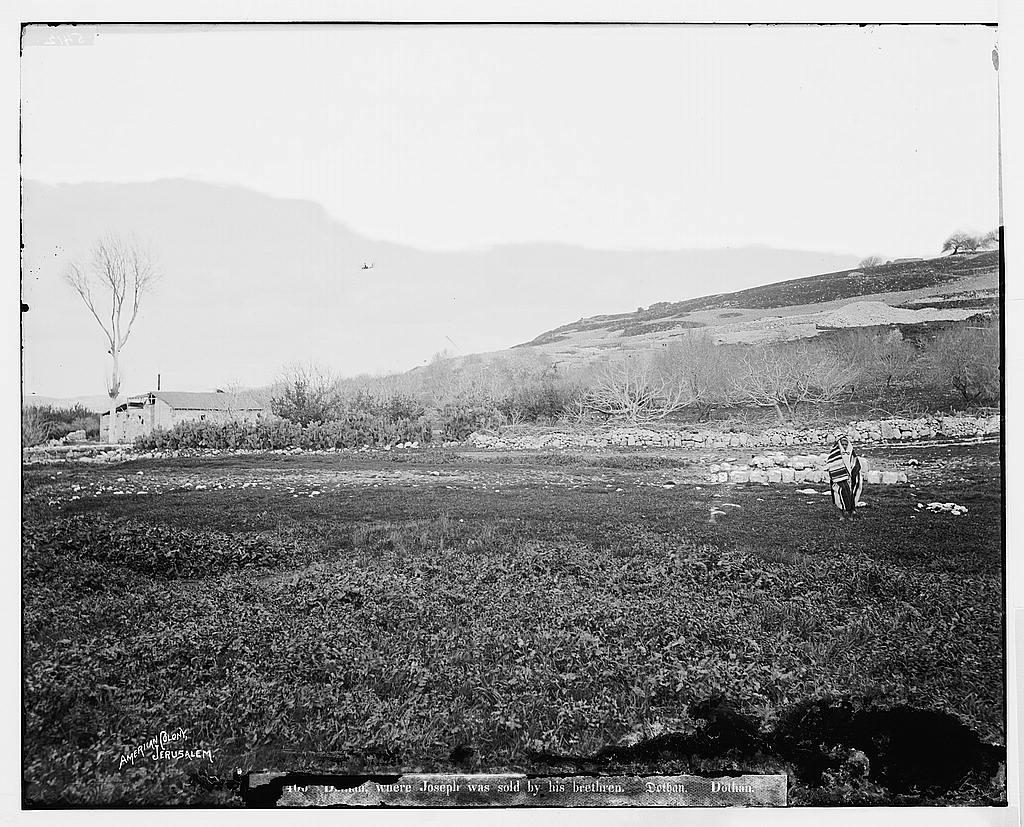
Dothan, where Genesis says Joseph was sold. American Colony (Jerusalem) Photo Dept. / Matson Photo Service, Library of Congress (public domain)
Watch
Three traditions, three films
Each told by its own community, in its own words, side by side. More on F-ILM.
A Jewish telling
Covenant & Conversation | Vayeshev | Rabbi SacksThe Rabbi Sacks Legacy · 8 minRabbi Sacks on Vayeshev: dreams, jealousy and the coat; sets up the forgiveness arc.
A Christian telling
Joseph Forgives His Brothers | Stories of the BibleSaddleback Kids · 3 min Shows prophets (a film-maker's portrayal)Kids option: Saddleback Kids, Joseph forgives his brothers.
A Muslim telling
How Ya’qub (as) Knew Yusuf (as) Wasn’t Dead | Ramadan Reflections | Dr. Omar SuleimanYaqeen Institute · 12 minYaqeen: how Ya'qub knew Yusuf was alive; the Qur'an's 'beautiful patience'.
The story
“The best of stories”: a pit, a prison, a palace and forgiveness. The longest shared story, and the gentlest.
A boy is his father’s favourite and he knows it. He has dreams in which the sun, the moon and eleven stars bow down to him, and he tells his brothers. They hate him for it. One day, far from home, they throw him into a pit and sell him to traders heading for Egypt. Then they take his torn and bloodstained shirt back to their father.
What follows has everything: slavery, a powerful woman’s false accusation, prison, dreams of fat and thin cows. Then a rise to power, a famine, a disguise, a silver cup and, at the end, a man weeping as he tells his brothers who he is. Joseph (peace be upon him) has fourteen chapters of Genesis and a whole surah of the Qur’an, surah 12. Andrew Lloyd Webber turned it into a musical. It may be the most loved story the three faiths share.
“He said: Have no fear this day! May Allah forgive you, and He is the Most Merciful of those who show mercy.”
Near the end of Surah Yusuf, the brothers who sold Joseph stand before him, now ruler of Egypt’s stores, and finally recognise him. His first words are forgiveness. The Prophet Muhammad ﷺ (peace be upon him) is reported to have used the same words when he entered Makkah in 630 CE and forgave the people who had driven him out. In Genesis, Joseph says: “ye meant evil against me; but God meant it for good” (Genesis 50:20, JPS 1917).
The world behind the story
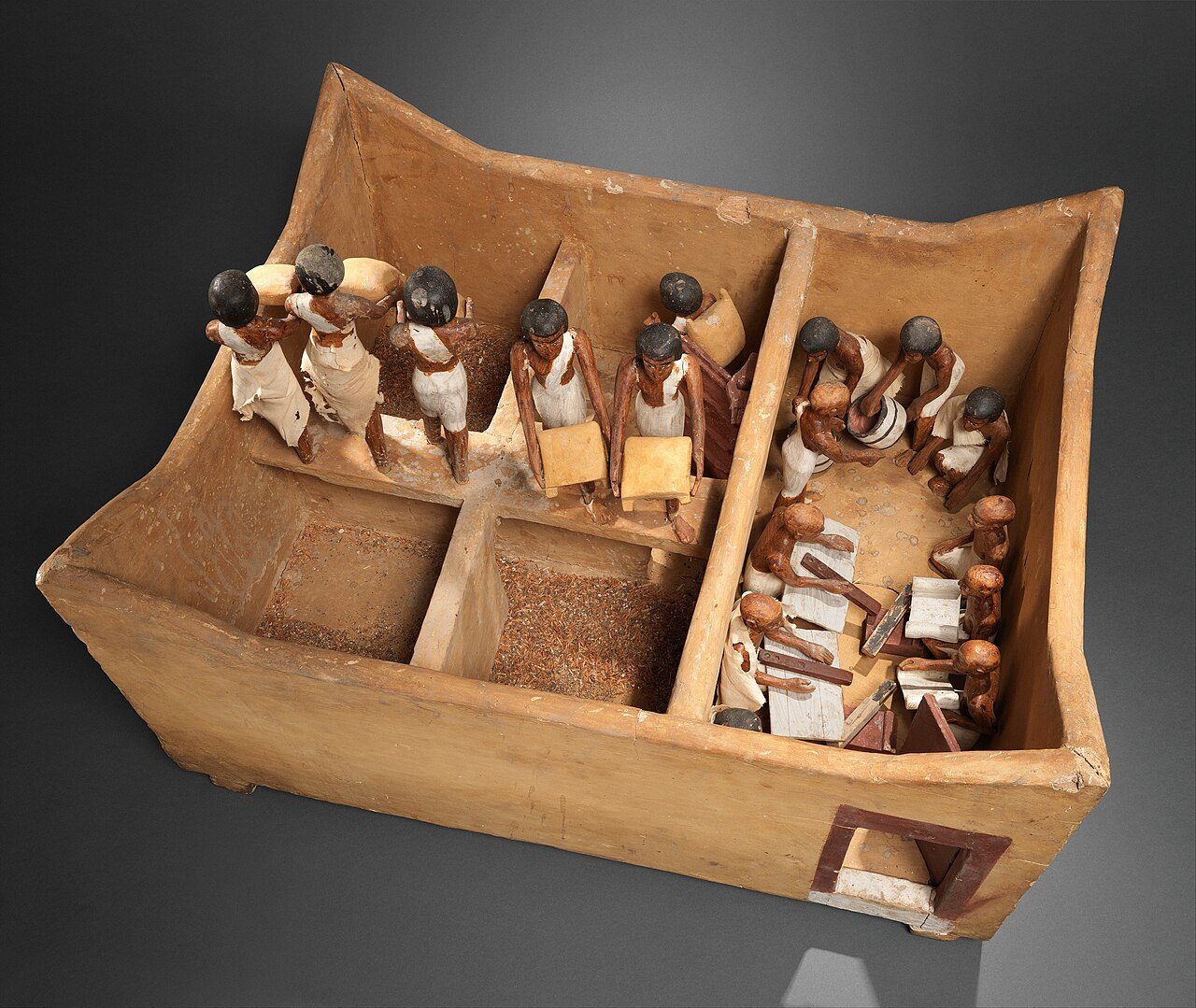
The Joseph story is set in Egypt, and its world is real. Egypt depended entirely on the yearly flood of the Nile. A low flood meant famine; Egyptian texts complain of hungry years. A later inscription carved on Sehel Island near Aswan, the Famine Stela, tells of seven years of famine in the reign of the ancient king Djoser. Storing grain against bad years was part of Egyptian government; granaries appear in tomb models and paintings.
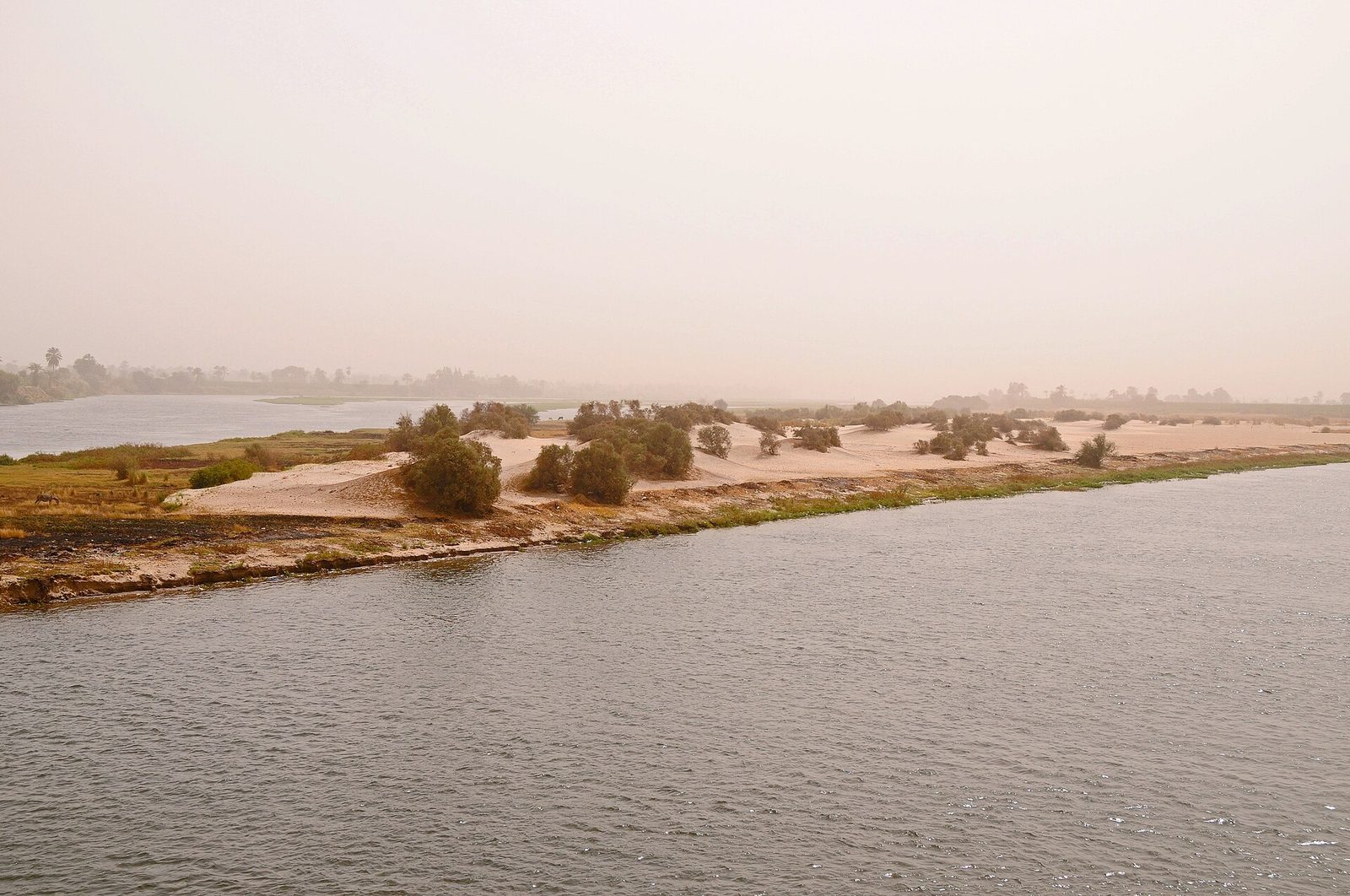
Cruising the Nile, Qena, Egypt - panoramio. David Broad / CC BY 3.0 (via Wikimedia Commons)
People from Canaan did go down to Egypt in times of hunger. A famous wall painting in a tomb at Beni Hasan, from about 1890 BCE, shows a group of Asiatic traders arriving in Egypt in brightly patterned clothes. At Tell el-Dab’a in the Nile Delta, the Austrian archaeologist Manfred Bietak excavated the city of Avaris. Semitic-speaking people lived there for centuries and eventually ruled as the Hyksos kings (about 1650–1550 BCE).
Some details fit Egypt closely: Joseph’s Egyptian name, Zaphenath-paneah, his marriage into a priestly family at On (Heliopolis), and embalming. Others are harder to place in one period, and many scholars think the story was shaped over a long time. No Egyptian record names Joseph, and the dates are debated.
There is one more echo. In the Faiyum, south-west of Cairo, a branch of the Nile has for centuries been called Bahr Yusuf, “the waterway of Joseph”. The canal is much older than that name, and the name comes from medieval Muslim tradition, but it shows how strongly the story lived in Egypt’s memory.
111verses in Surah Yusuf, a single continuous story
14chapters of Genesis (37–50) tell Joseph’s story
c. 1890 BCEthe Beni Hasan painting of Asiatic visitors to Egypt
What each faith says
Read:
Judaism
“And Joseph said unto his brethren: ‘Come near to me, I pray you.’ And they came near. And he said: ‘I am Joseph your brother, whom ye sold into Egypt. And now be not grieved, nor angry with yourselves, that ye sold me hither; for God did send me before you to preserve life.”
In Genesis, Jacob gives Joseph “a coat of many colours” (37:3) and the brothers’ jealousy grows. After his rise in Egypt, Joseph tests them. When the youngest, Benjamin, is about to be taken as a slave, Judah, the brother who once suggested selling Joseph, offers himself in Benjamin’s place (Genesis 44:33). The rabbis see this as true repentance: in the same situation, Judah chooses differently. Only then does Joseph reveal himself.
Joseph’s words of forgiveness are among the most quoted in the Torah: “be not grieved, nor angry with yourselves, that ye sold me hither; for God did send me before you to preserve life” (Genesis 45:5, JPS 1917). Jewish tradition calls him Yosef ha-Tzaddik, Joseph the Righteous, for resisting the temptation of Potiphar’s wife. Rabbi Jonathan Sacks often taught that Genesis ends not with a battle but with forgiveness. That, he said, is the book’s answer to the sibling rivalry that begins with Cain and Abel.
Joseph’s family lives on at the Friday-night table. As Shabbat begins, many Jewish parents put their hands on their children’s heads and bless them. Sons hear: “God make thee as Ephraim and as Manasseh” (Genesis 48:20), Joseph’s two sons, born in Egypt, who grew up far from home without losing who they were. Daughters hear the names of the four mothers: Sarah, Rebekah, Rachel, Joseph’s mother, and Leah.
Christianity
“The patriarchs, moved with jealousy against Joseph, sold him into Egypt. God was with him and delivered him out of all his afflictions, and gave him favour and wisdom before Pharaoh, king of Egypt. He made him governor over Egypt and all his house.”
Christians read Joseph’s story in Genesis and have long seen in it a picture of Christ. A beloved son is rejected by his brothers, sold for silver and falsely accused. Then he is raised to the right hand of the king and becomes the saviour of the very people who betrayed him. Stephen, the first Christian martyr, retells it in his speech in Acts 7.
Christian preachers often use Joseph as a model of integrity and trust in God’s hidden work. Paul’s words sum it up that “all things work together for good for those who love God” (Romans 8:28). The story also gave English the phrase “coat of many colours”, and inspired Thomas Mann’s four-volume novel Joseph and His Brothers (1933–43).
Orthodox Christians remember him by name in Holy Week. On Holy Monday the services honour “Joseph the All-Comely”, the patriarch who kept faith in a foreign land and forgave his brothers, as the Church walks towards Easter.
Islam
“Lo! my Lord is tender unto whom He will. He is the Knower, the Wise.”
The Qur’an calls Joseph’s story ahsan al-qasas, “We narrate unto thee (Muhammad) the best of narratives in that We have inspired in thee this Qur'an, though aforetime thou wast of the heedless.” (12:3, Pickthall). Surah Yusuf is the only chapter given over to a single continuous narrative. It opens with a dream and a father’s warning: Jacob (peace be upon him) tells Joseph not to tell his brothers. When they come home with the bloodstained shirt, Jacob knows at once they are lying and says: “Nay, but your minds have beguiled you into something. (My course is) comely patience. And Allah it is Whose help is to be sought in that (predicament) which ye describe.” (12:18, Pickthall). He weeps until his eyes turn white with grief, yet never gives up hope (12:84–87).
The Qur’an gives the woman who tempts Joseph a fuller story: her friends cut their hands in amazement at his beauty (12:31), and later she admits the truth (12:51). Joseph, in prison, teaches his fellow prisoners about the One God before he explains their dreams. At the end, with his family bowing before him as in his dream, he names God al-Latif, the Subtle: “Lo! my Lord is tender unto whom He will.” (12:100, Pickthall).
Same and different
The outline is the same in both scriptures. There are dreams, jealous brothers, a pit and slavery in Egypt; temptation refused, prison and dreams explained; a rise to power, famine, a test, forgiveness and a family reunited. Both see God working quietly through human wrongdoing. They differ in emphasis. The Qur’an stresses Jacob’s patience and hope, Joseph’s preaching in prison, and God’s subtle care. Genesis puts weight on Judah’s change of heart and on the coming of Israel’s family into Egypt, setting up the Exodus. Christians add the reading of Joseph as a figure of Christ. All three hear in Joseph’s words to his brothers one of the great moments of forgiveness in literature.
A moment to reflect
Joseph forgave the people who sold him. Is there anything that cannot be forgiven?
Judah changed. What does it take for someone to become a different person?
Jacob chose “patience most fitting”. What does patience look like when you are grieving?
Have you ever seen something bad turn out, in the end, to lead to good? Did that make it less bad?
Watch
A Yale lecture on the Joseph story and the move of Israel’s family into Egypt.
The archaeologist Manfred Bietak on his excavations at Avaris and the Hyksos.
Rabbi Jonathan Sacks on forgiveness, the heart of the Joseph story.
Surah Yusuf, Abdul Basit, official channel (replaces the al-Dosari fan upload).
Do it together
youth groups / faith groupsThe forgiveness letter
Read Genesis 45:1–8 and Qur’an 12:89–92. Each person writes, but doesn’t send, a letter forgiving someone, or asking forgiveness. Talk about what made it hard.
neighbours / schoolsGrain store
Joseph stored grain for the hungry years. Run a food collection together for a local food bank, and invite each faith community to bring something.
families / community groupsJoseph at the theatre
Watch a school or amateur production of Joseph and the Amazing Technicolor Dreamcoat together, then read the Qur’an’s version and compare the endings.
neighbours / familiesA blessing at the table
If a Jewish friend invites you to a Friday-night meal, you may see parents bless their children with the names of Joseph’s sons and of the four mothers. Ask about it afterwards. At home, try your own version: say one thing you hope for each person at the table.
interfaith groups / church groupsHoly Monday
Visit a Greek, Russian, Romanian or other Orthodox church on the evening of Holy Monday, when the services remember Joseph the patriarch. Most Orthodox churches welcome respectful visitors; stand at the back and follow the candles.
Check yourself
Three quick questions. No score, nothing saved.
1. Who says 'No blame will there be on you today'?
2. What did Joseph rise to run in Egypt?
3. What does the Qur'an call Joseph's story?
Sources (6)
Famine Stela, Sehel Island, seven-year famine under Djoser (Ptolemaic text): Wikipedia, Famine Stela
Quotations: Torah and Hebrew Bible, JPS 1917 · New Testament, World English Bible (British Edition) · Qur'an, Pickthall (1930). Translations and sources
THebrew Bible · Torah
In Jewish tradition's own words.
The coat, the dreams and the brothers' jealousy; the pit and the sale.
Potiphar's house, the false charge and prison.
Pharaoh's dreams: seven good years and seven of famine.
The brothers come for grain; Judah offers himself; Joseph makes himself known.
“And as for you, ye meant evil against me; but God meant it for good, to bring to pass, as it is this day, to save much people alive.”Genesis 50:20 · JPS 1917
Jewish tradition calls him ha-tzaddik, “the righteous”. The brothers' change of heart (teshuvah) is at the centre of the story.
Christian readers have long seen in Joseph, rejected by his own and raised up to save them, a picture of Christ.
“The patriarchs, moved with jealousy against Joseph, sold him into Egypt. God was with him and delivered him out of all his afflictions, and gave him favour and wisdom before Pharaoh, king of Egypt. He made him governor over Egypt and all his house.”Acts 7:9–10 · WEB (British Edition)
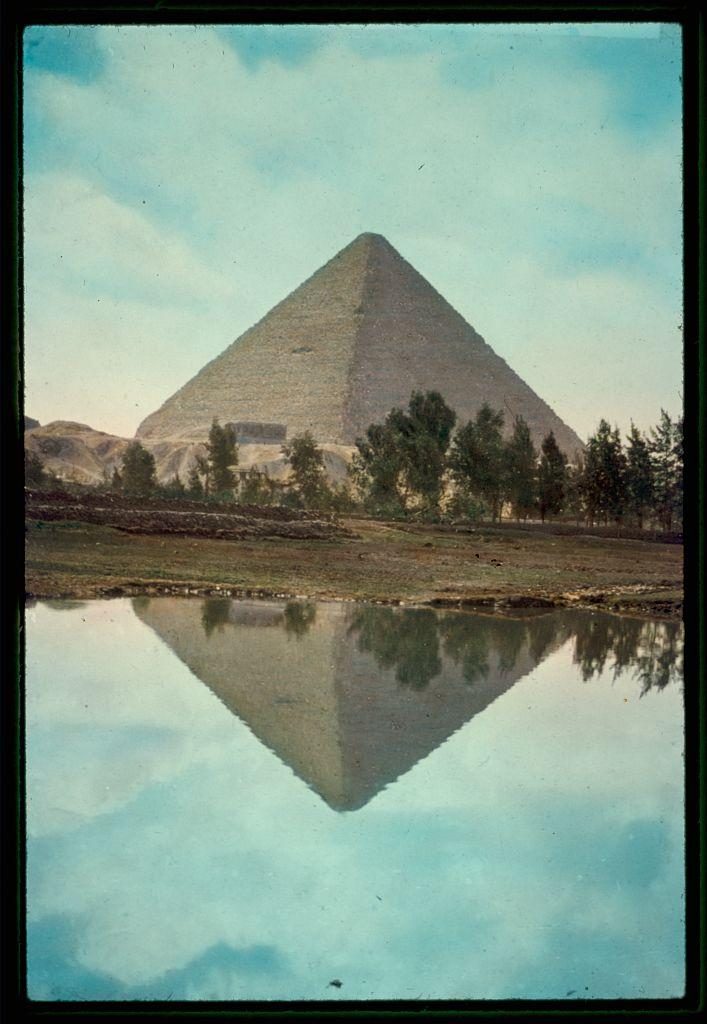
The Great Pyramid reflected in the Nile flood: the river that made Egypt's years of plenty. American Colony (Jerusalem) Photo Dept. / Matson Photo Service, Library of Congress (public domain)
Surah 12 tells the whole story in one continuous telling.
Jacob (peace be upon him) knows at once that his sons are lying and chooses “comely patience”.
The women of the city cut their hands at the sight of Joseph (peace be upon him).
He forgives his brothers and the family is reunited.
“He said: Have no fear this day! May Allah forgive you, and He is the Most Merciful of those who show mercy.”Qur'an 12:92 · Pickthall (1930)
The name Zulaykha for the master's wife comes from later tradition, not the Qur'an. In Jami's Persian poem Yusuf (peace be upon him) and Zulaykha the story becomes an allegory of the soul.
Tradition reports that the Prophet (peace be upon him) quoted 12:92 when he forgave the people of Makkah.
And as for you, ye meant evil against me; but God meant it for good, to bring to pass, as it is this day, to save much people alive.
Read the passages The Christian telling · 2
Acts 7:9–16 · New Testament · WEB British Edition
9
“The patriarchs, moved with jealousy against Joseph, sold him into Egypt. God was with him
10
and delivered him out of all his afflictions, and gave him favour and wisdom before Pharaoh, king of Egypt. He made him governor over Egypt and all his house.
11
Now a famine came over all the land of Egypt and Canaan, and great affliction. Our fathers found no food.
12
But when Jacob heard that there was grain in Egypt, he sent out our fathers the first time.
13
On the second time Joseph was made known to his brothers, and Joseph’s family was revealed to Pharaoh.
14
Joseph sent and summoned Jacob his father and all his relatives, seventy-five souls.
15
Jacob went down into Egypt and he died, himself and our fathers;
16
and they were brought back to Shechem and laid in the tomb that Abraham bought for a price in silver from the children of Hamor of Shechem.
Hebrews 11:22 · New Testament · WEB British Edition
22
By faith Joseph, when his end was near, made mention of the departure of the children of Israel, and gave instructions concerning his bones.
Read the passages The Qur'an · 2
Qur'an 12:1–111 · The Qur'an · Pickthall (1930)
1
الٓر ۚ تِلْكَ ءَايَٰتُ ٱلْكِتَٰبِ ٱلْمُبِينِ
Alif. Lam. Ra. These are verse of the Scripture that maketh plain.
When Joseph said unto his father: O my father! Lo! I saw in a dream eleven planets and the sun and the moon, I saw them prostrating themselves unto me.
Thus thy Lord will prefer thee and will teach thee the interpretation of events, and will perfect His grace upon thee and upon the family of Jacob as He perfected it upon thy forefathers, Abraham and Isaac. Lo! thy Lord is Knower, Wise.
(One said): Kill Joseph or cast him to some (other) land, so that your father's favour may be all for you, and (that) ye may afterward be righteous folk.
And verily Joseph brought you of old clear proofs, yet ye ceased not to be in doubt concerning what he brought you till, when he died, ye said: Allah will not send any messenger after him. Thus Allah deceiveth him who is a prodigal, a doubter.
Common ground
Where they agree
The dreams, the pit and Egypt.
Temptation refused, and prison.
Dreams interpreted, a rise to power, and the famine.
Forgiveness and a family reunited.
Said plainly, ranked never
Where they differ
In the Qur'an, Jacob (peace be upon him) suspects his sons' story from the start, and the women of the city cut their hands.
In Genesis, Joseph (peace be upon him) marries Asenath, and Jacob (peace be upon him)'s bones are carried back to Canaan.
Christian tradition adds a reading of Joseph as a figure of Christ.
Era and place
The world of Joseph
Where
Canaan → Egypt (the eastern Nile Delta, Goshen).
When
The Middle Bronze Age, as tradition places it.
What archaeology can and cannot say
Semitic visitors to Egypt are well attested, for example in the tomb painting at Beni Hasan and at Avaris (Tell el-Dab'a), the Hyksos capital. There is no direct evidence of Joseph (peace be upon him) himself.
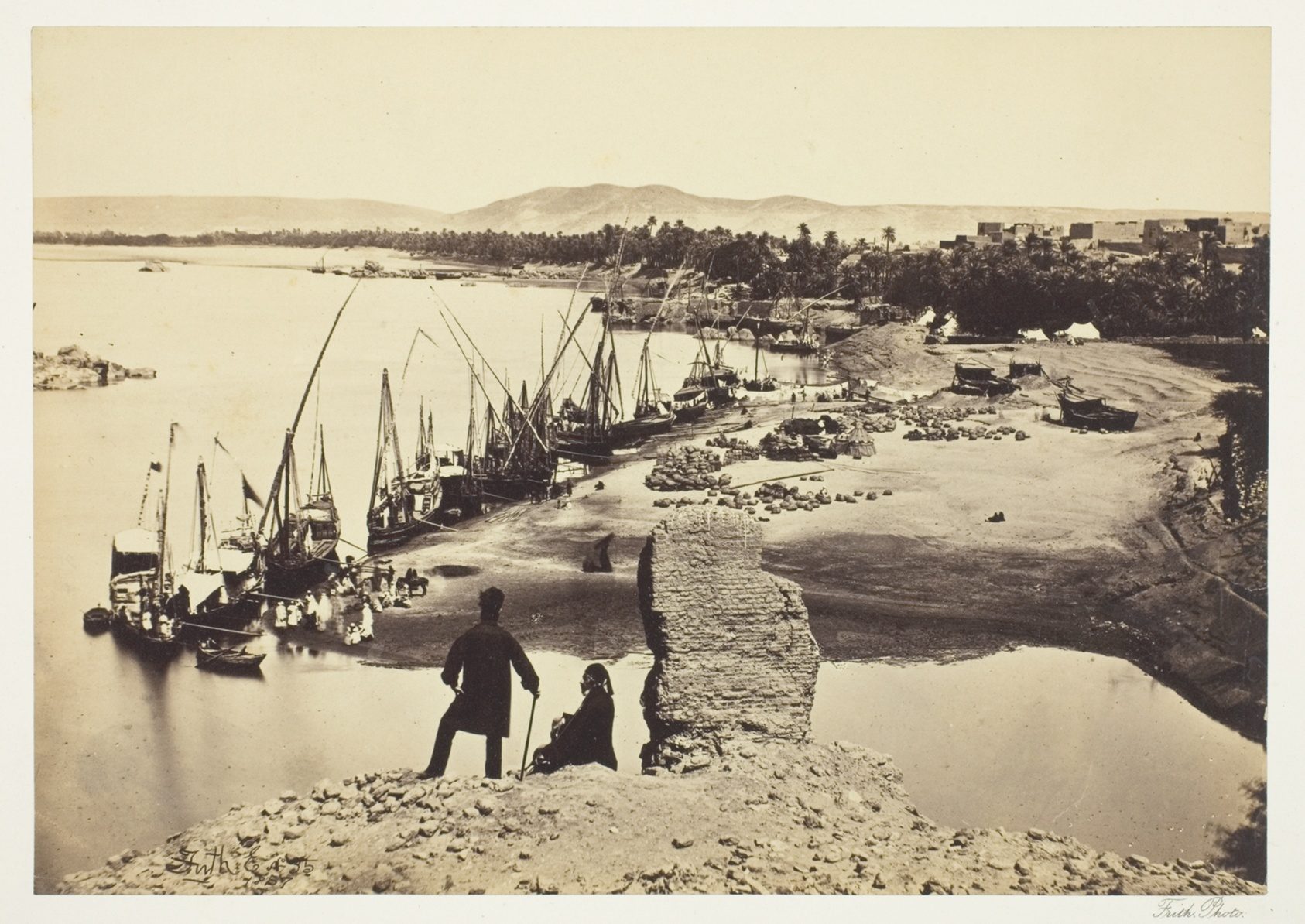
Francis Frith, Assouan, 1857. Francis Frith, Art Institute of Chicago (CC0)
Joseph: the story told in full, with the three tellings side by side.
Midrash and Jewish tradition
The rabbis read the whole story as one of repentance: the brothers who sold Joseph are tested in Egypt and this time refuse to abandon Benjamin.
Christian tradition
From the early Church onwards, Joseph's betrayal and rise were read as foreshadowing the story of Christ (Acts 7 retells it).
Tafsir and hadith
Ibn Kathir, on 12:4, opens with Joseph (peace be upon him)'s dream of the eleven stars, the sun and the moon. The Qur'an calls the whole story aḥsan al-qaṣaṣ, “the best of narratives” (12:3).
When Joseph said unto his father: O my father! Lo! I saw in a dream eleven planets and the sun and the moon, I saw them prostrating themselves unto me.
Reference works: Encyclopaedia Judaica (2nd ed.); The Oxford Dictionary of the Christian Church; Encyclopaedia of Islam (3rd ed.); Ibn Kathir, Qisas al-Anbiya.