Mansa Musa, king of Mali, passed through Cairo in 1324 on his way to Mecca, laden with gold. He gave so much of it away that the price of gold in Egypt is said to have fallen for years afterwards.
On his way home he had run out, and had to borrow. Al-Ghaniyy, the Self-Sufficient, names the One whose riches never run out, because He needs nothing at all.
Start with what we know
Start with something we know. Then take away everything it needs. What is left is not a bigger version of us: it is the Name.
Episode 1
In us
We need about 2,000 to 2,500 calories a day, according to the NHS, and water, sleep, warmth and other people. We are open systems: energy in, energy out, all the time. Even the richest person on Earth must eat, breathe and sleep, and cannot buy a single extra day of life when it is over. Our independence is always partial. We call people 'self-made', but no one made the air they breathe or the body they were born in. Being human means needing.
Episode 2
In nature
The common shrew, one of Britain's smallest mammals, has such a fast metabolism that it must eat every two or three hours, day and night. It often consumes close to its own body weight in insects and worms each day. A few hours without food can kill it. Every living thing is like this in its own way: an open system that needs a constant flow of energy from outside. Even the toughest creatures are dependants. Nothing alive in nature is free of need.
Episode 3
At our best
Mansa Musa (peace be upon him)'s pilgrimage of 1324 became a legend. Arab historians such as al-ʿUmarī described his huge caravan and lavish gifts in Cairo, which are said to have lowered the value of gold there. He is still remembered as one of the wealthiest people in history. But by the time his caravan reached Suez on the way home, many pilgrims had died and the gold was gone; he had to borrow from Cairo merchants. Human wealth, however vast, is a store that empties as it gives.
Episode 4
The Break
Every giver we know has needs, runs on fuel and hopes for some return. Each gives from a store that gets smaller, and needs something back. Al-Ghaniyy gives from no store and needs no return. In a hadith qudsi, God's words in the Prophet (peace be upon him)'s telling, God imagines every human and jinn from first to last asking Him at once. If He gave each what they asked, it would take from what He has no more than a needle takes from the sea when it is dipped in (Muslim 2577). “O mankind! Ye are the poor in your relation to Allah. And Allah! He is the Absolute, the Owner of Praise.” (Qur'an 35:15, Pickthall).
From the tradition: Muslim 2577 (qudsi): 'were I to give everyone what he requested, that would not decrease what I have, any more than a needle decreases the sea if put into it' (API 6572). Acts 17:25 'neither is he served by men's hands, as though he needed anything'; Ps 50:12 'Were I hungry, I would not tell you'.
On screen
The Matrix's machines need us to run. Al-Ghaniyy needs nothing from anything.
Abū Dharr al-Ghifārī, a Companion known for his plain living, reported a long hadith qudsi, words of God told by the Prophet Muhammad ﷺ (peace be upon him). It is one of the most loved passages in Muslim devotion.
O My servants, it begins, I have forbidden injustice for Myself and made it forbidden among you, so do not wrong one another.
O My servants, all of you are lost except those I guide, so ask Me for guidance and I will guide you. All of you are hungry except those I feed, so ask Me for food and I will feed you. All of you are unclothed except those I clothe, so ask Me for clothing and I will clothe you.
O My servants, you cannot harm Me and you cannot benefit Me. If the first of you and the last of you were all as devout as the most devout heart among you, it would add nothing to My kingdom. If you were all as wicked as the most wicked heart, it would take nothing from it.
And if the first of you and the last of you stood in one place and asked of Me, and I gave every one of you what you asked, it would no more reduce what I have than a needle reduces the sea when it is dipped in. (Muslim 2577)
What each faith says
Read:
Judaism
“If I were hungry, I would not tell thee; for the world is Mine, and the fulness thereof.”
In Psalm 50 God speaks against the idea that sacrifices feed Him: “If I were hungry, I would not tell thee; for the world is Mine, and the fulness thereof.” What God wants instead, says the psalm, is thanksgiving and faithfulness.
Jewish teaching holds that commandments are given for human good, not because God lacks anything. The rabbis taught that God desires the heart.
The Mishnah asks: who is rich? And answers: the one who rejoices in his portion (Pirkei Avot 4:1). Wealth, in Jewish teaching, is measured by contentment, not by the store.
Christianity
“He isn’t served by men’s hands, as though he needed anything, seeing he himself gives to all life and breath and all things.”
Paul told the people of Athens that God “doesn't dwell in temples made with hands. He isn't served by men's hands, as though he needed anything, seeing he himself gives to all life and breath and all things”.
Christian theology speaks of God's aseity, His existence from Himself. Christians believe God created out of overflowing love within the Trinity, not out of need.
Francis of Assisi gave away everything he owned, even the clothes he stood in, and the friars who follow his rule still own nothing as individuals.
Islam
“O mankind! Ye are the poor in your relation to Allah. And Allah! He is the Absolute, the Owner of Praise.”
Al-Ghaniyy appears many times in the Qur'an, often with al-Ḥamīd. It tells people that their good deeds benefit themselves: “And whosoever striveth, striveth only for himself, for lo! Allah is altogether Independent of (His) creatures.” (29:6, Pickthall). And: “A kind word with forgiveness is better than almsgiving followed by injury. Allah is Absolute, Clement.” (2:263, Pickthall).
A related hadith says that true wealth is not having many possessions but a soul that is content (Bukhari 6446).
Same and different
Psalm 50, Paul in Athens and Qur'an 35:15 all say God needs nothing from us and gives everything to us. All three teach that worship and charity benefit people, not God. The Mishnah's “who is rich? the one who rejoices in his portion” and the hadith “wealth is a contented soul” (Bukhari 6446) say the same thing in two languages. Christians describe God's self-sufficiency as the love of the Trinity; Jews and Muslims describe it without the Trinity.
A moment to reflect
What do you need every day that you never think about?
If God needs nothing from us, why do people pray and give?
What would being 'content' look like in your life?
Watch
National Geographic's Sun 101: a star that gives and gives, and burns its own fuel.
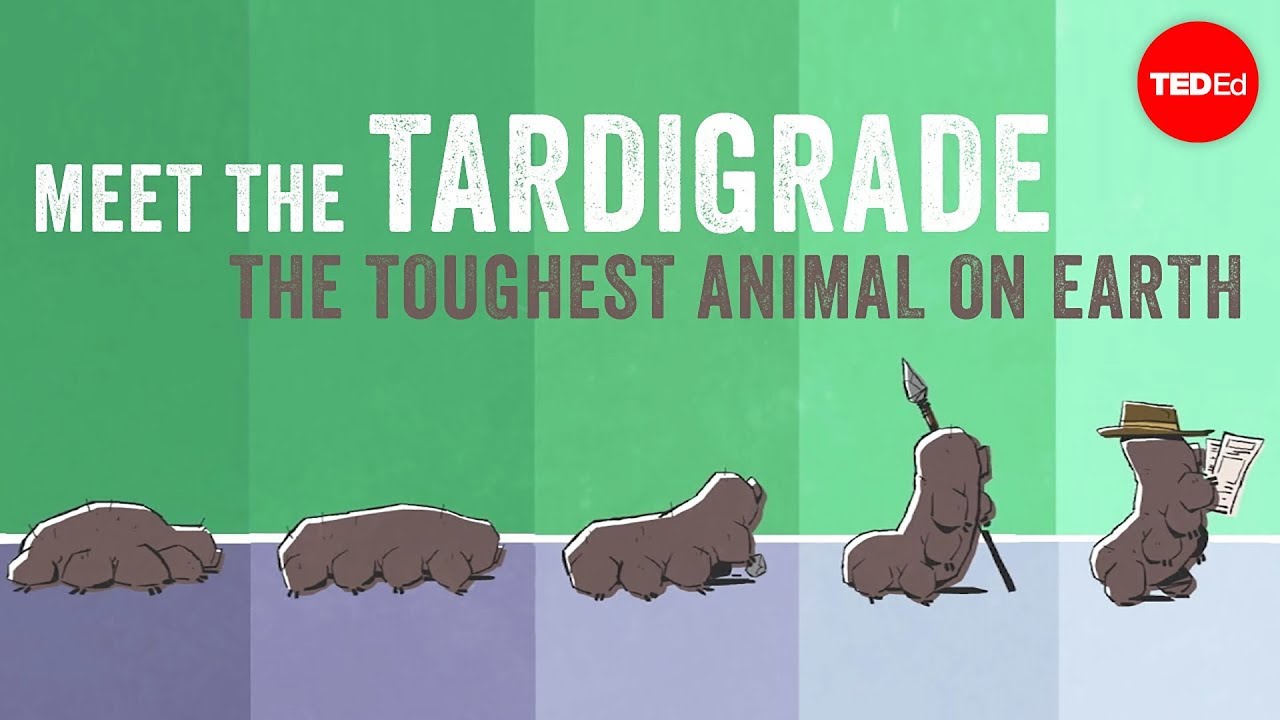
TED-Ed on the tardigrade: even the toughest animal needs something.
Do it together
families / schoolsThe needle and the bucket
Fill a bucket with water and mark the level. Dip a needle in and take it out. Can you see any difference? Read the needle hadith (Muslim 2577) and Psalm 50:12.
faith groups / neighboursEnough
Hold a 'swap shop' where people bring things they no longer need and take what they do, with no money changing hands. Talk about Bukhari 6446: wealth is a contented soul.
families / faith groups / schoolsA simpler Lent
Many Christians give something up for the forty days of Lent and give the money saved to people in need. Try it for a fortnight in any season: drop one small luxury, put the cost in a jar, and decide together where it goes.
 Episode 1