 Episode 1
In us
The longest human life on record: 122 years and 164 days. Every life we know is received, fed, repaired, and ends.
Reading settings
Text size
Easier reading
More space between lines and letters, plain font for headings, no italics.
Calm mode
No moving backgrounds or animations; softer images.
Save data
No background video and no card photos: good on a slow or capped connection.
Saved on this device only. Nothing is sent to us.

The 99 Names · Name 62 of 99 · Capacity
al-Ḥayy الْحَيُّ
Recited as it sounds in the Qur'an, 2:255.
Heard together with: al-Ḥayy / al-Qayyūm
In September 2007 a Russian satellite carried a cargo of tardigrades into orbit. These “water bears”, about half a millimetre long, were dried out and exposed to the vacuum of space for ten days. Some faced the Sun's raw ultraviolet light as well. Back on Earth, scientists added water. Many of them woke up, and some went on to lay eggs that hatched.
They are among the toughest animals known. But notice what brought them back: a drop of water. Even the hardiest life on Earth is borrowed from something outside it. Al-Ḥayy is the Name for life that is not borrowed from anything.
Start with something we know. Then take away everything it needs. What is left is not a bigger version of us: it is the Name.
Episode 1The longest human life on record: 122 years and 164 days. Every life we know is received, fed, repaired, and ends.
 Episode 2
A Greenland shark was found to be about 392 years old, give or take 120 (Nielsen and others, Science 2016). Ancient, and still mortal.
 Episode 3
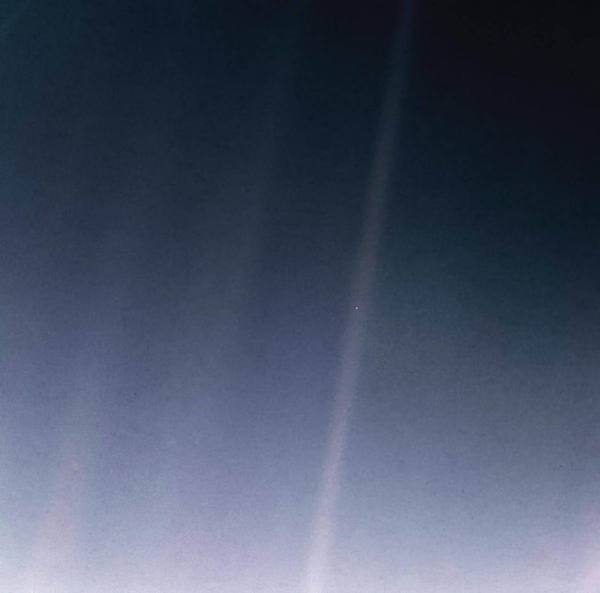
Voyager 1, launched in 1977, still sends data after 49 years, on a plutonium source that is slowly running down. Its instruments are being switched off one by one.
 Episode 4
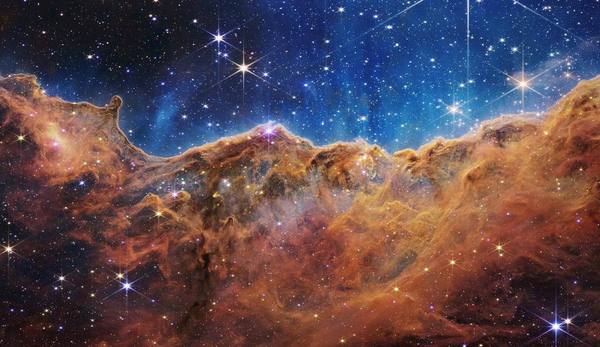
Take away a beginning, an end, food, repair, a source outside. Every life we know is lent. Al-Ḥayy's life is not received from anything. A Persian king in the book of Daniel praised “the living God, enduring for ever” (6:27), the same words as the Qur'an's al-Ḥayy al-Qayyūm (2:255).
From the tradition: Ashʿarī (al-Bāqillānī): knowledge, power, will, hearing and sight belong only to the living. Jeremiah 10:10 'A living God'.
Films, documentaries and voices that reach towards this Name. Each links out to where you can watch it.
On screen
Eywa is the sum of living things on Pandora. Al-Ḥayy is not the sum of anything; every life is from Him.
In June 632, in Medina, the Prophet Muhammad ﷺ (peace be upon him) died. The news ran through the city like a shock. ʿUmar ibn al-Khaṭṭāb, one of the strongest of his companions, could not accept it. He stood up and swore by God that the Prophet was not dead and would come back.
Abū Bakr, the Prophet's oldest friend, had been outside the city. He rode in, went straight to the room, uncovered the Prophet's face and kissed him. Then he came out to the people. He praised God and said: “Whoever worshipped Muhammad, Muhammad has died. But whoever worshipped God, God is living and will never die.”
Then he recited a verse: “Muhammad is but a messenger, messengers (the like of whom) have passed away before him. Will it be that, when he dieth or is slain, ye will turn back on your heels? He who turneth back on his heels doth no hurt to Allah, and Allah will reward the thankful.” (3:144, Pickthall). People said afterwards it was as if they had never heard the verse until that day. ʿUmar said his legs gave way beneath him.
In the hour of their deepest grief, Abū Bakr did not offer the community a slogan. He reminded them where life comes from. The one they loved most had died, as every life we know must end. Al-Ḥayy remained.
“But the LORD God is the true God, He is the living God, and the everlasting King”
Jeremiah 10:10 · JPS 1917
“The living God” is one of the Hebrew Bible's favourite ways of telling the true God from idols that “cannot speak” and “must needs be borne”. The Hebrew word for life, chai, has become a Jewish symbol worn on necklaces, and the toast l'chaim means “to life”.
Many Jews say a short prayer on waking, Modeh Ani: “I give thanks before You, living and enduring King, for You have returned my soul to me in mercy.” “Living and enduring” is chai ve-kayam in Hebrew, and many children learn the prayer before any other.
“He isn't served by men's hands, as though he needed anything, seeing he himself gives to all life and breath and all things.”
Acts 17:25 · WEB
Standing among the temples of Athens, Paul told the philosophers that God does not live in shrines made by hands and needs nothing from us. Rather, He gives life and breath to everyone. “In him we live, move, and have our being,” he said, quoting one of their own poets (Acts 17:28).
At the centre of Christian faith is the belief that the living God raised Jesus from the dead. Jesus says in John's Gospel: “I am the resurrection and the life” (John 11:25). For Christians, Easter is the feast of the living God.
On Easter night Orthodox Christians greet one another “Christ is risen!” and answer “Truly He is risen!”, over and over, for forty days.
“And trust thou in the Living One Who dieth not, and hymn His praise. He sufficeth as the Knower of His bondmen's sins.”
Qur'an 25:58 · Pickthall (1930)
Al-Ḥayy appears in the most famous verse of the Qur'an, the Verse of the Throne: “Allah! There is no God save Him, the Alive, the Eternal. Neither slumber nor sleep overtaketh Him.” (2:255, Pickthall). Muslim theologians call life the attribute that the others presuppose: only the living can know, will, hear and see.
Muslims also thank God for life every morning. The Prophet (peace be upon him) used to say on waking: “Praise be to God, who gave us life after He had made us die, and to Him is the return” (Bukhari 6312). Sleep is treated as a small death, and waking as life given back.
All three faiths call God ‘the living God’, set Him apart from idols and from everything that dies, and thank Him each morning for life given back after sleep. The Jewish Modeh Ani and the Muslim waking prayer are remarkably close. The Hebrew chai ve-kayam, ‘living and enduring’, and the Arabic al-Ḥayy al-Qayyūm are cousin words in sister languages. They differ over death and the living God. Christians believe God the Son took a human life, died on the cross and rose again. Jews and Muslims hold that God has no beginning, no end and no death of any kind.
A moment to reflect
Meet the tardigrade, the animal that survived open space, and why even it needs water to come back.
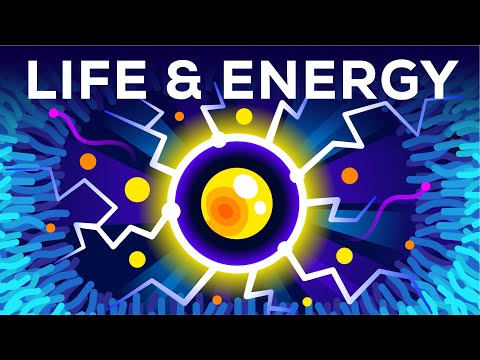
Kurzgesagt asks the hardest question in biology: what is life, and is death real?
Microbes from under the seafloor, revived after about 100 million years: life that waits, but does not create itself.
Collect a pinch of dry moss from a wall or roof and soak it in a dish of rainwater overnight. Then look at drops of the water under a cheap microscope at about 40x magnification. With patience you may find a tardigrade. Talk about what brought it back to life.
Share the waking prayers of different traditions: Modeh Ani, the Muslim ‘Praise be to God who gave us life’, a Christian morning prayer. Try saying one each morning for a week, then compare how the days felt.
Beyond the Abrahamic family, other traditions reach for something like this. Each in its own words; we connect, never rank.
Hindu
Death was not then, nor was there aught immortal... That One Thing, breathless, breathed by its own nature: apart from it was nothing whatsoever.
Rig Veda 10.129.2 · tr. R. T. H. Griffith (1896)
Sikh
There is but one God whose name is True, the Creator, devoid of fear and enmity, immortal, unborn, self-existent.
Mul Mantar (akal murat: timeless form) · Guru Granth Sahib p. 1 · tr. M. A. Macauliffe, The Sikh Religion (1909), vol. 1
5 films and talks, chosen for this page. They play here.
SERIES FINALE: What Is the Greatest Name of Allah? | Allah’s Names | Dr. Omar Suleiman | Ep. 30
Yaqeen Institute · 19 min
Hisﷻ Names in Our Lives (Ep 7) | Who is "Al Hayy & Al Qayyum" | Dr Haifaa Younis | Jannah Institute
Jannah Institute by Dr Sh Haifaa Younis · 49 min
10 - The Divine Names Al-Qawi until Al-Qayyum - Ninety-Nine Names of Allah for Youth - Imam Yama
SeekersGuidance · 55 min
SeekersGuidance: Imam Yama Niazi on the Names from al-Qawiyy to al-Qayyum, including al-Hayy.
Harvey Clemons on "Science and the Living God"
BioLogos · 16 min
Voyager Captures Sounds of Interstellar Space
NASA Jet Propulsion Laboratory · 1 min