Students at the University of California spent one minute gazing up at eucalyptus trees more than 60 metres tall. The psychologists running the 2015 study had another group look at a tall building instead. Then a researcher ‘accidentally’ dropped a handful of pens. The students who had looked up at the trees picked up more of them (Piff and others, 2015).
The researchers called it awe: the feeling of meeting something so vast that it makes the self feel small, and somehow kinder. Al-ʿAẓīm is the Magnificent. Muslims say it with their backs bent in prayer: “Glory to my Lord, the Magnificent.” Magnificent things make us feel small. Al-ʿAẓīm is beyond size altogether.
Start with what we know
Start with something we know. Then take away everything it needs. What is left is not a bigger version of us: it is the Name.
Episode 1
In us
Psychologists such as Dacher Keltner have spent two decades studying awe. They find that it can be triggered by nature, music, great acts of goodness, even a newborn baby. It quietens the inner voice that worries about status, and people who feel it more often tend to be more generous and less stressed (Greater Good Science Center, Berkeley). Awe may be one of the most important feelings a human can have. But it is fleeting. It fades within minutes, it needs something outside us to set it off, and we can feel it for the wrong things.
Episode 2
In nature
On the border of Zambia and Zimbabwe, the Zambezi River drops over Victoria Falls in a curtain of water about 1.7 kilometres wide and more than 100 metres high. In the rainy season the spray rises so high it can be seen tens of kilometres away; local people named it Mosi-oa-Tunya, ‘the smoke that thunders’ (UNESCO World Heritage Centre). It is one of the most magnificent sights on Earth. Yet it can be measured, mapped and photographed from space. In a dry year it shrinks to a series of thin streams. Even nature's magnificence has a size and a season.
Episode 3
At our best
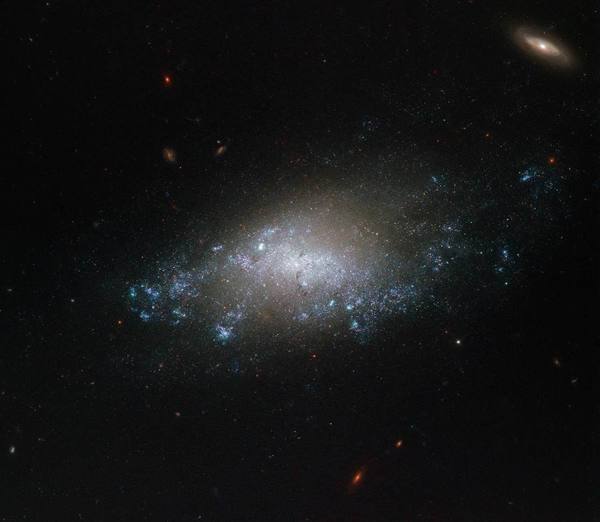
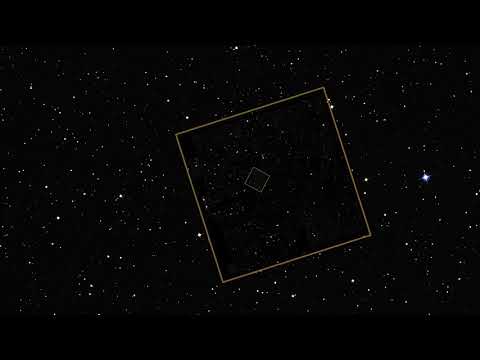
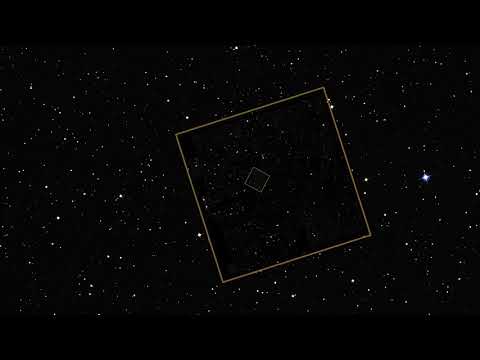
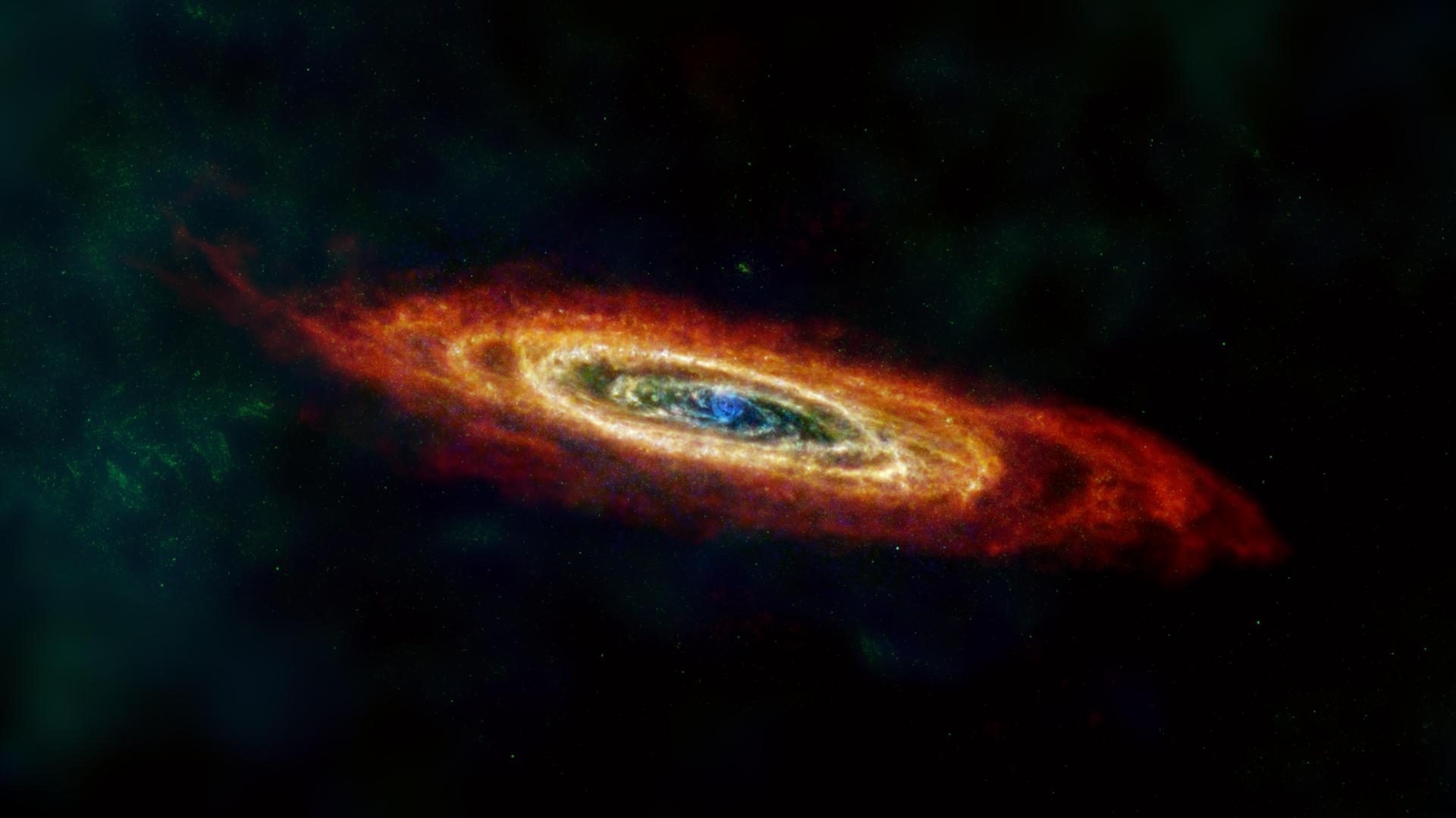
In July 2022 NASA released the first deep-field image from the James Webb Space Telescope. It showed thousands of galaxies, some whose light set out more than 13 billion years ago. All of them sat in a patch of sky about the size of a grain of sand held at arm's length (NASA). It may be the most magnificent picture human beings have ever made. But it is still a picture of size and distance: more, further, older. Every telescope shows us things that are big. None of them shows us what magnificence itself is.
Episode 4
The Break
Forget the trees and the thundering water, and the grain of sand of sky. Then forget size itself, because every big thing can be measured, and al-ʿAẓīm cannot. His magnificence is not that He is larger than the universe. It is that He is beyond the scale on which ‘large’ and ‘small’ are measured. “He knoweth (all) that is before them and (all) that is behind them, while they cannot compass it in knowledge.” (20:110, Pickthall). Āyat al-Kursī, the Verse of the Throne, ends: “He is the Sublime, the Tremendous” (Qur'an 2:255, Pickthall).
When the verse “So glorify the name of your Lord, the Magnificent” was revealed (56:74), the Prophet Muhammad ﷺ (peace be upon him) told his companions: “Put it in your bowing.” When “Praise the name of thy Lord the Most High.” (87:1, Pickthall) came, he said: “Put it in your prostration” (Abū Dāwūd 869). Some scholars grade the chain of people who passed on this report as weak, though the practice itself is followed by Muslims everywhere.
So ever since, in every rakʿah, or cycle, of every prayer, Muslims bend from the waist, hands on knees, back straight. They say quietly at least three times: Subḥāna rabbiya l-ʿaẓīm, “Glory to my Lord, the Magnificent.”
The Prophet once asked his companion Ubayy ibn Kaʿb which verse in the Qur'an was the greatest. Ubayy said: “God and His Messenger know best.” The Prophet asked again. Ubayy answered: “God, there is no god but He, the Living, the Sustainer”: Āyat al-Kursī, the Verse of the Throne, which ends with al-ʿAẓīm. The Prophet tapped him on the chest and said: “May knowledge delight you, Abū al-Mundhir” (Muslim 810).
The body bowing and the verse praising belong together. Muslims learn the meaning of magnificence not only by looking up at the stars, but by bowing down.
What each faith says
Read:
Judaism
“Great is the LORD, and highly to be praised; and His greatness is unsearchable.”
In the Jewish morning service, the congregation stands and repeats the words the prophet Isaiah heard the angels say in his vision of the Temple: “Holy, holy, holy”. It is called the Kedushah. The Psalms add that God's greatness cannot be searched out.
Rabbi Abraham Joshua Heschel was one of the great Jewish thinkers of the twentieth century. He wrote that awe is the beginning of wisdom, and that the loss of a sense of wonder is the beginning of losing faith.
Jewish tradition gives awe its own blessing. On seeing mountains, deserts, great rivers or the sea, Jews say: ‘Blessed are You… who makes the work of creation’ (Mishnah Berakhot 9:2).
Christianity
“Holy, holy, holy is the Lord God, the Almighty, who was and who is and who is to come.”
Christians sing the same words as Isaiah's angels in the Sanctus at every communion service: “Holy, holy, holy”. The book of Revelation pictures creatures around God who never stop saying them.
Christian tradition speaks of God's majesty and of the ‘fear of the Lord’, a reverent awe that, as Proverbs says, is the beginning of wisdom.
‘How Great Thou Art’ is one of the best-loved hymns in Britain. It began as a Swedish poem by Carl Boberg in 1885 and is loved in Anglican, Methodist, Baptist and Pentecostal churches alike.
Islam
“Therefor (O Muhammad), praise the name of thy Lord, the Tremendous.”
Al-ʿAẓīm appears nine times in the Qur'an as a Name of God, most famously at the end of Āyat al-Kursī (2:255). Scholars warned against picturing it as physical size: God is not a very large thing. His magnificence is beyond what minds can take in.
It is one of the Names Muslims use most often without noticing. It is said in every bowing of prayer. It is also in the phrase subḥān Allāh al-ʿaẓīm, ‘glory be to God the Magnificent’, which the Prophet called light on the tongue and heavy on the scales (Bukhari 6406).
Same and different
All three faiths turn awe into worship. Jews stand for the Kedushah, Christians sing the Sanctus, and Muslims bow and say ‘Glory to my Lord, the Magnificent’. All three warn that God's greatness is not a matter of size, and all three see awe as the beginning of wisdom. They differ in how God's majesty draws near: through the Temple and Torah, through Christ, or through the Qur'an's verses and the prayer itself.
A moment to reflect
When did you last feel awe? What caused it?
Why might feeling small make people kinder?
Is there something you treat as magnificent that perhaps does not deserve it?
Watch
Dacher Keltner on why awe is such an important emotion: the ‘In us’ rung.
BBC Earth at Victoria Falls, ‘the smoke that thunders’: the ‘In nature’ rung.
ESA's journey through the James Webb Space Telescope's views: the ‘At our best’ rung.
Do it together
families / neighbours / schoolsAwe walk
Take a 15-minute walk where the only aim is to notice things that make you go quiet: a big tree, a sky, a tiny detail. Afterwards, each share one. Read Psalm 145:3 and Qur'an 56:74.
schools / faith groupsBowing, explained
Invite a Muslim volunteer to show the bowing position in prayer (rukūʿ) and explain what is said in it. Compare with bowing or kneeling in Jewish and Christian worship, and talk about why bodies bow.
families / schoolsA blessing for a wonder
Jewish tradition has a blessing for seeing mountains, great rivers or the sea (Mishnah Berakhot 9:2). On your next trip to the coast or the hills, stop, look for a full minute, and each say your own one-line thank-you for what you see.
choirs / faith groupsHow great
Sing or listen to ‘How Great Thou Art’ together, then share the moment in your life that came closest to the awe in its first verse.
Abraham Joshua Heschel, God in Search of Man (1955) · book
Others say it too
Beyond the Abrahamic family, other traditions reach for something like this. Each in its own words; we connect, never rank.
Hindu
If there should rise suddenly within the skies sunburst of a thousand suns flooding earth with beams undeemed-of, then might be that Holy One's majesty and radiance dreamed of!
Bhagavad Gita 11.12 · tr. Edwin Arnold, The Song Celestial (1885)
 Episode 1