 Episode 1
In us
Your fingertips can feel ridges just 13 billionths of a metre high (Skedung and others, 2013). But touch needs contact.
Reading settings
Text size
Easier reading
More space between lines and letters, plain font for headings, no italics.
Calm mode
No moving backgrounds or animations; softer images.
Save data
No background video and no card photos: good on a slow or capped connection.
Saved on this device only. Nothing is sent to us.
The 99 Names · Name 30 of 99 · Capacity
al-Laṭīf اللَّطِيفُ
Recited as it sounds in the Qur'an, 6:103.
Heard together with: al-Laṭīf / al-Khabīr
Tens of billions of neutrinos from the Sun pass through every square centimetre of you each second. These tiny particles go through your hand, through the Earth, out the other side, and almost never touch anything. Huge detectors buried under mountains catch only a handful a day.
Some things are too fine to feel. Al-Laṭīf has two meanings in Arabic, and both matter. It is the Subtle, who reaches the finest and most hidden things; and it is the Gentle, whose kindness often arrives so quietly that we only notice it years later. The second meaning matters here as much as the first.
Start with something we know. Then take away everything it needs. What is left is not a bigger version of us: it is the Name.
Episode 1Your fingertips can feel ridges just 13 billionths of a metre high (Skedung and others, 2013). But touch needs contact.
 Episode 2
A male silk moth can respond to a single molecule of scent, carried on the wind from far away (Sakurai and others, 2014).
 Episode 3
In 2009 scientists in Zurich imaged the bonds inside a single molecule. It took ultra-high vacuum, near absolute zero, and a molecule held perfectly still.
 Episode 4
Take away contact, the probe, the vacuum, the stillness. Al-Laṭīf is not a finer instrument, but subtlety that reaches the smallest thing, and kindness that arrives unseen. Joseph (peace be upon him), looking back on his whole life, said: “Lo! my Lord is tender unto whom He will.” (Qur'an 12:100 · Pickthall).
From the tradition: al-Ghazālī: knows the subtleties and conveys benefit by gentle means. The ladder serves sense 1; the Break turns to sense 2 (Joseph (peace be upon him), 12:100)
Films, documentaries and voices that reach towards this Name. Each links out to where you can watch it.
On screen
Ant-Man has to shrink to reach the small. Al-Laṭīf reaches the smallest thing without becoming anything.
Elijah (peace be upon him), whom the Qur'an calls Ilyās, had stood alone against the worship of Baal in the kingdom of Israel. Now Queen Jezebel had sworn to kill him. He ran south into the desert, sat under a broom tree and asked to die. “It is enough,” he said. Then he fell asleep.
An angel woke him and said, “Arise and eat.” There was a cake baked on hot stones and a jar of water by his head. He ate, slept again, and was woken again and fed again. Before any lesson, before any rebuke, he was given bread, water and sleep.
Then he walked to Horeb, the mountain of God, and hid in a cave. A great wind tore at the rocks, but God was not in the wind. Then an earthquake, but God was not in the earthquake. Then a fire, but God was not in the fire. And after the fire came “a still small voice”.
The Hebrew is stranger still: kol demamah dakkah, “a sound of thin silence”. The story is loved in all three faiths because it turns our expectations round. We look for God in the loud and dramatic; Elijah met Him in something almost too quiet to hear, after being cared for as gently as a child.
“and after the fire a still small voice.”
1 Kings 19:12 · JPS 1917
Jewish tradition has a deep sense of God working quietly behind events. The book of Esther never mentions God's name once. Yet the rabbis read it as the story of a hidden hand: a queen in the right place, a sleepless king, a plot turned round. Jews call this hashgachah, providence.
The Elijah story's ‘still small voice’ has become, for many Jews and Christians, the way God most often speaks: inwardly, quietly, in a moment of calm.
At Purim the book of Esther is read aloud in synagogue, and children in fancy dress drown out the villain Haman's name with rattles. A hidden God is celebrated with a great deal of noise.
“He won't break a bruised reed. He won't quench a smoking flax, until he leads justice to victory.”
Matthew 12:20 · WEB
Matthew's Gospel applies a prophecy of Isaiah to Jesus: he would not break a bruised reed or snuff out a smouldering wick. Christians see in this the gentleness of God towards people who are nearly broken. Jesus says of himself, “I am gentle and humble in heart” (Matthew 11:29).
Paul lists gentleness among the fruit of the Spirit (Galatians 5:22-23). For Christians, God's power and God's gentleness are not opposites.
Quakers meet for worship in silence, waiting on that small inward voice; anyone may stand and speak if moved to. The Quaker poet John Greenleaf Whittier ended his hymn “Dear Lord and Father of Mankind”, still sung in British churches, with a prayer to the “still small voice of calm”.
“O my dear son! Lo! though it be but the weight of a grain of mustard-seed, and though it be in a rock, or in the heavens, or in the earth, Allah will bring it forth. Lo! Allah is Subtile, Aware.”
Qur'an 31:16 · Pickthall (1930)
In the Qur'an the wise man Luqmān gives his son a picture of al-Laṭīf. Even something the weight of a mustard seed, hidden inside a rock or anywhere in the heavens or the earth, God will bring it out. The other sense appears too: “Allah is gracious unto His slaves. He provideth for whom He will. And He is the Strong, the Mighty.” (42:19, Pickthall).
Al-Ghazālī said the one who truly deserves this Name knows the finest details of what benefits people, and brings that benefit to them by gentle means, without harshness. For Muslims, living by it means kindness that does not announce itself.
Jews, Christians and Muslims all keep the story of Elijah and teach that God is gentle with the bruised and nearly broken. Often God works too quietly for us to notice at the time. They differ on how close that gentleness comes. Christians believe it took human form in Jesus. Jews and Muslims speak of God's hidden providence and kindness without any incarnation. Islam's al-Laṭīf also carries the sense of subtlety, a knowing that reaches the smallest thing.
A moment to reflect
Fermilab on neutrinos, the ghostly particles passing through you as you watch.
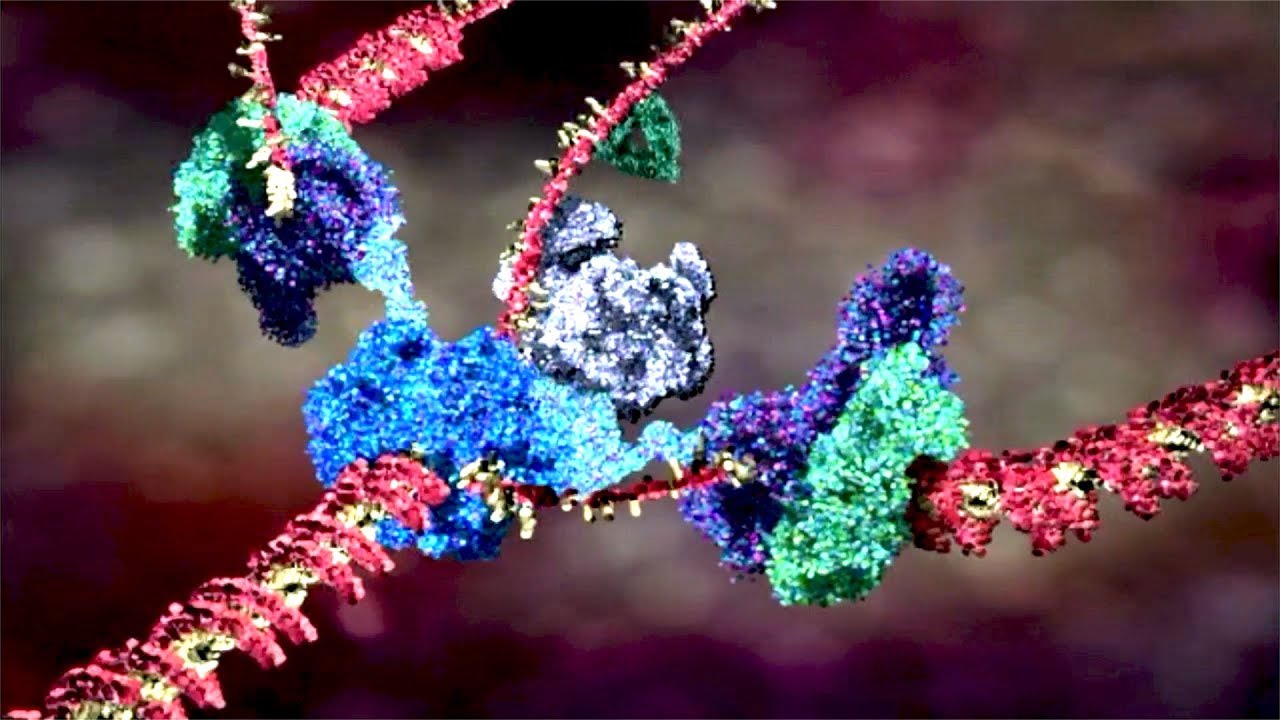
The molecular machines working inside every cell, far too small and quick to feel.
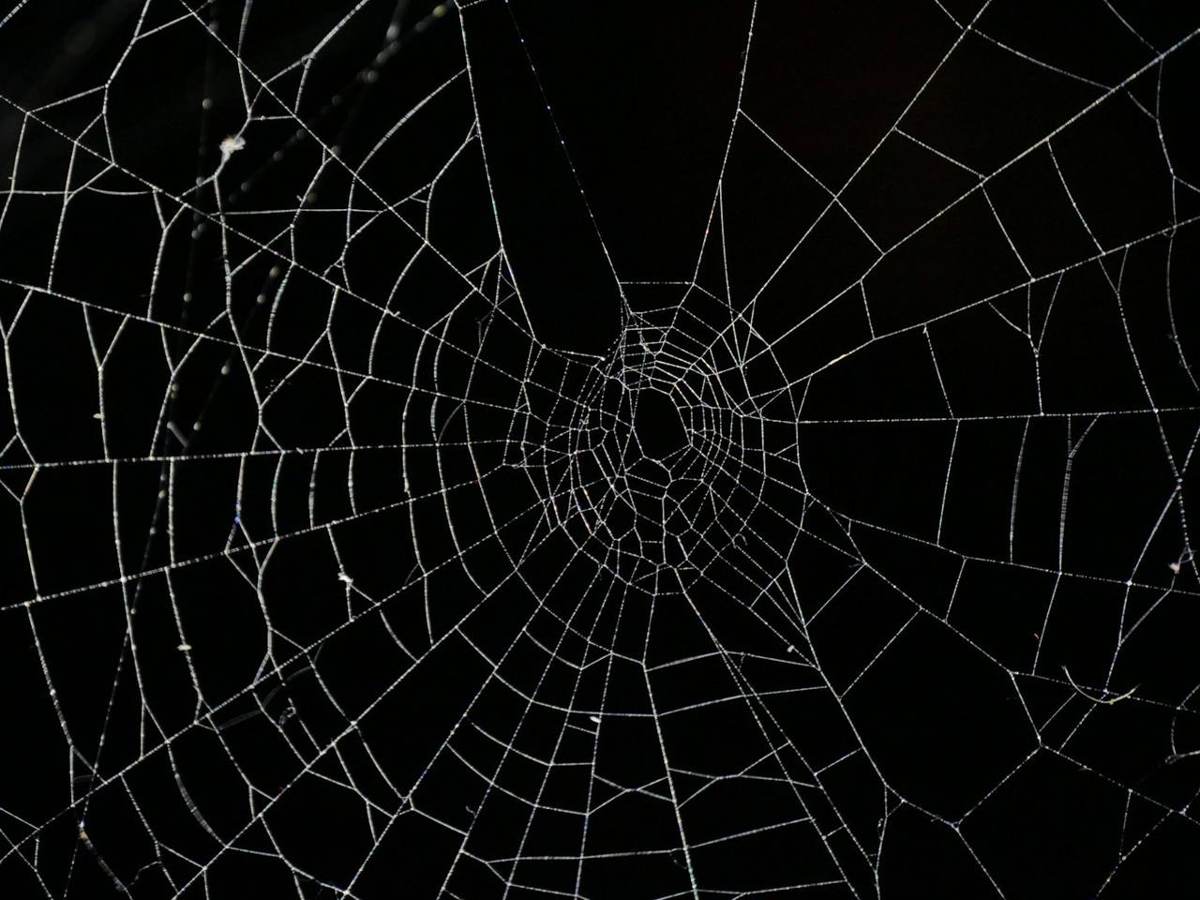
A spider spinning its web in time-lapse: strength made of threads finer than a hair.
Pass a raw egg or a feather round a circle with eyes closed, as gently as you can. Then talk about who in your life handles you gently when you are fragile, and read Matthew 12:20 and Qur'an 42:19.
Sit together in a garden, park or place of worship in complete silence for five minutes; Quaker meetings welcome visitors who want to try it for an hour. Afterwards, each person names the smallest sound they heard. Read 1 Kings 19:11-12 aloud and talk about where we expect to find God.
Many synagogues welcome visitors to the Purim reading of Esther each February or March. Go along with a rattle, listen for the moments where luck looks like something more, and talk afterwards about a time things turned round for you without anyone planning it.
7 films and talks, chosen for this page. They play here.
The Wisdom Behind Your Pain | Allah’s Names | Dr. Omar Suleiman | Ep. 17
Yaqeen Institute · 16 min
Yaqeen: Dr Omar Suleiman on al-Latif, al-Khabir and al-Hakim, the wisdom behind your pain (episode 17).
The Beautiful Names of Allah (Part 12)- Al-Lateef
Yasir Qadhi · 14 min
Yasir Qadhi: the Beautiful Names, part 12, on al-Latif.
Episode 12 - Allah’s name Al-Latif ( the subtle & kind)
Nouman Ali Khan - Official - Bayyinah · 20 min
Nouman Ali Khan: Allah's Name al-Latif, the Subtle and Kind.
"I Got This" Is Distancing You From Allah | The Names Class 17: Al-Latif | Shaykh Mikaeel Smith
Qalam Institute · 56 min
God, Faith, and the Path of Lovingkindness
Hadar · 92 min
Inside Japan’s Giant Neutrino Detector | BBC Earth Science
BBC Earth Science · 3 min
How Small Is An Atom? Spoiler: Very Small.
Kurzgesagt – In a Nutshell · 5 min