More than 900 sub-postmasters in Britain were prosecuted for theft and false accounting between 1999 and 2015. Many went to prison. Some lost their homes, their marriages and their good names. The money had never been stolen. A faulty computer system called Horizon had invented the shortfalls.
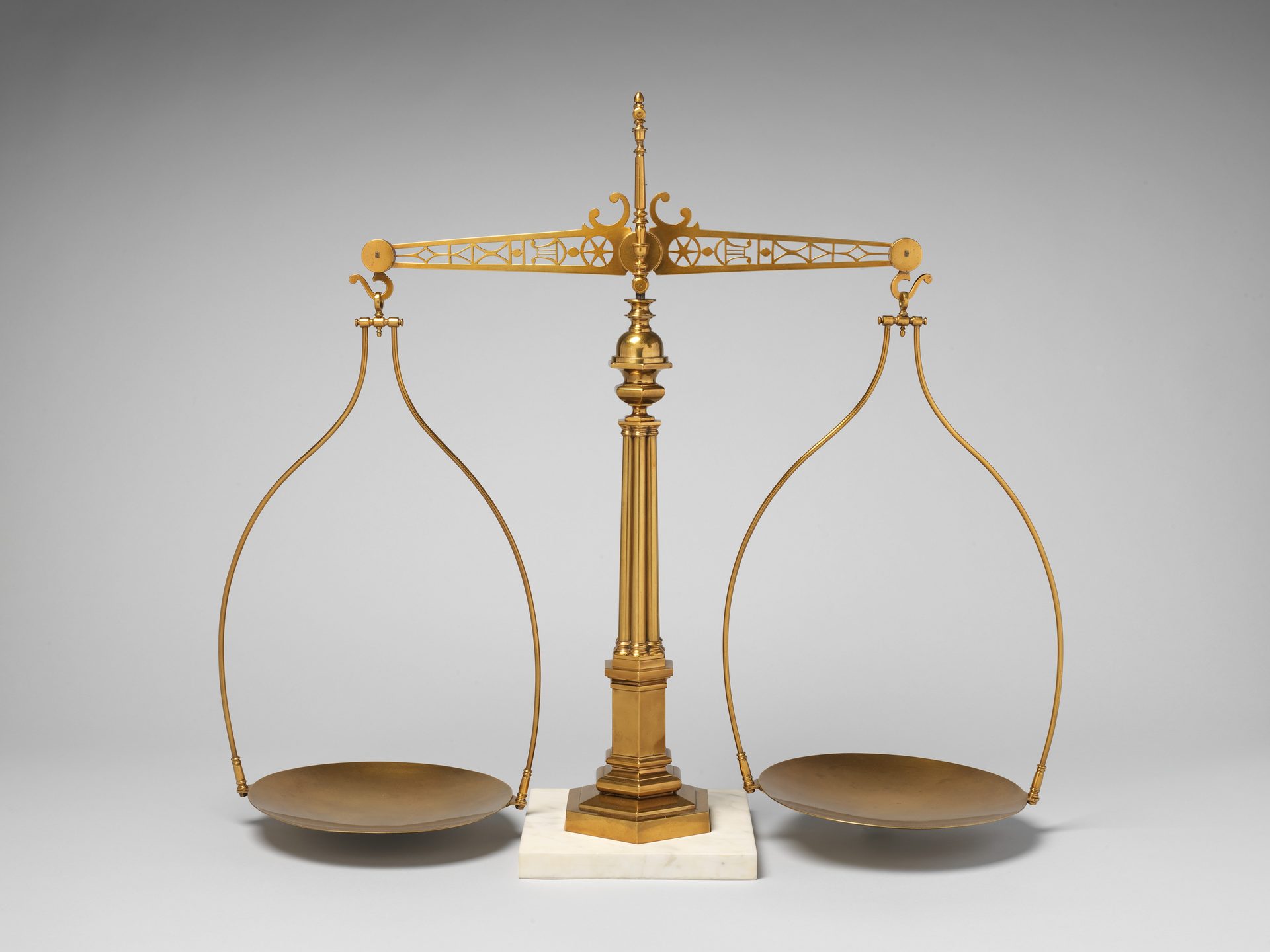
Al-ʿAdl means Justice: not just a just judge, but justice itself, the One who never wrongs anyone by even an atom's weight. Even the best justice we know falls short of it.
Start with what we know
Start with something we know. Then take away everything it needs. What is left is not a bigger version of us: it is the Name.
Episode 1
In us
It took the sub-postmasters more than twenty years to be heard. A group led by Alan Bates, a former sub-postmaster from Llandudno, took the Post Office to court and won in 2019. In 2024 Parliament passed a law quashing the convictions of hundreds of them at once, an act almost without precedent (Post Office Horizon IT Inquiry; GOV.UK). It is a powerful example of a justice system eventually correcting itself. But ‘eventually’ is the word. Some of those wrongly convicted died before they were cleared. Human justice can be put right; it cannot give back the years.
Episode 2
In nature
Vampire bats must feed on blood almost every night; a bat that misses two or three meals in a row can starve. Bats that have fed well will regurgitate blood to hungry roost-mates. Studies found they share most with bats that have shared with them before (Wilkinson, Nature, 1984; Carter and Wilkinson, 2013). It is a kind of fairness: give and take, kept in balance. But it is a ledger. Bats that never share tend to receive less. Nature's justice keeps score, and those who cannot pay are left out.
Episode 3
At our best
Physics has the most perfect balance sheet we know. In every experiment ever done, energy is neither created nor destroyed, only changed from one form to another. In 1918 the mathematician Emmy Noether showed why: conservation laws follow from deep symmetries in nature itself (Noether, 1918). Nothing in the universe cheats the books. Yet physics balances only quantities, not wrongs. The same energy flows through a healing hand and a striking fist. The laws of nature are impartial, but they are not just: they have no concern for the victim.
Episode 4
The Break
Count up the twenty years, the death before the verdict, the ledger that leaves out those who cannot repay, the impartial law that does not care. Every justice we know is late, partial, or blind to the person. Al-ʿAdl is justice that wrongs no one, sees every person and every deed, and comes in full. “And We set a just balance for the Day of Resurrection so that no soul is wronged in aught. Though it be of the weight of a grain of mustard seed, We bring it. And We suffice for reckoners.” (Qur'an 21:47, Pickthall).
From the tradition: Hadith qudsi: 'O My servants, I have forbidden oppression for Myself and have made it forbidden amongst you' (Muslim 2577; API 6572). Deut 32:4 'all of whose ways are just'
Watch and listen
Films, documentaries and voices that reach towards this Name. Each links out to where you can watch it.
On screen
In the novel, a good man loses to an unjust jury. Al-ʿAdl never loses a case to injustice, because He has forbidden it for Himself.
Beyond: majesty: what He is not, and how far beyond.
In the Qur'an: cf. 16:90 (He commands justice); 6:115 (not in the Qur'an verbatim)
The verses that defended a Jewish neighbour
Commentators on the Qur'an tell this story about Qur'an 4:105-113. In Medina, a Muslim man stole a coat of armour from a neighbour. When suspicion grew, he hid the armour in the house of a Jewish man and let it be found there.
His clan came to the Prophet Muhammad ﷺ (peace be upon him) to defend him. They were persuasive, and they were his own people; the Jewish man was an outsider. For a moment, it seemed the case might go the thief's way.
Then revelation came: “Lo! We reveal unto thee the Scripture with the truth, that thou mayst judge between mankind by that which Allah showeth thee. And be not thou a pleader for the treacherous.” (4:105, Pickthall). The verses go on to condemn anyone who commits a wrong and then “And whoso committeth a delinquency or crime, then throweth (the blame) thereof upon the innocent, hath burdened himself with falsehood and a flagrant crime.” (4:112, Pickthall).
The Jewish man was cleared, and the Muslim thief exposed. Versions of the story differ in some details. But Muslim scholars have always taken its point: justice does not take sides by faith or tribe. Elsewhere the Qur'an says: “Be ye staunch in justice, witnesses for Allah, even though it be against yourselves or (your) parents or (your) kindred, whether (the case be of) a rich man or a poor man, for Allah is nearer unto both (them ye are).” (4:135, Pickthall).
In a saying Muslims believe comes from God Himself, He says: “My servants, I have forbidden injustice for Myself, and I have made it forbidden among you; so do not wrong one another” (Muslim 2577).
What each faith says
Read:
Judaism
“But let justice well up as waters, and righteousness as a mighty stream.”
The Torah describes God as the Rock, for “all His ways are justice” (Deuteronomy 32:4), and commands human judges to pursue justice, repeating the word twice for emphasis. The prophets turned justice into a river.
Jewish teaching links tzedek, justice, with tzedakah, the giving that puts things right for the poor: charity is not a favour but a duty of justice.
Rabbi Tarfon left much-quoted advice for anyone facing a huge injustice. It is not your duty to finish the work, but neither are you free to give up on it (Pirkei Avot 2:16).
Christianity
“you have left undone the weightier matters of the law: justice, mercy, and faith. But you ought to have done these, and not to have left the other undone.”
Jesus criticised religious people who were careful about small rules but neglected “the weightier matters of the law: justice, mercy, and faith”. Christians believe God is perfectly just, and that His justice and mercy meet in Christ.
Churches in Britain have campaigned for justice from the abolition of slavery to debt relief, inspired by the prophets' call that Jesus took up.
Elizabeth Fry, a Quaker, went into Newgate prison in the 1810s and spent her life on prison reform. William Wilberforce, an evangelical Anglican, pushed for twenty years to end the British slave trade. In 2000, churches across the world backed the Jubilee 2000 campaign to cancel the debts of the poorest countries.
Islam
“Lo! Allah enjoineth justice and kindness, and giving to kinsfolk, and forbiddeth lewdness and abomination and wickedness. He exhorteth you in order that ye may take heed.”
Al-ʿAdl appears in the traditional lists of the 99 Names, but not word for word as a Name in the Qur'an. Some scholars, such as the modern Saudi scholar Ibn ʿUthaymīn, held that it should not be counted among the Names for that reason. The quality, though, is everywhere: God commands justice (16:90), wrongs no one by an atom's weight (4:40), and His word is complete “Perfected is the Word of thy Lord in truth and justice. There is naught that can change His words. He is the Hearer, the Knower.” (6:115, Pickthall).
For Muslims, justice is owed to everyone, friend or enemy: “O ye who believe! Be steadfast witnesses for Allah in equity, and let not hatred of any people seduce you that ye deal not justly. Deal justly, that is nearer to your duty. Observe your duty to Allah. Lo! Allah is Informed of what ye do.” (5:8, Pickthall).
Same and different
Justice is one of the deepest common threads in the three faiths. The Torah's ‘justice, justice’, Amos's river, Jesus' ‘weightier matters’ and the Qur'an's ‘stand firm for justice, even against yourselves’ all ask people to be fair even to outsiders and enemies. Each also has its own emphasis. Judaism makes charity a matter of justice: tzedek and tzedakah share a root. Islam insists that justice is owed even to people you hate (5:8). They differ on how God's justice and mercy fit together. Christianity sees them meet in the cross; Judaism and Islam see them held together by God directly. All three say God Himself never wrongs anyone.
A moment to reflect
Have you ever been treated unfairly and never had it put right? How do you carry that?
Is it harder to be fair to people you dislike, or to people you love?
What injustice near you could you help put right?
Watch
NOVA on vampire bats who share blood with their friends: the ‘In nature’ rung.
Khan Academy on conservation of energy: the ‘At our best’ rung.
Do it together
families / schoolsThe mustard seed
Look at a single mustard seed (from any supermarket spice rack) on a white plate. Read Qur'an 21:47. Talk about the smallest kind thing and the smallest unfair thing anyone did today, and whether they matter.
faith groups / neighboursJustice reading group
Read Amos 5:21-24, Matthew 23:23 and Qur'an 4:135 together. Pick one local injustice (an unfair rule, a neglected group) and decide on one practical thing the group can do about it.
faith groups / neighboursNot yours to finish
Take Rabbi Tarfon's advice from Pirkei Avot 2:16: you do not have to finish the work, but you may not walk away from it. Choose one long-running injustice, and agree on a single first step each person will take this month.
schools / familiesFind Elizabeth Fry
Elizabeth Fry, the Quaker prison reformer, was on the Bank of England £5 note from 2002 to 2017. Look her up, read Matthew 25:36 (‘I was in prison, and you came to me’), and talk about who is forgotten in your town.
 Episode 1