 Episode 1
In us
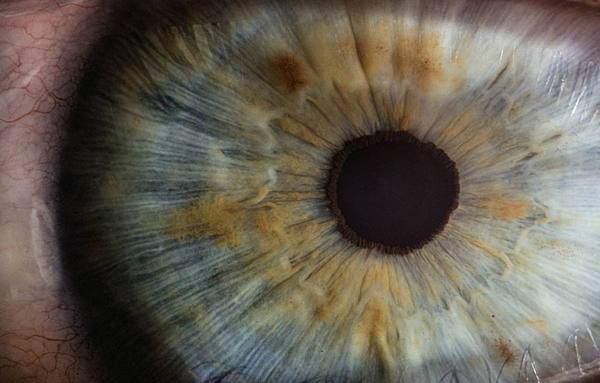
Your eye catches light from violet to red and, on a dark night, can register a single photon. But it needs light, a lens, a line of sight and a moment, and everything it sees has already happened.
Reading settings
Text size
Easier reading
More space between lines and letters, plain font for headings, no italics.
Calm mode
No moving backgrounds or animations; softer images.
Save data
No background video and no card photos: good on a slow or capped connection.
Saved on this device only. Nothing is sent to us.
The 99 Names · Name 27 of 99 · Capacity
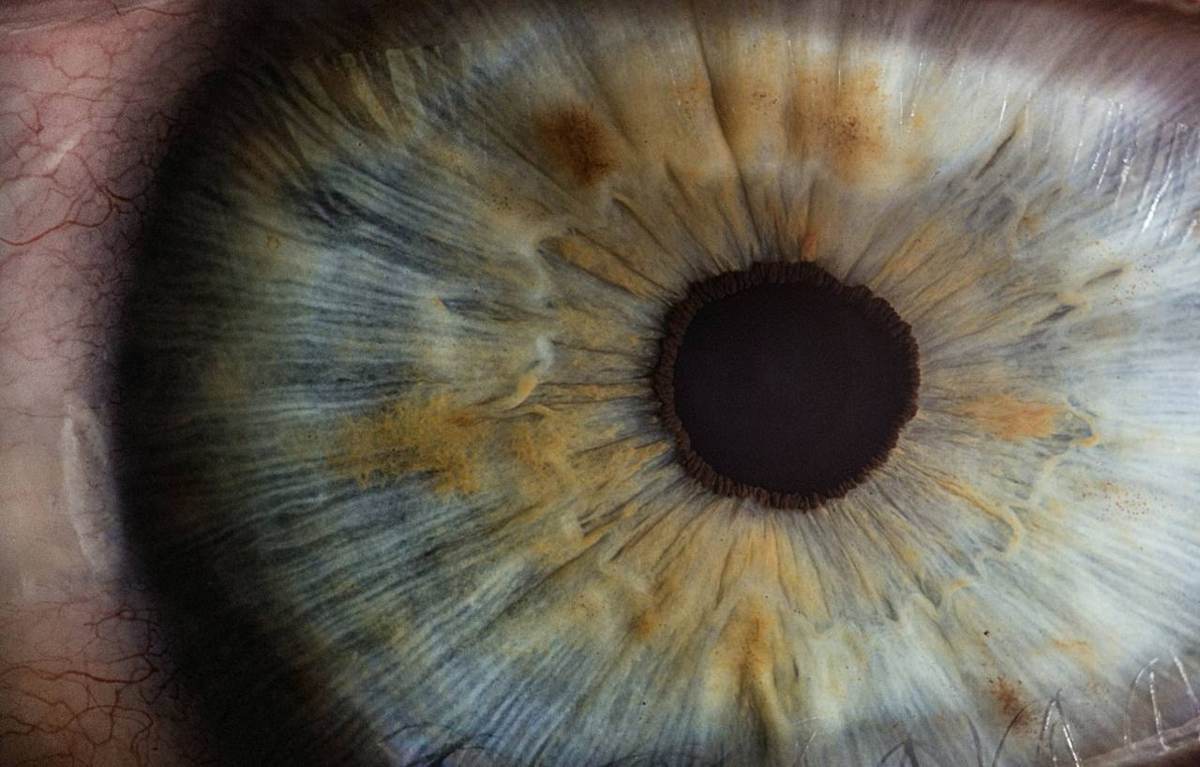
al-Baṣīr الْبَصِيرُ
Recited as it sounds in the Qur'an, 22:61.
Heard together with: as-Samīʿ / al-Baṣīr
More than 17,000 wallets went “missing” in 355 cities across 40 countries in 2019. A team of economists handed each one in at a bank, a hotel or a police station, saying they had found it in the street. Some held no money, some held a little, some held more. In almost every country, people were more likely to email the owner when the wallet held more money.
Nobody was watching the people who sent those emails. They thought no one would ever know. That is the question behind al-Baṣīr, the All-Seeing: who are you when you are sure no one can see? For Muslims, the answer begins with knowing that Someone always can, and that this is meant as comfort as much as a warning.
Start with something we know. Then take away everything it needs. What is left is not a bigger version of us: it is the Name.
Episode 1Your eye catches light from violet to red and, on a dark night, can register a single photon. But it needs light, a lens, a line of sight and a moment, and everything it sees has already happened.
 Episode 2
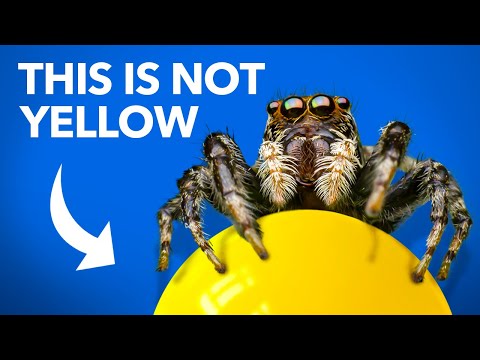
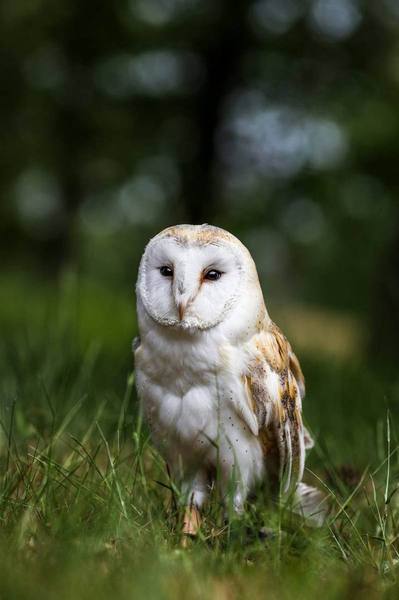
The mantis shrimp has twelve kinds of colour receptor to our three; the owl hunts by starlight. Every creature sees a slice of the world, never the whole of it.
 Episode 3
The Webb telescope's 6.5-metre gold mirror, a million miles out, catches light that left galaxies more than 13 billion years ago. Even it sees only the past, and only what light brings.
 Episode 4
Take away light, organ, distance, delay, direction, surface.
Every seeing we know needs light, an eye and a moment. Al-Baṣīr needs none of them.
From the tradition: al-Ghazālī: 'He sees without eyeball or eyelid'. Nahj Sermon 1: 'He sees even when there is none to be looked at'
Films, documentaries and voices that reach towards this Name. Each links out to where you can watch it.
On screen
In Avatar, 'I see you' is the highest thing one person can say to another. Al-Baṣīr saw you before you could say it.
A story told about ʿUmar ibn al-Khaṭṭāb, the second caliph, is set in Medina at night. ʿUmar used to walk the streets after dark to see for himself how his people were living. One night, tired, he leaned against the wall of a small house and heard a mother and daughter talking inside.
The mother sold milk. “Get up,” she said, “and mix some water into the milk before morning.” The girl answered: “Don't you know that the Commander of the Faithful has forbidden people to water their milk?” Her mother said: “ʿUmar can't see us here. Go and do it.”
The girl replied: “If ʿUmar cannot see us, the Lord of ʿUmar sees us. I will not obey him in public and disobey him in private.”
In the story, ʿUmar marked the door, came back the next day, and asked his son ʿĀṣim to marry the girl. Tradition says that, generations later, one of her descendants was ʿUmar ibn ʿAbd al-ʿAzīz, remembered as one of the most just rulers in Islamic history. Whether or not every detail happened as told, Muslims have handed the story down because of one sentence a girl said in the dark.
“He that planted the ear, shall He not hear? He that formed the eye, shall He not see?”
Psalms 94:9 · JPS 1917
The Psalms answer people who think God cannot see what they do with a simple question. If God made the eye, can God be blind? The same psalms that warn the powerful also comfort the weak. In Psalm 139 the writer says he could not flee from God's presence, even into darkness or to the far side of the sea.
The Mishnah's advice for avoiding wrongdoing is famous. Know what is above you, it says: an eye that sees, an ear that hears, and a book in which all your deeds are written (Pirkei Avot 2:1).
“But you, when you pray, enter into your inner room, and having shut your door, pray to your Father who is in secret, and your Father who sees in secret will reward you openly.”
Matthew 6:6 · WEB
In the Sermon on the Mount, Jesus told his followers to give, pray and fast in secret, not to be seen by others. “Your Father who sees in secret will reward you.” What matters is what is done when only God sees.
In the Gospels, Jesus sits near the Temple treasury watching rich people put in large sums, and then a poor widow puts in two tiny coins. He tells his disciples she has given more than all of them (Mark 12:41-44). Nobody else noticed her. God did.
Ignatius of Loyola, founder of the Jesuits, taught a short prayer for the end of each day, the Examen. Catholics and many other Christians still use it: look back over the day as God saw it, give thanks, and notice where you went wrong.
“He said: Fear not. Lo! I am with you twain, Hearing and Seeing.”
Qur'an 20:46 · Pickthall (1930)
The Qur'an often closes a verse with “God sees what you do”. In one of the earliest passages revealed, it asks the man who mistreats others: “Is he then unaware that Allah seeth?” (96:14, Pickthall).
But al-Baṣīr is also a Name of comfort. When Moses and Aaron (peace be upon them) were afraid to go to Pharaoh, God told them: “Do not be afraid. I am with you both; I hear and I see.” Being seen by God means no injustice goes unnoticed, and no one is ever truly alone.
All three faiths teach that God sees what is done in secret, and all three turn that into both a warning to the cruel and a comfort to the forgotten. Each refuses to describe God's seeing as eyes like ours. Jesus's teaching on giving in secret and the milk-seller's daughter in ʿUmar's Medina make the same point from two directions. The faiths differ in where they place God's seeing. Islam gives the idea a name of its own, iḥsān, excellence. The Prophet described it as worshipping God as though you see Him, for even if you do not see Him, He sees you (Muslim 8). Christians believe that in Jesus God also looked at the world through human eyes. Judaism and Islam hold that God sees without any body or organ at all.
A moment to reflect
How eyes evolved, from a light-sensitive patch to the camera-like eye: every kind of seeing we know needs an organ.
The mantis shrimp's strange way of seeing colour, from Science magazine.
NASA's first images from the Webb telescope: our widest seeing, and still only the past.
Everyone draws a name from a hat and does three kind things for that person over a week without being found out. At the end, guess who had whom, and read Matthew 6:6 and Qur'an 20:46 together.
Make cards for animal eyes: the owl that hunts by starlight, the mantis shrimp, the eagle, the bee that sees ultraviolet. On the last card, write only ‘He sees without eyes’, and talk about why the faiths will not draw it.
Maimonides ranked giving in which neither giver nor receiver knows the other near the top of his eight levels of charity (Mishneh Torah, Gifts to the Poor 10). Set up a box for a local food bank where gifts are left without names, and talk about why giving unseen feels different.
Beyond the Abrahamic family, other traditions reach for something like this. Each in its own words; we connect, never rank.
Sikh
Who can sing Him, who is all-seeing and omnipresent?
Japji 3 · Guru Granth Sahib p. 2 · tr. M. A. Macauliffe, The Sikh Religion (1909), vol. 1
5 films and talks, chosen for this page. They play here.
When You Need to Be Seen | Allah's Names | Dr. Omar Suleiman | Ep. 13
Yaqeen Institute · 20 min
Yaqeen: Dr Omar Suleiman on al-Basir, ar-Raqib and ash-Shahid, when you need to be seen (episode 13).
You Are Never Alone. He Protects, Hears & Sees you (Al-Waliy, As-Samii' & Al-Baseer)
Belal Assaad · 71 min
Belal Assaad: He protects, hears and sees you.
We've never seen THIS before - James Webb Space Telescope
Physics Girl · 19 min
The Snail-Smashing, Fish-Spearing, Eye-Popping Mantis Shrimp | Deep Look
Deep Look · 4 min
Deep Look: the mantis shrimp's extraordinary eyes.
History through the eyes of a chicken - Chris A. Kniesly
TED-Ed · 5 min