 Episode 1
In us
The purest thing we make is silicon for computer chips: 99.9999999% pure, “nine nines”. Even that has a flaw in every sample. We approach purity; we never reach it.
Reading settings
Text size
Easier reading
More space between lines and letters, plain font for headings, no italics.
Calm mode
No moving backgrounds or animations; softer images.
Save data
No background video and no card photos: good on a slow or capped connection.
Saved on this device only. Nothing is sent to us.
The 99 Names · Name 4 of 99 · Beyond
al-Quddūs الْقُدُّوسُ
Beyond every flaw we can imagine.
Recited as it sounds in the Qur'an, 59:23.
Heard together with: al-Malik al-Quddūs (59:23; 62:1)
Walk into almost any mosque in Britain and the first thing you meet is a shoe rack. Gurdwaras and mandirs have them too, and in some synagogues and churches people still slip their shoes off to pray. It is one of the oldest human habits: at the door of something holy, we take our shoes off.
Ask why, and the answer goes back to a desert, a fire and a voice, in a story the Torah and the Qur'an both tell. Al-Quddūs means the Holy, the Utterly Pure. The Arabic root q-d-s is the same as the Hebrew qadosh. Holiness does things to people. It makes us lower our voices, wash before prayer, and refuse to draw God at all.
Start with something we know. Then take away everything it needs. What is left is not a bigger version of us: it is the Name.
Episode 1The purest thing we make is silicon for computer chips: 99.9999999% pure, “nine nines”. Even that has a flaw in every sample. We approach purity; we never reach it.
 Episode 2
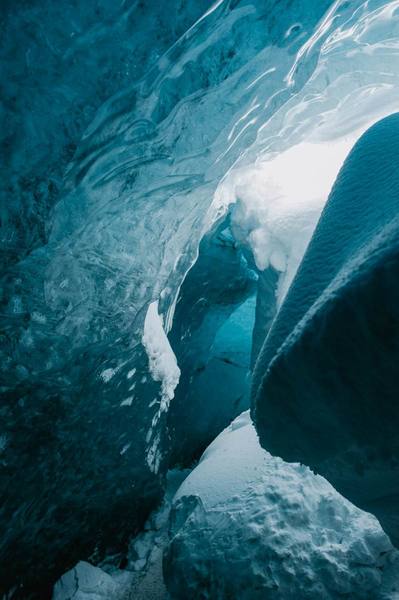
No two snowflakes are alike, because each is shaped, and marked, by its own path through the cloud. Beautiful, and never flawless.
 Episode 3
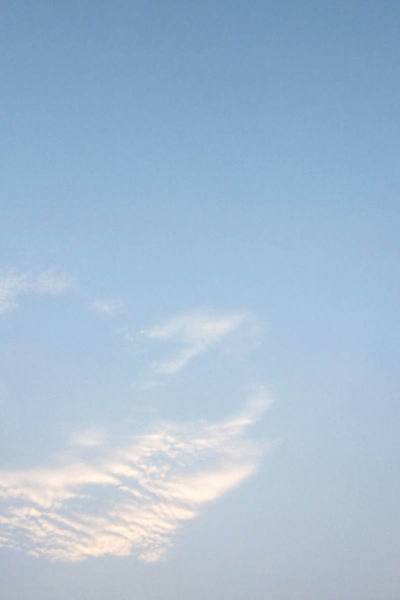
When the Planck telescope mapped the oldest light in the universe, the headline was “an almost perfect Universe” (ESA, 2013). Notice the word almost. Physics even says absolute zero, perfect stillness, can never quite be reached.
 Episode 4
Take away every flaw, every comparison, even our best idea of what perfect means. Al-Quddūs is not the purest thing, but the One no flaw has ever touched, including our picture of Him. That is why Muslims refuse to picture God.
From the tradition: al-Ghazālī: al-Quddūs transcends whatever the senses, imagination or even our ideas of perfection grasp. Muslim 487: in bowing, 'subbūḥun quddūs'. Isaiah 6:3 'Holy, holy, holy'
Films, documentaries and voices that reach towards this Name. Each links out to where you can watch it.
On screen
We can reach 'nine nines' of purity, never ten. Al-Quddūs is not the last nine; He is outside the scale.
Moses (peace be upon him) was a long way from home. He had fled Egypt and was tending sheep in the wilderness, near the mountain called Horeb in the Torah. One evening he saw a fire on the mountainside. In the Qur'an's telling, he said to his family: wait here, I can see a fire; perhaps I can bring you a burning brand from it, or find someone there who can guide us (Qur'an 20:10).
In the Torah the fire is in a bush that burns and is not burnt up. As Moses comes close, a voice calls his name. “Draw not nigh hither; put off thy shoes from off thy feet, for the place whereon thou standest is holy ground” (Exodus 3:5). The Qur'an gives the same command: “Lo! I, even I, am thy Lord, So take off thy shoes, for lo! thou art in the holy valley of Tuwa.” (20:12, Pickthall).
What happens next is just as telling. The Torah says Moses hid his face, “for he was afraid to look upon God” (Exodus 3:6). Neither book describes anything to see. There is a fire, a voice, bare feet and a man who will not look up.
That is the oldest picture of holiness the three faiths share. It is not a shape or a face. It is ground made different by Whose presence it is, and a person who knows to take off whatever came in with him from the road.
“Holy, holy, holy, is the LORD of hosts; The whole earth is full of His glory.”
Isaiah 6:3 · JPS 1917
The prophet Isaiah saw angels calling to one another, “Holy, holy, holy.” Those words are at the heart of the Kedushah, “sanctification”, said standing in the synagogue service, with worshippers rising on their toes at each “holy”.
Holiness in Judaism is also something people are asked to live. “Ye shall be holy; for I the LORD your God am holy” (Leviticus 19:2). That verse opens a chapter that also commands fair wages, honest weights, care for the deaf and blind, and love for the neighbour and the stranger.
“Holy, holy, holy is the Lord God, the Almighty, who was and who is and who is to come.”
Revelation 4:8 · WEB
The same threefold “holy” returns in the last book of the Christian Bible, sung around God's throne. In churches it became the Sanctus, sung at every Eucharist, and the hymn “Holy, Holy, Holy, Lord God Almighty” (Reginald Heber, 1826). Orthodox Christians sing the Trisagion: Holy God, Holy Mighty, Holy Immortal, have mercy on us.
The first request of the Lord's Prayer, taught by Jesus, is about holiness: “may your name be kept holy” (Matthew 6:9). For Christians, honouring God's holiness starts with how His name is spoken.
“All that is in the heavens and all that is in the earth glorifieth Allah, the Sovereign Lord, the Holy One, the Mighty, the Wise.”
Qur'an 62:1 · Pickthall (1930)
Al-Quddūs appears twice in the Qur'an, both times beside al-Malik, the King. The Prophet Muhammad ﷺ (peace be upon him) used to say in his bowing and prostration: “Subbūḥun quddūs, Rabb al-malāʾikati wa-r-rūḥ”, “Glorified, Holy, Lord of the angels and the Spirit” (Muslim 487).
The great scholar al-Ghazālī (died 1111) said al-Quddūs is beyond anything the senses can perceive, the imagination can picture or the mind can grasp, even our own idea of perfection. This is one reason Muslims never picture God: any image would be smaller than He is. Washing before prayer and taking off shoes are small, daily ways of answering that holiness.
Jews, Christians and Muslims all describe God as holy, all three keep the burning-bush story and its bare feet, and the threefold “holy” runs from Isaiah into Christian worship. They agree that holiness asks something of how we live, not only how we pray. They differ in how holiness meets the world. Christians believe the Holy One became flesh in Jesus Christ. Judaism and Islam hold that God never takes a body, and both refuse any image of Him.
A moment to reflect
A physicist who grows snow crystals in the lab explains why even the most perfect-looking one carries the marks of its making.
How snowflakes form, from the Met Office: a short, clear starting point for younger viewers.
ESA's map of the oldest light in the universe, the ‘almost perfect’ sky described in the ladder.
Arrange a visit to a local mosque, gurdwara or synagogue on an open day. Before you go, ask everyone to find out why shoes come off there, and afterwards compare what each host said with Exodus 3:5 and Qur'an 20:12.
Pour tap water through a coffee filter, then through sand and charcoal, and hold each glass up to the light. However clear it looks, something is always left in it. Talk about why the faiths say purity like God's belongs to Him alone.
Listen to the Kedushah from a synagogue service, then the Sanctus from a choral Mass, such as William Byrd's Mass for Four Voices, then a recitation of Qur'an 62:1. Notice what each tradition's music does with the word 'holy', and where people stand, bow or fall silent.
6 films and talks, chosen for this page. They play here.
The Secret to Finding Inner Peace | Allah's Names | Dr. Omar Suleiman | Ep. 14
Yaqeen Institute · 16 min
Yaqeen: Dr Omar Suleiman on al-Quddus and as-Salam, the Holy and the Source of Peace (Allah's Names, episode 14).
Living by Allah’s Name ‘The Holy’- Al Quddus
Belal Assaad · 60 min
Belal Assaad: living by Allah's Name 'the Holy', al-Quddus.
Hisﷻ Names in Our Lives (Ep 9) | Who is Al Malik & Al Quddus | Dr Haifaa Younis | Jannah Institute
Jannah Institute by Dr Sh Haifaa Younis · 52 min
Understanding Prayer: Holy Words (8/10)
The Rabbi Sacks Legacy · 5 min
The Rabbi Sacks Legacy: 'Holy Words', from his short series on understanding Jewish prayer.
Barbara Brown Taylor — “This Hunger for Holiness”
The On Being Project · 65 min
The Snowflake Myth
Veritasium · 19 min
Veritasium: the snowflake myth, the ice crystals this page uses as its sign.