Young Explorers · ages 7–11
The moon’s shapes
Young Explorers · The moon’s shapes
Next: Where does rain come from? (children) →Have you ever noticed that the moon keeps changing?
Some nights it is a big, round, glowing circle. Some nights it is half a circle, like a slice of an orange. Some nights it is just a thin curve, like a smile, or a fingernail. And some nights you cannot see it at all.
Is the moon really changing shape? No. The moon is always a big round ball of rock. It is about a quarter as wide as the Earth. It is also a very long way away. If you could drive there in a car, it would take about six months without stopping.
Here is a secret. The moon does not make any light of its own. It is like a mirror. The light we see is sunlight, bouncing off it.
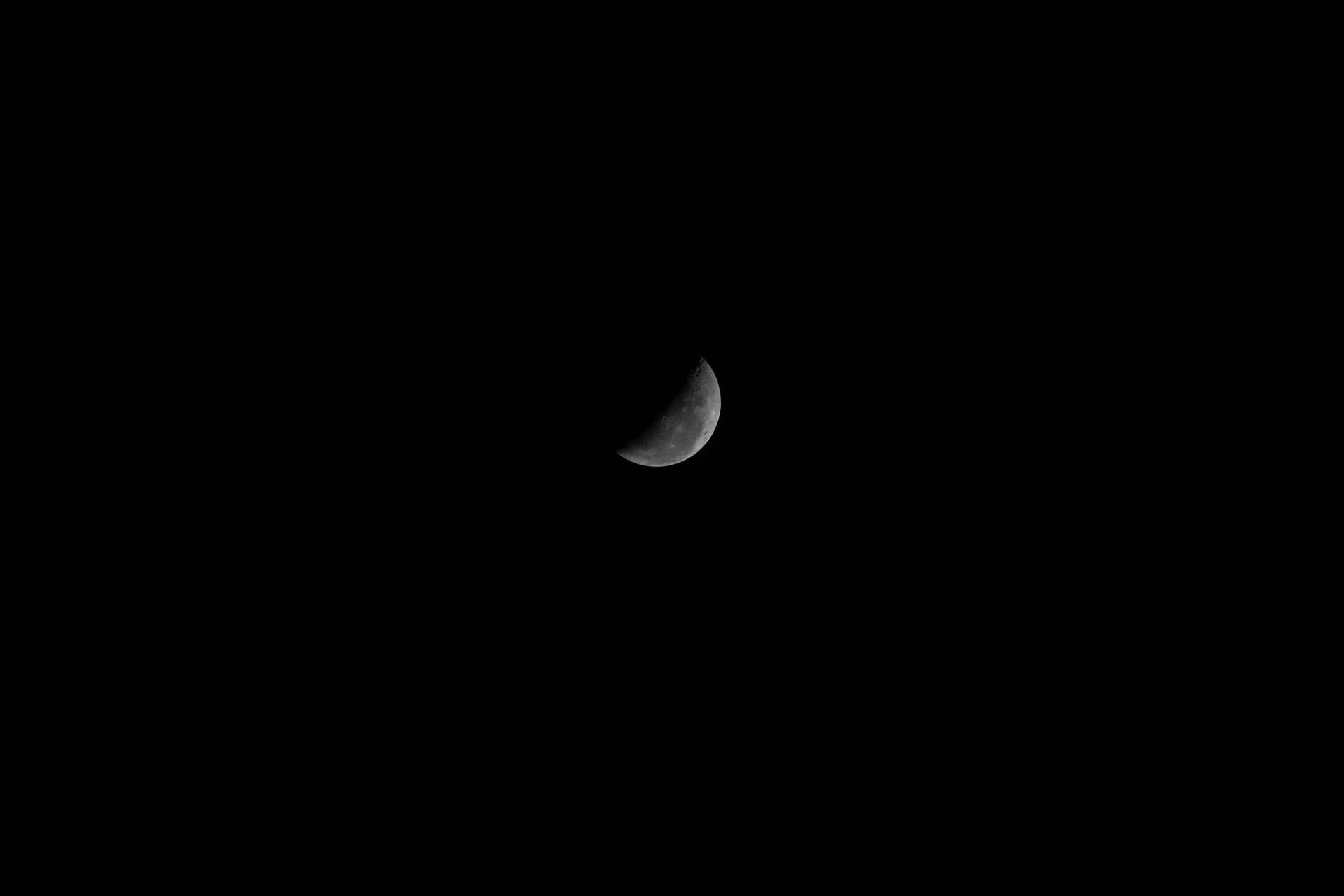
The sun always lights up half of the moon. But as the moon travels around the Earth, we see different amounts of that lit-up half. When we can see all of it, we call it a full moon. When we can see only a little sliver, it is a crescent. When the lit side is facing away from us, we see nothing, and that is called a new moon.
It takes the moon about twenty-nine and a half days to go through all its shapes and back again. That is about a month. In fact, the word “month” comes from the word “moon”.
The moon does something else as well. It pulls on the Earth’s oceans, a little bit, all the time. That pull helps make the tides. The sea comes up the beach and goes back out again, twice a day.

For thousands of years, people have used the moon as a calendar in the sky. Muslims begin each new month when the first thin crescent is seen after sunset. That is how they know when Ramadan starts, and when it is time for Eid. The Jewish calendar follows the moon too, and the first day of each Jewish month is a small celebration. And Christians work out the date of Easter each year by looking at the moon.
Muslims read in the Qur’an that God measured out the moon’s stages. At the end of each month it comes back thin and curved, like an old palm branch. Jewish people sing a Psalm that says God made the moon to mark the seasons. Once a month, many go outside at night to say a blessing over the growing moon. It is called Kiddush Levanah.
So the moon is a clock, a calendar and a lamp, all at once. And it is always there, even when you cannot see it.
Twelve people have walked on the moon. The first was Neil Armstrong, in 1969. There is no wind or rain on the moon. So their footprints are probably still there today, just as they left them.
Tonight, before bed, have a look out of the window. What shape is the moon?
Wonder with us
The moon has no light of its own, but it still shines. How can you shine for someone else?
For one month, look at the moon every evening you can (with a grown-up if it is late). Draw its shape in a box on a calendar. At the end, look at your drawings: can you see the pattern? You can also shine a torch on a ball in a dark room. Walk around it to make the shapes yourself.
Watch together
Why the moon seems to change shape, explained simply.
Where the moon came from, for curious young astronomers.
For grown-ups
Kiddush Levanah, the monthly blessing of the moon, is said outdoors while the moon is waxing. The verses are Qur’an 36:39 and Psalm 104:19 (“Who appointedst the moon for seasons”, JPS 1917). The Islamic calendar is purely lunar; the Jewish calendar is lunisolar, with Rosh Chodesh marking each new month; Western Easter falls on the Sunday after the first full moon on or after the spring equinox (by a church calculation). The Moon is about 384,400 km away on average and 3,474 km wide, roughly a quarter of Earth’s width; the synodic month is 29.5 days. The “six months by car” figure assumes about 90 km/h without stopping. NASA’s Moon pages are a great next step. Talk about it: what would you like to see if you visited the moon?
Watch more: The moon’s shapes
8 films and talks, chosen for this page. They play here.
STEMonstrations: Moon Phases
NASA Johnson · 4 min
What if there were no Moon?
whoisallah.org.uk · 1 min
Moon Phases 2022 – Northern Hemisphere – 4K
NASA Goddard · 5 min
Tidal Locking | Why Do We Only See One Side of the Moon?
MinuteEarth · 2 min
Earth's Rotation & Revolution: Crash Course Kids 8.1
Crash Course Kids · 4 min
Crash Course Kids: how the Earth spins and moves around the Sun.
Paxi - Day, night, and the seasons
European Space Agency, ESA · 4 min
ESA's Paxi explains day, night and the seasons.
Our Moon Isn't the Only Moon!
NASA Space Place · 3 min
Why can you see the moon during the day?
Mark Rober · 2 min