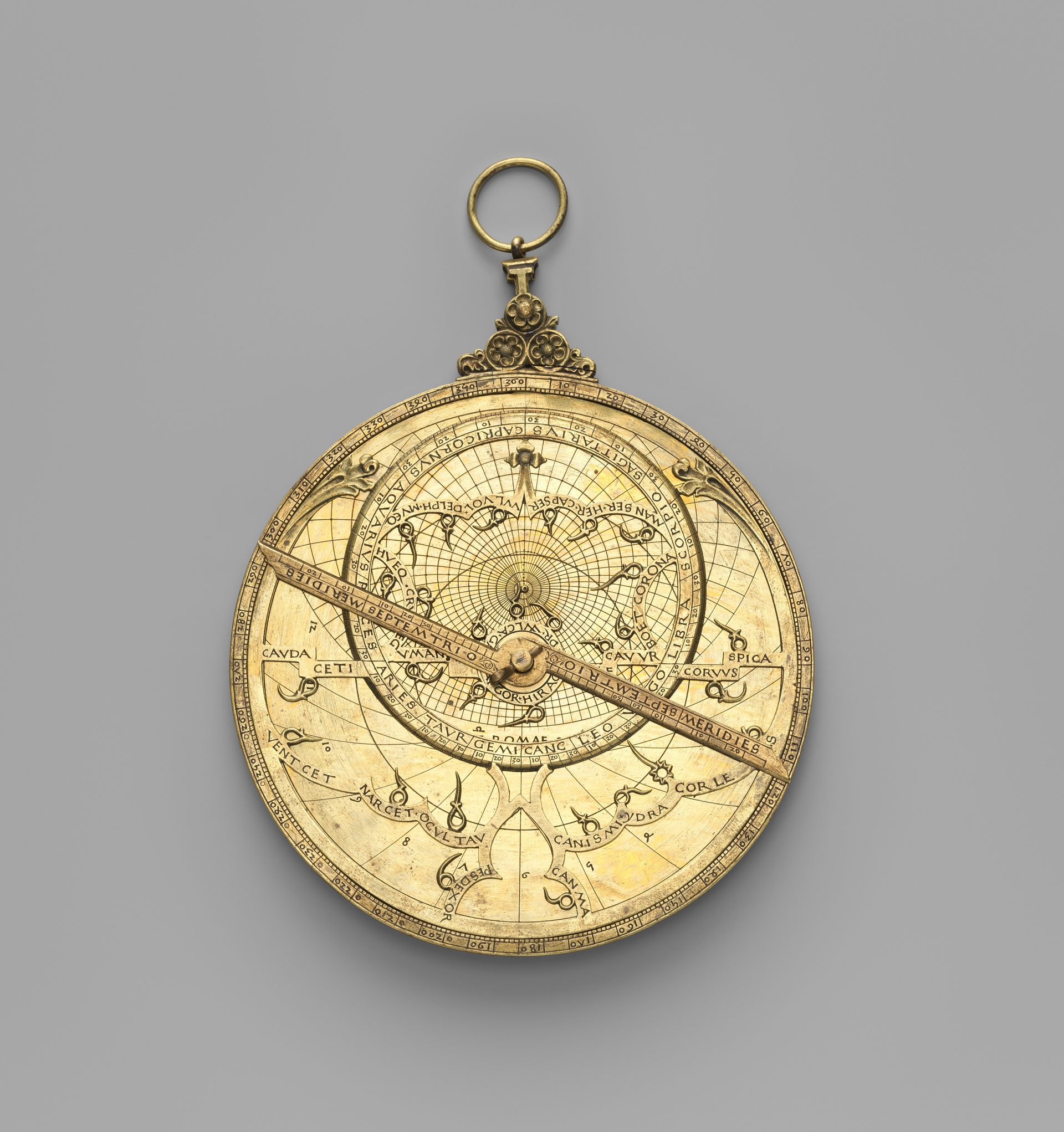
In Britain, people went to bed on Wednesday 2 September 1752 and woke up on Thursday 14 September. Eleven days had vanished by Act of Parliament, so that Britain's calendar would match the Sun and the rest of Europe again.
Calendars are humanity's attempt to fit two clocks together, the Sun and the Moon, which refuse to fit neatly. Every faith has solved the puzzle in its own way. That is why Christmas never moves, why Easter does, why Passover always comes in spring, and why Ramadan drifts slowly through every season of the year.
“And God said: ‘Let there be lights in the firmament of the heaven to divide the day from the night; and let them be for signs, and for seasons, and for days and years”
Genesis 1:14 · JPS 1917
The Psalmist says God “appointedst the moon for seasons” (Psalm 104:19). The Qur'an says the new moons are markers of time for people and for the pilgrimage (2:189), and that the Sun and Moon were set so people could learn to count the years (10:5).
Sun, Moon and some awkward maths
A year, from one spring to the next, lasts about 365.24 days. A month, from new moon to new moon, lasts about 29.53 days. Twelve moon-months add up to about 354 days, roughly eleven days short of a solar year. There are three ways to deal with this.
You can follow the Sun and let the months ignore the Moon. That is a solar calendar, like the Gregorian calendar used for everyday life in Britain. You can follow the Moon and let the year drift through the seasons: a lunar calendar, like the Islamic one. Or you can follow the Moon but add an extra month every few years to pull it back into line with the Sun: a lunisolar calendar, like the Jewish, Hindu, Buddhist and Chinese calendars.
How to use our calendar. The year together, on our Days out page, lists festivals for the next twelve months. Dates marked ‘expected’ or ‘subject to moon sighting’ depend on the Moon and may move by a day. Many festivals begin the evening before, because Jewish and Islamic days begin at sunset. Communities sometimes keep different dates for the same festival, so check with a local place of worship before you plan a visit.
Watch
Watch
Together
What each faith says
Judaism
“This month shall be unto you the beginning of months; it shall be the first month of the year to you.”
Exodus 12:2 · JPS 1917
The Hebrew calendar is lunisolar. Each month begins with the new moon, but the festivals must stay in their seasons: Passover in spring, Sukkot at the autumn harvest. So, seven times in every nineteen years, an extra month is added, a second Adar. Jewish days begin at sunset, so Shabbat and every festival start in the evening. The Torah sets the first month in spring, the month of the Exodus.
Christianity
“But when the fullness of the time came, God sent out his Son, born to a woman, born under the law”
Galatians 4:4 · World English Bible (British Edition), public domain
Christmas follows the Sun: always 25 December. Easter follows the Moon. In Western churches it is the first Sunday after the first full moon on or after 21 March, a rule that goes back to the early church. In 1582 Pope Gregory XIII corrected the old Julian calendar, which had drifted. Britain did not follow until 1752.
Many Orthodox churches still use the Julian calendar to set Easter, so in 2027 Western Easter is on 28 March and Orthodox Easter is on 2 May. Some Orthodox churches also keep Christmas on 7 January.
Islam
“Lo! the number of the months with Allah is twelve months by Allah's ordinance in the day that He created the heavens and the earth.”
Qur'an 9:36 · Pickthall (1930)
The Islamic, or Hijri, calendar is purely lunar: twelve months, each beginning when the new crescent is seen, about 354 days a year. It counts from the Hijra, the Prophet Muhammad's migration to Madinah in 622 CE. Because it never adds a month, Ramadan comes about eleven days earlier each year, and passes through summer and winter over about 33 years. A British Muslim who fasts through a long June day as a teenager may fast through short December days in middle age.
Some British mosques follow a local moon sighting, some follow announcements from Saudi Arabia, and some use calculation. That is why Eid can fall on different days in the same town.
Without religion
The Gregorian calendar is now the world's shared civil calendar, used by people of every faith and none. Many people write its years as BCE and CE (‘before the Common Era’ and ‘Common Era’), as this site does, so that the dates can be shared by everyone.
Sikhi
Vaisakhi, the Sikh new year festival, follows the Sun and falls on 13 or 14 April. Many gurpurabs, days remembering the Gurus, follow the Moon: Guru Nanak's birth is celebrated at the full moon of the month of Kartik, in November. A solar Nanakshahi calendar was introduced in 2003 and partly changed in 2010, and Sikhs still discuss which dates to keep.
Hindu traditions
Most Hindu festivals follow a lunisolar calendar, in which each lunar day is called a tithi. About every 32 or 33 months, an extra month, adhik maas, is added. Diwali falls on a new moon in October or November. Some festivals follow the Sun: Makar Sankranti is on 14 or 15 January. Regional calendars differ, so the same festival can have different dates in Gujarat, Bengal and Tamil Nadu.
Beyond the Abrahamic faiths
Buddhists mark the full moons; Vesak, the Buddha's birth, awakening and passing, falls on a full moon in May for many. The Bahá'í calendar has nineteen months of nineteen days, plus four or five extra days, and its new year, Naw-Rúz, is at the spring equinox. Chinese New Year follows a lunisolar calendar.
Same and different
Every tradition looks at the same Sun and Moon and asks the same question: how do we keep holy days at the right time? They answer differently. Christians tie Christmas to the Sun and Easter to the Moon. Jews and Hindus keep the Moon in step with the seasons by adding months. Muslims follow the Moon alone, so Ramadan travels through every season, which many Muslims see as a mercy: fasting in long days and short days alike, everywhere on Earth. The result is that in any month of the year, someone near you is celebrating.
A moment to reflect
- If you could design a calendar, would you follow the Sun, the Moon or both? Why?
- Ramadan moves through every season over about 33 years. What would change if Christmas did the same?
- Why do you think so many festivals begin at sunset?
- What is happening this month, in your town, in a faith that is not your own?
Watch
Each tradition, in its own words
A Jewish telling
A Christian telling
Do it together
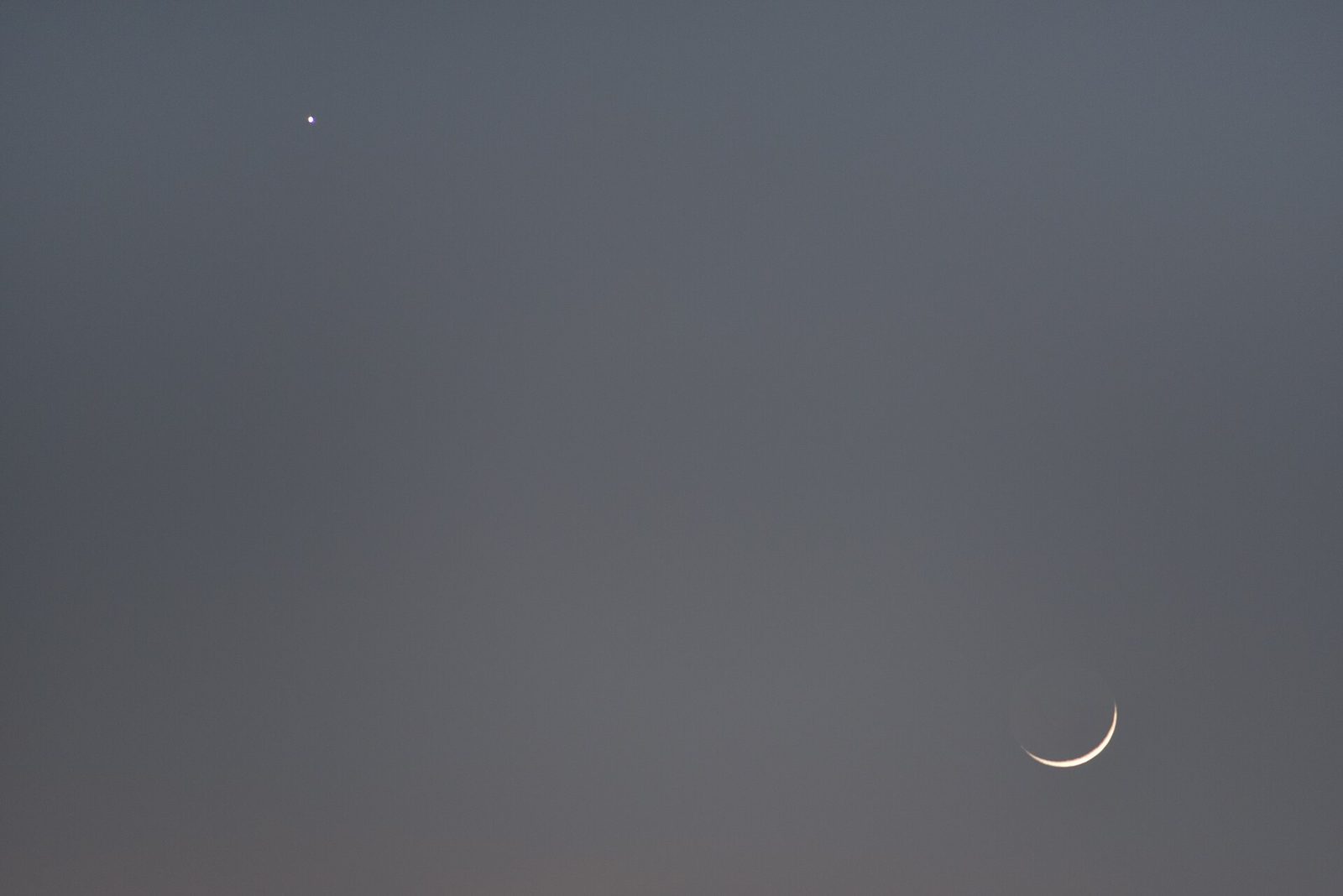
Sketch the Moon every clear evening for a month. Mark the new moon and full moon on a calendar, then find which festivals on our calendar page fall near them.
Put a Gregorian, a Hebrew and a Hijri calendar side by side for this month. Find today's date in all three, and count how far apart the month starts are.
Check the calendar page at the start of each month. Choose one festival to learn about, and send a greeting or visit an open day.
Go deeper
- Jewish calendar and festival dates (Hebcal) · tool
- Islamic calendar (Wikipedia) · article
- Calculating the date of Easter (Wikipedia, Computus) · article
- Calendar (New Style) Act 1750 (Wikipedia) · article
- Bahá'í calendar and holy days (bahai.org) · find out more
Sources (13)
- Genesis 1:14; Psalm 104:19; Exodus 12:2 text: Sefaria, JPS 1917
- Galatians 4:4 text: World English Bible (British Edition) via bible-api.com
- Qur'an 2:189, 10:5, 9:36: Quran.com
- Britain moved from 2 to 14 September 1752: Wikipedia, Calendar (New Style) Act 1750
- Gregorian reform of 1582: Wikipedia, Gregorian calendar
- Easter rule; Orthodox Julian computus: Wikipedia, Computus
- Western Easter 28 Mar 2027; Orthodox Easter 2 May 2027: Calculated from the standard Easter rules (Computus)
- Hebrew calendar: 7 leap months in 19 years; days begin at sunset: Wikipedia, Hebrew calendar
- Hijri calendar: lunar, about 354 days, from 622 CE: Wikipedia, Islamic calendar
- Nanakshahi calendar 2003, amended 2010: Wikipedia, Nanakshahi calendar
- Adhik maas: Wikipedia, Adhik Maas; Hindu calendar
- Bahá'í calendar: 19 months of 19 days; Naw-Rúz at the equinox: Wikipedia, Bahá'í calendar; bahai.org
- Vesak at the May full moon: Wikipedia, Vesak