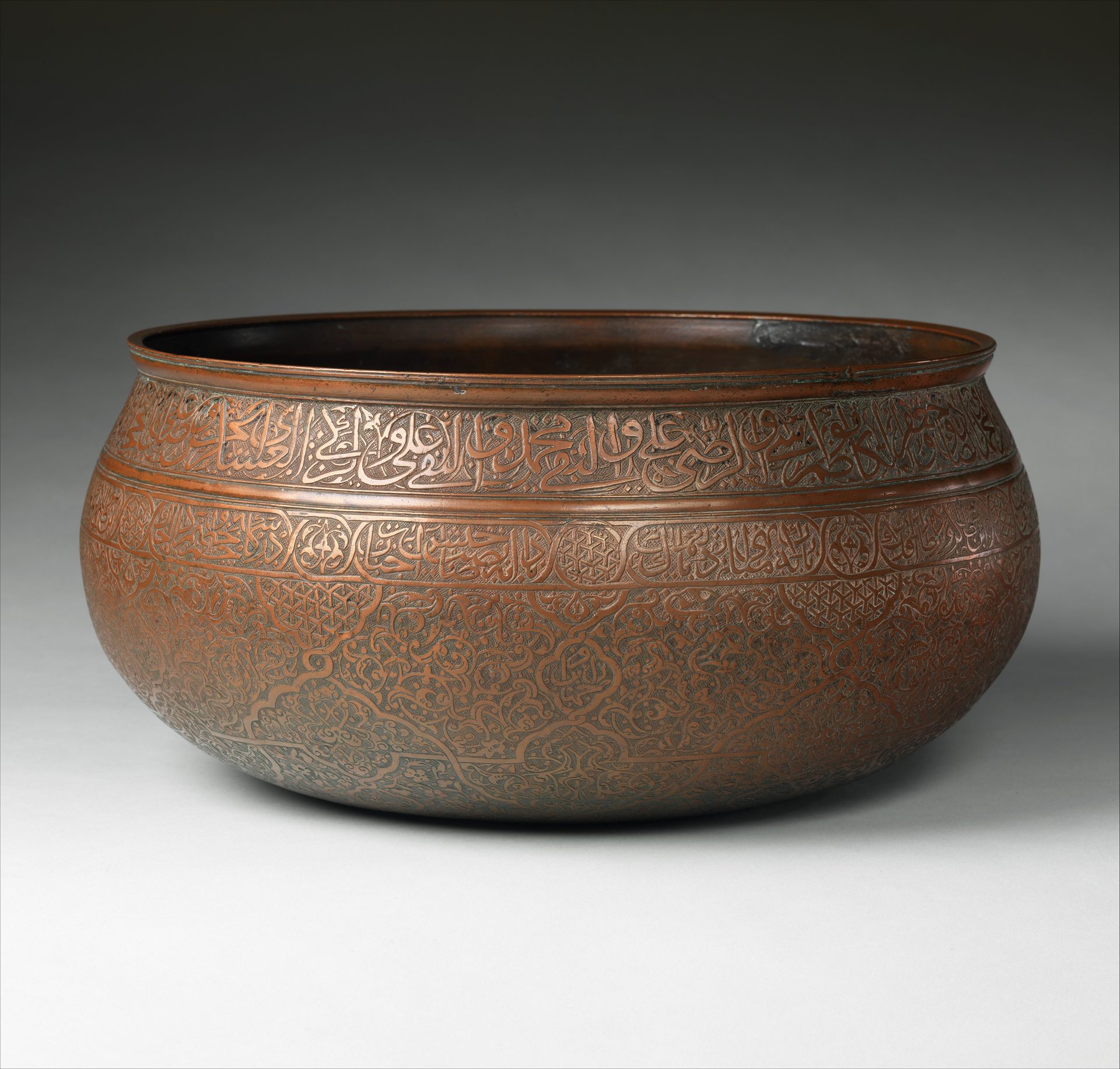
مَا شَاءَ اللّٰهُ
mā shā' Allāh
'What God has willed', said in admiration of something good that has already happened. Its partner, inshallah, looks forward; mashallah looks at what is here.
A new baby is passed round the room. 'Mashallah, look at those eyes.' A cousin gets her exam results. 'Mashallah.' A neighbour's garden is in full bloom. 'Mashallah, it's beautiful.'
It is how many Muslims say 'wow', with a twist: it gives the credit for the good thing to God. On 24 May 1844 Samuel Morse sent the first long-distance telegraph message in America. He chose a line from the Bible with the same idea: 'What hath God wrought'.
In scripture
In the Hebrew Bible and Jewish tradition
“This is the LORD’S doing; It is marvellous in our eyes.”Psalm 118:23, JPS 1917'What hath God wrought' comes from Numbers 23:23. Yiddish speakers say keyn eyn hore, 'no evil eye', when praising a child: the same instinct.
In the New Testament and Christian tradition
“Jesus said to them, “Did you never read in the Scriptures, ‘The stone which the builders rejected was made the head of the corner. This was from the Lord. It is marvellous in our eyes’?”Matthew 21:42, WEBJesus (peace be upon him) quotes Psalm 118 here. Many Christians say 'God be praised' or 'praise God' in the same spirit.
In the Qur'an
وَلَوْلَآ إِذْ دَخَلْتَ جَنَّتَكَ قُلْتَ مَا شَآءَ ٱللَّهُ لَا قُوَّةَ إِلَّا بِٱللَّهِ
“If only, when thou enteredst thy garden, thou hadst said: That which Allah willeth (will come to pass)! There is no strength save in Allah! Though thou seest me as less than thee in wealth and children.”Qur'an 18:39, Pickthall (1930)In the sayings of the Prophet (hadith)
“The Prophet Muhammad ﷺ (peace be upon him) said: 'The effect of the evil eye is real.'”Ṣaḥīḥ al-Bukhārī 5740Many Muslims say mashallah when praising something, so that admiration does not turn into envy.
How people use it
To praise a child, a home, a success, a recovery: 'Mashallah, you've grown.'
To admire without envy. Saying it reminds the speaker, and the hearer, that good things are gifts, not trophies.
On cars, shop signs and wedding cards, often written in Arabic calligraphy.
Across faiths and languages: in Turkish, Urdu, Persian, Bosnian and Swahili, mashallah is everyday speech, and many non-Muslims in those countries say it too.
What neighbours say. Jews say Baruch HaShem, ‘blessed be the Name’, and when praising a child many add bli ayin hara in Hebrew or keyn eyn hore in Yiddish, ‘without the evil eye’. Christians say ‘God bless him’ or ‘praise God’. Sikhs say Waheguru, ‘Wondrous Lord’. In many Hindu and Punjabi homes, a small black dot of kajal goes on a baby’s cheek or behind the ear to ward off the evil eye. People say nazar na lage, ‘may no evil eye fall on you’.
How it is misheard
It is often confused with inshallah. A simple rule: inshallah is for the future ('if God wills'); mashallah is for what has already happened ('God has willed it').
Some people hear it as superstition because of its link to the evil eye. For most who say it, it is closer to gratitude: a way of saying 'this good thing is not mine to boast about'.
Say it
MAA-shaa al-LAAH
Two long 'aa' sounds, as in 'father', then Allāh. Often run together as 'ma-shal-lah'.
A moment to reflect
- Why might admiring something out loud ever feel risky?
- How is 'what God has willed' different from 'well done'? Can you say both?
- What in your life right now would you say mashallah, or 'praise God', about?
Do it together
Walk round your street or park and each name three good things you see: a tree, a new shop, a friendly dog. Say 'mashallah', 'praise God' or 'how lovely' for each, in whatever words feel right.
Read out ten sentences, some about the future and some about the past. Pupils hold up a card: inshallah for future hopes, mashallah for good things already here.
Ask friends of different faiths how a new baby is welcomed in their family. It might be a naming in synagogue, a christening, the adhan in the ear, a Sikh naming at the gurdwara, a Hindu namkaran. Make a ‘welcome to the world’ card using a phrase from each.
Go deeper
- Psalm 118, ‘This is the LORD’s doing’ (Sefaria) · scripture
- Matthew 21 (Bible Gateway, WEB) · scripture
Sources (5)
- Qur'an 18:39 and the parable of the two gardens (18:32–44): Quran.com
- 'The effect of the evil eye is real': Ṣaḥīḥ al-Bukhārī 5740
- Psalm 118:23; Numbers 23:23 (JPS 1917): Sefaria
- Matthew 21:42 (WEB): Bible Gateway
- Morse's first telegraph message, 24 May 1844, 'What hath God wrought': Library of Congress