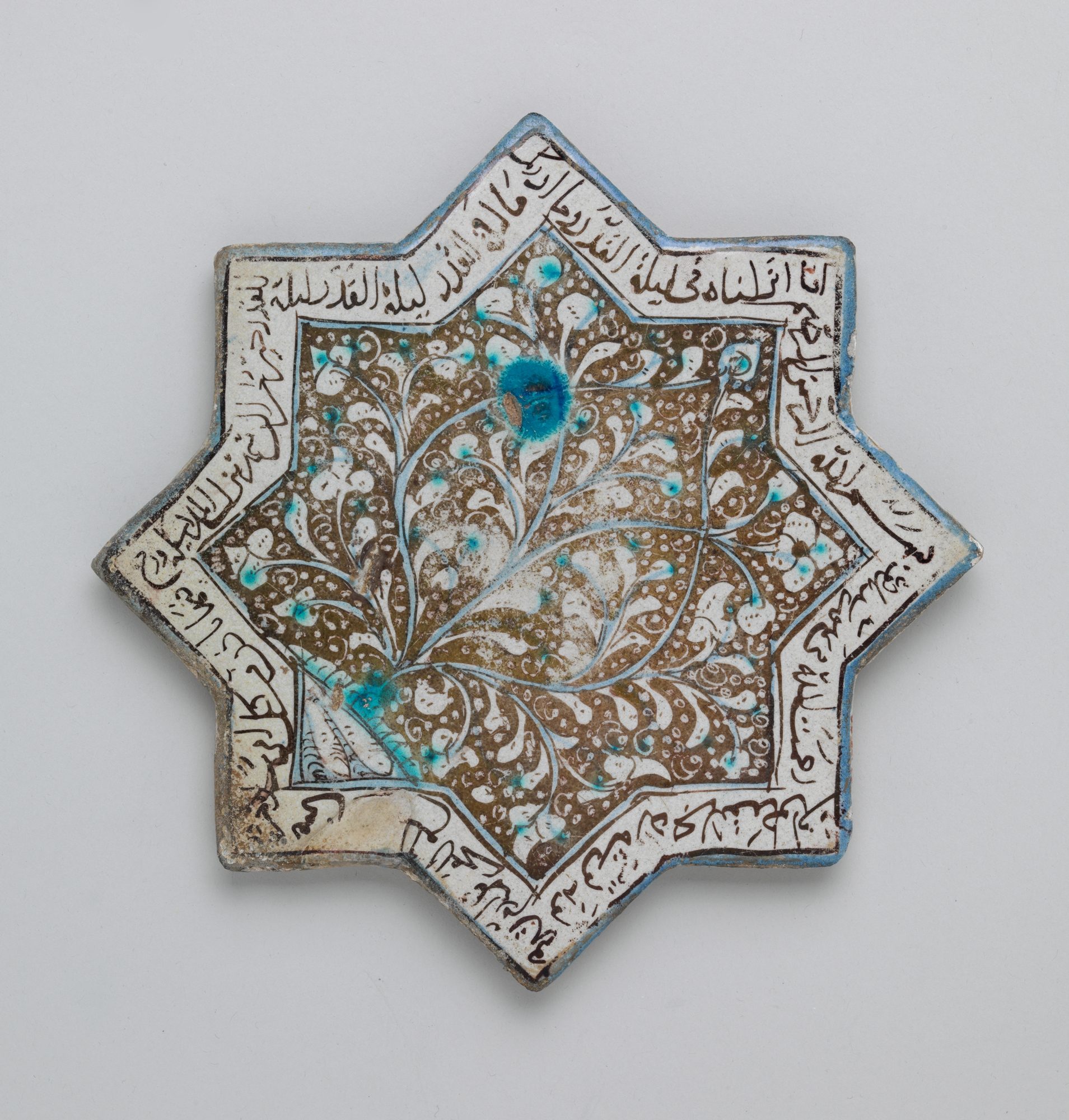
اللّٰهُ أَكْبَرُ
Allāhu akbar
'God is greater', meaning greater than anything you can name or imagine. Often translated 'God is greatest'.
Allāhu akbar: a Muslim who keeps the five daily prayers says it about 94 times a day. That is by the usual count, before adding a single extra prayer. It is the first thing a newborn baby may hear, whispered in its ear. It opens the call to prayer four times over. People say it at weddings, at Eid, at the sight of a mountain range, and when their team scores.
Yet many people in Britain have only heard it shouted in news footage. Here is the phrase as nearly two billion people actually use it.
In scripture
In the Hebrew Bible and Jewish tradition
“Great is the LORD, and highly to be praised; And His greatness is unsearchable.”Psalm 145:3, JPS 1917In the Hebrew Bible and Jewish tradition
“For the LORD is a great God, And a great King above all gods”Psalm 95:3, JPS 1917The Kaddish, said in synagogue every day, opens in Aramaic: Yitgadal v'yitkadash shmeh rabba, 'May His great name be magnified and made holy'.
In the New Testament and Christian tradition
“Glory to God in the highest, on earth peace, good will towards men.”Luke 2:14, WEBArabic-speaking Christians also say Allāhu akbar in everyday speech.
In the Qur'an
وَقُلِ ٱلْحَمْدُ لِلَّهِ ٱلَّذِى لَمْ يَتَّخِذْ وَلَدًا … وَكَبِّرْهُ تَكْبِيرًۢا
“And say: Praise be to Allah, Who hath not taken unto Himself a son, and Who hath no partner in the Sovereignty, nor hath He any protecting friend through dependence. And magnify Him with all magnificence.”Qur'an 17:111, Pickthall (1930)In the Qur'an
“And whosoever of you is present, let him fast the month, and whosoever of you is sick or on a journey, (let him fast the same) number of other days. Allah desireth for you ease; He desireth not hardship for you; and (He desireth) that ye should complete the period, and that ye should magnify Allah for having guided you, and that peradventure ye may be thankful.”Qur'an 2:185, Pickthall (1930)In the sayings of the Prophet (hadith)
“The key to prayer is purification; its opening is the takbīr (saying Allāhu akbar), and its close is the greeting of peace.”Sunan Abī Dāwūd 61How people use it
In prayer. Allāhu akbar begins every Muslim prayer and marks each change of position: standing, bowing, prostrating, sitting. It reminds the person praying that whatever is on their mind, God is greater.
In the call to prayer. The adhan opens with Allāhu akbar four times and returns to it before its close. Many families whisper the call into a newborn's right ear, so that the first words a child hears are about God.

In joy and wonder. At Eid, groups chant it together. People say it at good news, at a beautiful view, at a goal. Arab Christians use it too, as an ordinary exclamation of awe.
In difficulty. Said quietly, it can mean: this problem is not the biggest thing in the world.
What neighbours say. Jews proclaim God’s greatness in the Kaddish, Yitgadal v’yitkadash, ‘magnified and made holy’, and in the psalm verse ‘Great is the LORD, and highly to be praised’. Christians sing Gloria in excelsis Deo, ‘Glory to God in the highest’, the Gloria Patri, ‘Glory be to the Father’, and hymns such as ‘How Great Thou Art’. Sikhs say Waheguru, ‘Wondrous Lord’. At gatherings they raise the cry Bole So Nihal, Sat Sri Akal, ‘whoever says it is blessed: Truth is the Timeless Lord’, much as Muslims chant together at Eid. Many Gujarati Hindus greet each other with Jai Shri Krishna, ‘glory to Lord Krishna’.
How it is misheard
Some people who commit violence shout this phrase. Muslim scholars and communities have condemned that, and many describe it as taking God's name in vain: using words of praise to cover cruelty. Because those moments make the news and ordinary prayer does not, many people hear the phrase only one way.
The phrase has also been shouted at Muslims as mockery, or used in jokes that make it sound like a threat. A fair rule: judge the phrase by its everyday use, and judge people by their actions.
Say it
Al-LAA-hoo AK-bar
Allāhu: a full, dark double 'l', stress on LAA. Akbar: short 'a' sounds, as in 'cat', with a light rolled 'r'. Said as two gentle words, not a shout.
A moment to reflect
- What do you think it means to say God is 'greater', without finishing the sentence?
- Is there a phrase from your own life that others have only heard used badly?
- When you feel something is bigger than you, do you want to shout, sing or go quiet?
Do it together
Play a recording of the call to prayer, a Kaddish and a sung Gloria. Ask: what feeling does each one carry? Then read this page together.
If you have Muslim neighbours, ask when they last said Allāhu akbar and why. Most people will be glad to be asked, and the answer is usually ordinary and warm.
Learn to sing a simple Gloria Patri together, then listen to the Kaddish chanted in synagogue and a recording of the adhan. Talk about how each tradition sets greatness to sound.
Go deeper
- Psalm 145, ‘Great is the LORD’ (Sefaria) · scripture
- Luke 2, the angels’ Gloria (Bible Gateway, WEB) · scripture
- Common Worship: services and prayers (Church of England) · article
Sources (5)
- Prayer opens with the takbīr: Sunan Abī Dāwūd 61
- About 94 takbīrs in the five obligatory prayers (22 + 22 + 17 + 22 + 11): Ṣaḥīḥ al-Bukhārī 788: Ibn ʿAbbās confirms twenty-two takbīrs in a four-unit prayer as the Prophet's practice (our total for the five prayers)
- Qur'an 17:111, 2:185: Quran.com
- Psalm 145:3; Psalm 95:3 (JPS 1917): Sefaria
- Luke 2:14 (WEB): Bible Gateway